Understanding Whole House Water Softener Systems and Costs
Hard water is a common issue for many households, leading to problems like scale buildup in pipes and appliances, soap scum on fixtures, and even dry skin and hair. A whole house water softener system is a comprehensive solution designed to treat water at its point of entry, providing softened water to every faucet and appliance in your home. This guide will explore the different types of systems available, the factors that influence their cost, and what you can expect in terms of long-term maintenance.
What is Hard Water and Why Treat It?
Hard water contains high concentrations of dissolved minerals, primarily calcium and magnesium. While it is generally safe to drink, these minerals can cause a variety of household problems. As hard water flows through your home's plumbing, it leaves behind mineral deposits known as scale. This scale can build up inside pipes, reducing water flow, and can also accumulate in water-using appliances like water heaters, dishwashers, and washing machines, decreasing their efficiency and shortening their lifespan.
Beyond its effects on plumbing and appliances, hard water also impacts daily cleaning and personal care. The minerals interfere with the lathering ability of soaps and detergents, meaning you need to use more product to get things clean. This reaction also creates a sticky soap scum that leaves residue on sinks, showers, and tubs. When it comes to personal hygiene, washing with hard water can leave a film on your skin and hair, making them feel dry and look dull.
Types of Whole House Water Softeners
When you start looking for a water softener, you'll find several different technologies available. The most common and traditional type is the salt-based ion exchange system. These units use a process where water flows through a resin bed, and the hard water minerals (calcium and magnesium ions) are swapped for sodium ions. Other options include salt-free systems, often called water conditioners, which use various technologies to crystallize the minerals, preventing them from forming scale without actually removing them from the water.
Understanding the primary categories can help you narrow down your choices:
- Salt-Based Ion Exchange Softeners: These are highly effective at removing hardness minerals. They consist of a mineral tank and a brine tank and require periodic refilling with salt to regenerate the resin beads.
- Salt-Free Water Conditioners: An alternative for those concerned about sodium intake or environmental impact. They do not soften the water in the traditional sense but rather prevent scale buildup. Their effectiveness can vary depending on the specific water chemistry.
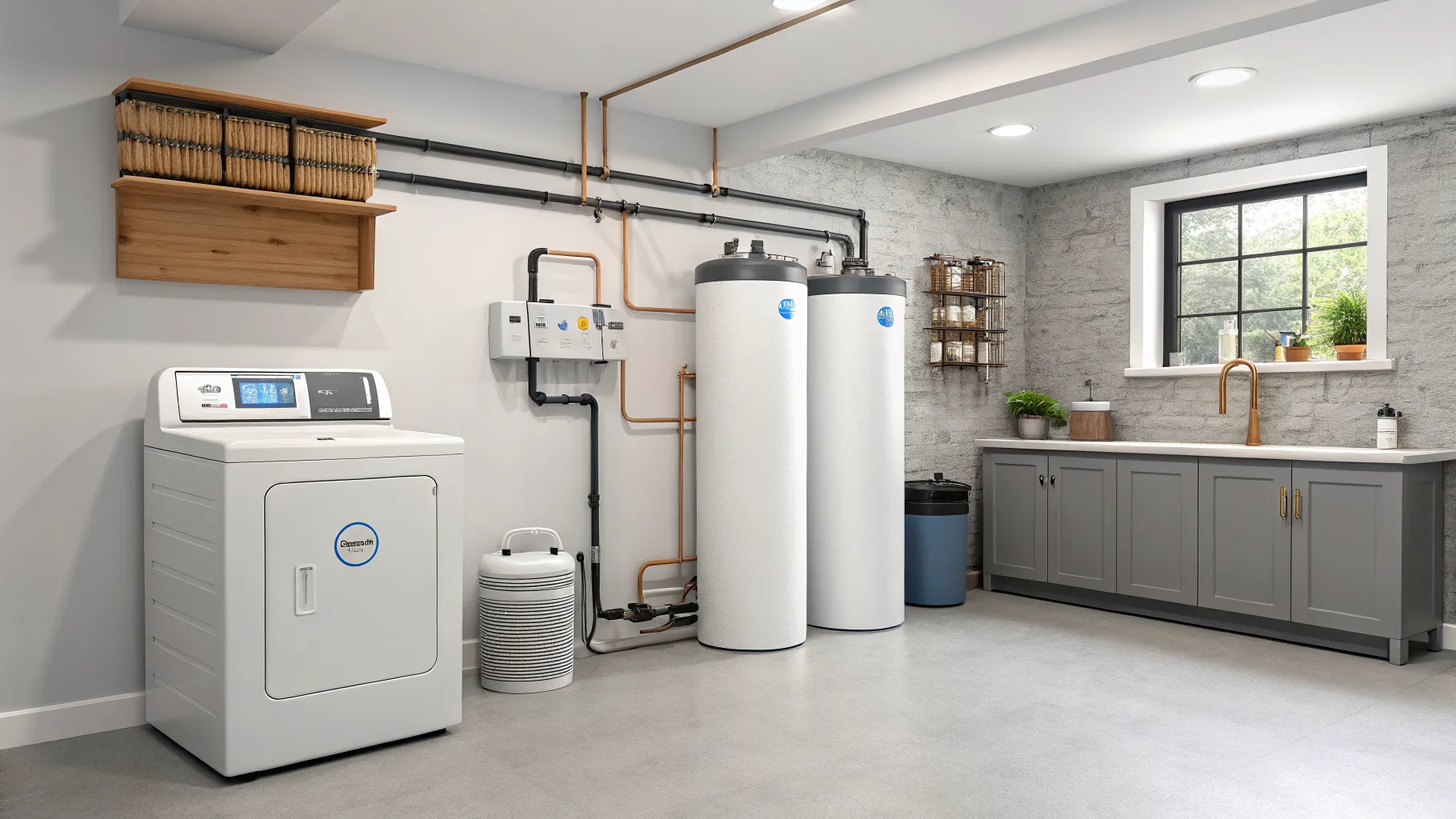
- Dual-Tank Water Softeners: These are a type of salt-based system with two mineral tanks. They provide a continuous supply of soft water, as one tank can regenerate while the other is in service, making them ideal for larger households or homes with very hard water.
- Magnetic/Electronic Descalers: These devices are typically clamped to the outside of the main water pipe. They use magnetic fields or electronic pulses to alter the structure of the minerals. The scientific backing for their effectiveness is a subject of debate.
Key Factors Influencing System Costs
The total cost of a whole house water softener is not just the price tag on the unit itself. Several key factors contribute to the overall expense, from the type and size of the system to the complexity of the installation. The initial purchase price is the most significant component, and this can vary widely based on the technology, brand reputation, and features like digital controls or water usage monitoring.
Beyond the unit, you must account for installation. While some homeowners with plumbing experience may opt for a DIY approach, most people hire a professional plumber, which adds to the upfront cost. Finally, there are the long-term operating expenses. For salt-based systems, this includes the recurring cost of salt pellets or blocks. All systems will eventually require some form of maintenance, whether it's replacing a filter or, after many years, the resin media itself.
Breaking Down the Initial Purchase Price
Water softener systems are available across a wide price spectrum, which can generally be broken down into budget, mid-range, and high-end categories. Entry-level or budget systems are often basic, single-tank, salt-based models with simple timer-based regeneration cycles. These are functional but may be less efficient with salt and water usage compared to more advanced units. They are a practical option for smaller homes with moderate water hardness.
Mid-range systems represent the most popular category for average households. These units often feature metered regeneration, meaning they only regenerate after a specific volume of water has been used, making them more efficient. They may also include better warranties and more durable components. High-end systems typically come with advanced features like smart technology, Wi-Fi connectivity for monitoring, dual tanks for uninterrupted soft water, and superior efficiency ratings, which can save on salt and water over the long run.
Understanding Installation Costs
Professional installation is a critical component of the total cost and ensures the system operates correctly and is compliant with local plumbing codes. The cost of installation can vary significantly based on your geographic location, the plumber's hourly rates, and the complexity of the job. A straightforward installation where the system can be easily connected to the main water line near the water heater will cost less than a complex one requiring extensive new piping.
Factors that can increase installation costs include limited space, the need to install a new drain line for the regeneration cycle, or having to cut through finished walls to access plumbing. It's always a good idea to get quotes from at least two or three licensed plumbers. When comparing quotes, ensure they specify exactly what work is included, such as installing a bypass valve (which allows you to bypass the softener for watering lawns) and disposing of any old equipment.
Long-Term Operating and Maintenance Expenses
The initial purchase and installation are just the beginning of the investment. It's important to consider the ongoing costs to get a true picture of the system's total cost of ownership. For the vast majority of effective systems, which are salt-based, the primary recurring expense is salt. The amount of salt a household uses depends on its water hardness and daily water consumption, but it's a consistent budget item you'll need to account for.
Other long-term costs are less frequent but still important. The resin beads inside the mineral tank are what perform the ion exchange, and they have a finite lifespan, typically lasting 10 to 20 years before needing replacement. Some systems may also have pre-filters to remove sediment, which will need to be changed periodically. While modern water softeners are generally reliable, it's wise to budget for potential repairs or professional servicing over the system's lifetime.