Discovering Pottery Classes for Retirees: A Guide to Ceramics After Sixty
Entering retirement opens up new avenues for exploring creative interests that were previously sidelined by busy careers. Pottery classes for retirees have emerged as a highly popular choice for those looking to learn a new skill while engaging their minds and hands. Working with clay provides a tactile experience that blends artistic expression with practical craftsmanship. For seniors looking to step into a studio, understanding the basics of ceramics can make the transition smoother and much more enjoyable.
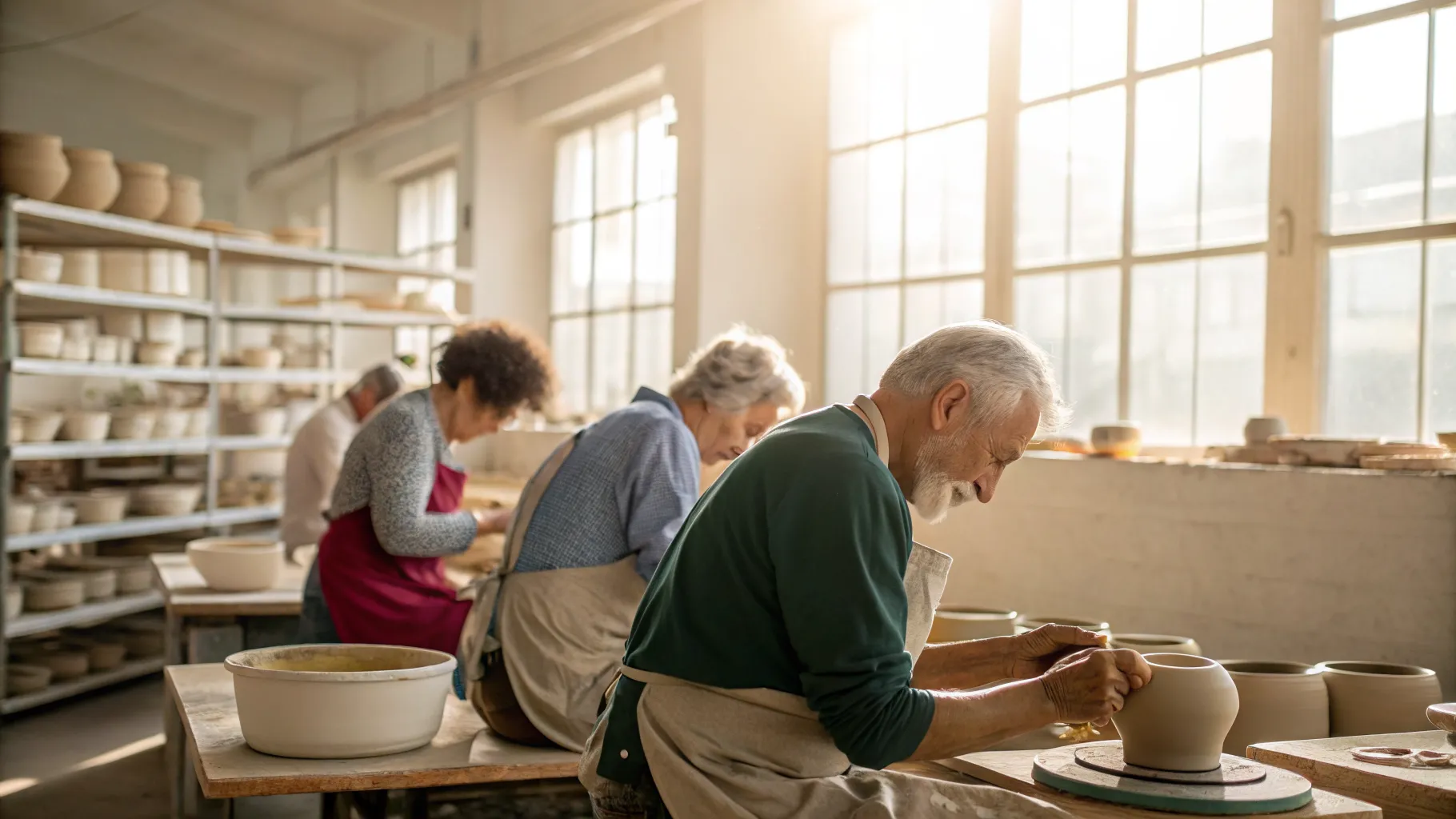
The Physical and Mental Benefits of Working with Clay
Engaging in pottery offers significant cognitive and physical advantages for older adults. Shaping clay requires a level of concentration that helps keep the mind sharp and focused. The process of conceptualizing a piece and bringing it to life stimulates creative thinking and problem-solving skills, which are crucial for maintaining mental agility during the retirement years.
Physically, manipulating clay serves as a gentle exercise for the hands and wrists. The kneading, wedging, and molding processes can help maintain joint flexibility and strengthen hand muscles. While those with severe arthritis might need to take extra care, many find that the warmth of the clay and the rhythmic motions provide a soothing effect that alleviates minor stiffness.
Choosing Between Handbuilding and Wheel Throwing
When looking into ceramics classes for seniors, prospective students generally encounter two primary techniques. Handbuilding is the oldest method of creating pottery and involves pinching, coiling, or rolling slabs of clay. This technique is often recommended for absolute beginners because it allows for immediate success and requires minimal specialized equipment. It is also highly adaptable for those who prefer to sit comfortably at a table without needing to hunch over.
Wheel throwing, on the other hand, involves shaping clay on a spinning potter's wheel. This method requires more core strength and coordination to center the clay properly. While it can be physically demanding on the back and shoulders, many retirees find the mesmerizing spin of the wheel deeply meditative. Most beginner courses offer an introduction to both methods so students can discover which style suits their physical comfort and artistic vision.
What to Expect in Your First Ceramics Class
Walking into a clay workshop for retirees can feel intimidating, but beginner environments are designed to be highly supportive. The first few sessions typically begin with a studio tour, covering safety rules and the locations of kilns, glazes, and cleanup stations. Instructors will then demonstrate basic techniques, such as wedging the clay to remove air bubbles, before letting students get their hands dirty.
It is important to remember that early attempts at pottery rarely result in perfect vessels. The focus is usually on understanding the nature of the material, learning how much pressure to apply, and familiarizing oneself with the tools. Students should dress in comfortable, washable clothing, as getting covered in clay dust and slip is an inevitable part of the learning process.
Essential Tools and Materials for Beginners
Most community studios and ceramic workshops for older adults provide all the necessary tools for beginners. However, understanding the basic toolkit can help new students feel more prepared. A standard beginner pottery kit usually contains a few specific items designed to cut, smooth, and shape the clay.
- A wire tool for cutting clay blocks safely from the main block.
- Wooden modeling tools and ribs for smoothing sides and creating textures.
- A sponge to keep the clay moist and manage slip on the wheel.
- A needle tool for scoring edges before attaching handles or other components.
- Trimming tools with metal loops to remove excess clay when refining a piece.
Finding the Right Studio Environment
Not all pottery studios offer the same experience, and finding the right fit is crucial for long-term enjoyment. Some studios focus heavily on independent work, catering to experienced potters who just need kiln access. Retirees learning pottery over 60 often benefit more from structured workshops or community center programs that emphasize guided instruction. These environments usually have dedicated teachers who are experienced in pacing the lessons appropriately.
Accessibility is another important factor to consider when evaluating a studio. Prospective students should look for spaces with good lighting, sturdy seating, and accessible sinks. Studios that offer adjustable wheels or dedicated handbuilding tables ensure that individuals with varying mobility levels can participate comfortably and safely.
Social Connections Through Pottery Workshops
Beyond the creation of bowls and vases, ceramics classes serve as excellent social hubs. Retirement can sometimes bring a sense of isolation, but joining a local class introduces individuals to a community of like-minded peers. The shared experience of learning a new craft, laughing over collapsed clay pots, and admiring finished pieces naturally fosters conversation and friendship.
Many studios host open studio hours outside of formal instruction time, allowing students to practice their skills together in a relaxed setting. These unstructured periods often become the foundation for lasting friendships, proving that learning pottery is just as much about building a community as it is about mastering the art of ceramics.