Exploring Art and Craft Workshops for Seniors
Creative expression remains a vital part of human experience at every stage of life. For older adults, participating in structured art and craft workshops offers a unique blend of personal fulfillment and community engagement. These classes are designed to accommodate varying skill levels while fostering a sense of accomplishment.
The Importance of Creative Outlets for Older Adults
Engaging in creative activities provides older adults with a meaningful way to spend their time and express their inner thoughts. Many seniors find that retirement opens up new blocks of free time, which can sometimes lead to feelings of isolation or boredom. Joining art and craft workshops for seniors helps fill this void by offering a regular schedule and a clear purpose.
Furthermore, these creative environments encourage lifelong learning. Taking up a new skill requires concentration and patience, keeping the mind active. The process of conceptualizing a project and seeing it through to completion builds confidence and provides a tangible reward for the effort invested.
Popular Types of Craft Workshops for Seniors
Community centers and adult education facilities often host a wide variety of craft workshops for seniors. The selection typically caters to different interests and physical abilities. Some of the most frequently offered classes include watercolor painting, pottery, knitting, and woodworking.
- Watercolor painting: This medium is gentle on the hands and allows for expressive, fluid artwork without the need for harsh chemicals.
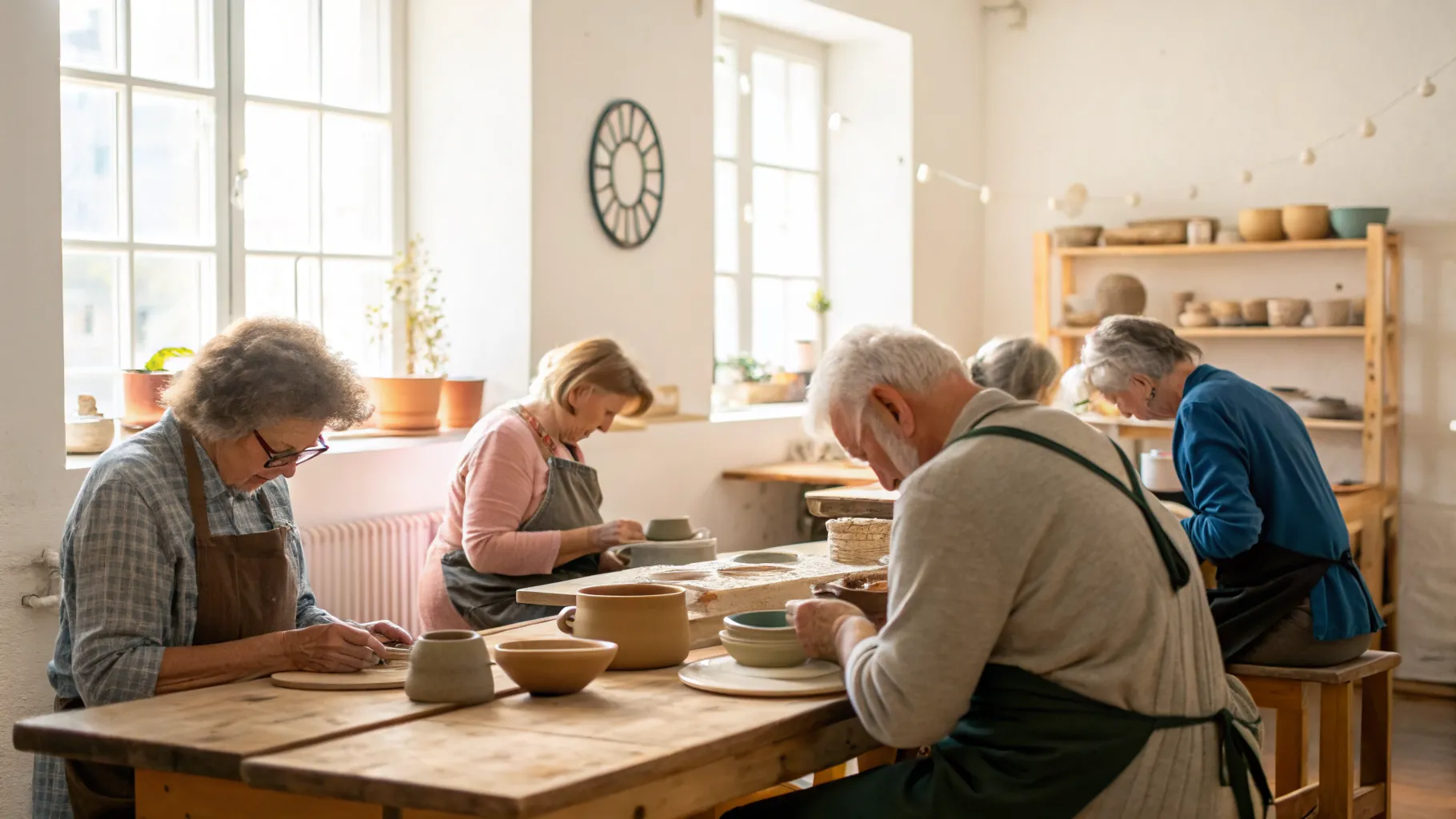
- Pottery and ceramics: Working with clay offers tactile stimulation and can improve hand dexterity.
- Knitting and crochet: These fiber arts are highly portable and provide a soothing, repetitive rhythm.
- Woodworking: Supervised woodcraft programs allow participants to build functional items like birdhouses or small furniture.
Physical and Cognitive Benefits of Art Classes
Participating in art classes for seniors goes beyond simple entertainment. The physical act of holding a brush, molding clay, or threading a needle requires fine motor skills. Regular practice in these areas can help maintain hand strength and joint flexibility, which is particularly beneficial for those managing arthritis.
Cognitively, creative workshops for older adults demand problem-solving and spatial awareness. Translating a three-dimensional object onto a flat canvas or planning the pattern of a knitted scarf stimulates the brain. Studies frequently indicate that engaging in these types of mentally demanding hobbies can support cognitive reserve as people age.
Finding the Right Senior Art Programs
Locating suitable senior art programs requires a bit of research within the local community. The most common venues for these workshops are local community centers, libraries, and dedicated senior centers. These locations frequently publish monthly or seasonal calendars detailing the types of classes available and the required registration steps.
Additionally, many local art museums and galleries host specialized educational outreach programs. These institutions often provide high-quality instruction and grant access to professional-grade materials. When searching for a class, it is advisable to inquire about the experience level expected and whether the facility provides the necessary supplies or if participants need to purchase their own.
Essential Accommodations in Creative Workshops
A well-designed art workshop must consider the physical needs of its participants. Adequate lighting is crucial, as many crafts require precision and clear vision. Workspaces should feature large, bright windows or specialized task lighting to prevent eye strain during intricate tasks like sewing or painting.
Seating and accessibility are equally important factors. Tables should be at a comfortable height for both standing and seated work, including wheelchair access. Instructors often provide adapted tools, such as paintbrushes with thicker, ergonomic grips or scissors designed to reduce hand fatigue, ensuring that everyone can participate comfortably.
Creating a Supportive Environment for Beginners
Starting a new hobby later in life can be intimidating, making a supportive atmosphere essential for success. Instructors who specialize in teaching older adults understand the importance of patience and positive reinforcement. They focus on the process of creation rather than demanding perfection in the final product.
Peer support also plays a massive role in these workshops. When seniors gather to learn a shared skill, they naturally form bonds and encourage one another. This collaborative spirit transforms a simple craft class into a vibrant social gathering, reducing feelings of loneliness and building lasting friendships.