Utility Trailer Financing Options: A Complete Market and Eligibility Guide
Utility trailer financing options have expanded considerably for both individual buyers and business owners operating in landscaping, construction, delivery, and mobile service sectors. Rather than tying up large amounts of working capital in a single purchase, most buyers today spread costs over structured payment terms while putting the asset to work immediately. Understanding the full range of available structures, their associated rates, and the qualification requirements each demands is essential before entering any financing arrangement.
Trailer Price Ranges and What They Mean for Financing
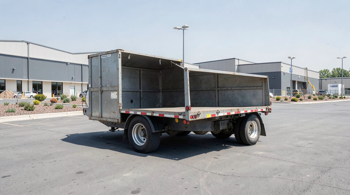
Trailer costs vary significantly by type, directly influencing the loan amounts lenders are asked to underwrite. As of 2026, utility trailers typically fall in the $1,800 to $3,800 range, while dump trailers run $7,000 to $16,500, enclosed trailers $4,500 to $13,000, and equipment haulers $4,000 to $10,000. 1 At the heavier commercial end, dry van, flatbed, and refrigerated trailers commonly land near $40,000 for many buyers, with lenders citing 15% down as a common anchor point for that segment. 2 Landscape-specific dump and utility trailers typically cost $3,000 to $25,000 new, with used units running 25 to 40% less. 3
These price points matter because they determine the financing tier a buyer enters. Smaller utility trailers under $10,000 are frequently financed through personal loans or dealer-captive programs with shorter terms, while larger commercial trailers qualify for dedicated equipment financing with longer amortizations. A buyer's ability to compare the true cost of ownership across these tiers requires understanding not just the sticker price, but the total interest burden across the chosen term length.
Core Utility Trailer Financing Options Explained
Equipment loans are the most common structure, allowing buyers to finance up to 100% of a trailer's cost with fixed monthly payments and full ownership at term end. 4 The trailer itself typically serves as collateral, which reduces lender risk and generally produces lower rates compared to unsecured alternatives. 5 Lease arrangements offer lower monthly payments and flexibility to upgrade at term end or purchase the unit, making them attractive for businesses that rotate equipment frequently. 4
Beyond loans and leases, buyers can access personal loans through credit unions and banks, SBA 7(a) programs for qualifying small businesses, and USDA Business and Industry loan programs for eligible rural operations. 6 7 Unsecured personal loan products, such as those offered by lenders like LightStream, do not require the trailer as collateral but typically carry higher rates to compensate for the additional lender risk. 8 Rent-to-own programs exist for buyers who cannot access traditional credit, though total costs under these arrangements are substantially higher over time. 9
Rate Benchmarks and Term Structures Across Lender Types
Interest rate ranges vary considerably depending on lender type and borrower credit profile. Dealer-captive financing from manufacturer partners can run 0% to 7% APR for prime credit borrowers on new equipment. Bank and SBA 7(a) loan rates generally fall between 8% and 11.5% APR for established businesses. Equipment finance specialists typically operate in the 6% to 12% range for qualified applicants, while subprime independent lenders may charge 18% to 22% APR. 10 The trucking equipment financing segment more broadly runs 6% to 22% APR across 2- to 7-year terms. 11
In Canada, competitive rates for trailer financing start from approximately 6.99%, with approval timelines commonly running 24 to 48 hours for most applications. 12 For standard commercial trailer financing in the U.S., established lenders cite APR bands of 6.5% to 10% for creditworthy borrowers with 60-month amortizations as the baseline term. 2 Typical financing terms for utility and landscape trailers run 24 to 60 months through equipment finance channels, while SBA programs can extend to 7 to 10 years depending on collateral and use case. 3
| Financing Type | Typical APR Range | Common Term Length | Down Payment |
|---|---|---|---|
| Equipment Loan (Prime) | 6.5% – 10% | 24 – 60 months | 0% – 15% |
| SBA 7(a) Loan | 9% – 11.5% | Up to 10 years | Varies |
| Dealer-Captive Financing | 0% – 7% | 24 – 60 months | 0% – 20% |
| Subprime Equipment Lenders | 18% – 22% | 24 – 48 months | 10% – 25% |
| Unsecured Personal Loan | Variable | 24 – 84 months | None required |
Qualification Criteria and What Lenders Evaluate
Lenders across all categories evaluate a combination of credit score, time in business, annual revenue, and the trailer's collateral value. For equipment financing, credit score thresholds commonly start at 600 for standard approval, with stronger pricing reserved for borrowers at 650 and above. 3 Mainstream lenders generally prefer at least one year of operating history, though specialty lenders exist for newer operators. Bay Street Lending, for example, lists a 500+ FICO floor for subprime trucking equipment loans while requiring 650+ for best-term pricing. 13 Landscaping-sector guidelines cited by Axiant Partners suggest credit profiles in the 580 to 680+ FICO range, 1 to 2 years in business, and annual revenues of $120,000 to $300,000 or more depending on deal structure. 14
For deals under $150,000, lenders typically require a completed credit application, three months of bank statements, and a personal financial statement for each guarantor. Deals above $150,000 generally add profit and loss statements, balance sheets, and business plus personal tax returns to the documentation package. 15 Statistics Canada reported that 49.3% of Canadian SMEs requested external financing in 2023, with construction, manufacturing, and wholesale trade among the most active sectors, reflecting strong market demand in the very industries that most commonly purchase utility trailers. 16
Tax Considerations and Depreciation Benefits
One of the financial advantages specific to business use of financed trailers is access to tax deduction mechanisms. The 2026 Section 179 deduction limit is $2,560,000 with a $4,090,000 phase-out threshold, and 100% bonus depreciation has been reinstated permanently for qualified property placed in service after January 19, 2025. 10 A $75,000 piece of equipment financed at 8% over 60 months generates approximately $16,260 in total interest, but the Section 179 write-off in year one can reduce the effective cost by $17,000 to $25,000 depending on the buyer's tax bracket. 10
Trailers financed as business equipment also qualify for MACRS depreciation treatment, and most new and used trucking equipment can be expensed under Section 179 in the year placed in service. 17 Buyers should work with a qualified CPA to confirm eligibility and structure, as bonus depreciation and Section 179 interact differently depending on the asset type, business entity structure, and taxable income level. Seller-provided financing arrangements are additionally subject to Truth in Lending Act (TILA, Regulation Z) disclosure requirements covering the APR, total finance charge, amount financed, and total payments. 18
Risks, Limitations, and Factors That Complicate Approval
Financing a utility trailer introduces ongoing obligations that cash purchases do not. The lender holds a lien on the equipment until the loan is fully repaid, meaning selling or replacing the trailer requires coordinating with the lienholder first. 17 In financed transactions, the title is issued with the lender's name noted as lienholder, and the buyer typically receives a copy of the title while the lender holds the original until the loan is satisfied. 18 Borrowers who miss payments risk repossession of the equipment, which can also damage credit standing and disrupt business operations.
Buyers with lower credit scores face materially higher rates, with subprime paper running 18% to 22% APR or higher through independent lenders. Rent-to-own programs, while accessible without traditional credit checks, carry total cost structures that can far exceed the trailer's market value over the contract period. 9 Seasonal businesses should also be cautious about term length relative to revenue timing. Landscaping and construction operators, for example, can experience compressed cash flow during off-season months, making longer terms with lower monthly payments sometimes preferable to shorter high-payment structures, even if the total interest paid is higher. 14 Sheffield Financial, one recognized name in trailer financing, has financed over $25 billion in consumer loans since 1992, indicating the scale and maturity of the dedicated trailer financing market, but not all dealer financing partners operate at that consistency level. 19
Sources
- MaxBuilt Trailers – Buying vs Financing a Trailer in 2026 (maxbuilttrailers.com)
- EquipmentCalculators.com – Finance a Commercial Trailer (equipmentcalculators.com)
- Axiant Partners – Landscape Trailer Financing (axiantpartners.com)
- FinanceScope – Utility Trailer Equipment Financing (financescope.com)
- Bankrate – How to Finance a Car / Trailer (bankrate.com)
- U.S. Small Business Administration – SBA Loan Programs (sba.gov)
- USDA – Business and Industry Loan Program (rd.usda.gov)
- LightStream – Unsecured Personal Loans (lightstream.com)
- RTOHQ – Rent-To-Own How It Works (rtohq.com)
- PipelineOn – Essential Contractor Equipment Financing Options for 2026 (pipelineon.com)
- Bay Street Lending – Trucking Equipment Financing (baystreetlending.com)
- Finance That Canada – Trailer Financing (financethat.ca)
- Bay Street Lending – Equipment Financing Qualifications (baystreetlending.com)
- Axiant Partners – Landscaping Truck and Trailer Financing Cash Flow (axiantpartners.com)
- United Leasing and Finance – Equipment Financing Requirements (unitedevv.com)
- Mehmi Group – Utility Trailer Financing Canada (mehmigroup.com)
- Dispatched Finance – Trucking Equipment Financing (dispatched.finance)
- BillOfSaleNow – Financed Purchase Utility Trailer Bill of Sale Alaska (billofsalenow.com)
- Stoll Trailers – Sheffield Financial Trailer Financing (stolltrailers.com)