Lightweight orthopedic walking shoes for men and women: A Consumer Research Guide
Lightweight orthopedic walking shoes for men and women represent one of the fastest-evolving segments in functional footwear. Podiatrists and orthopedic specialists routinely recommend supportive shoes for individuals managing plantar fasciitis, arthritis, hallux valgus, Achilles tendonitis, flat feet, and heel spurs, conditions documented across multiple clinical and consumer footwear platforms. 1 According to Aetrex, the non-negotiable elements that distinguish a genuine orthopedic walking shoe from a standard trainer include built-in arch support for proper alignment, ample cushioning to soften each step, and a spacious toe box to eliminate pressure on joints. 2
Core Structural Features Found in Orthopedic Walking Shoes
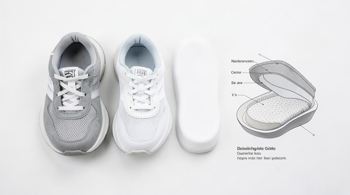
Across the category, lightweight orthopedic walking shoes typically weigh between 6 and 10 ounces per shoe and incorporate cushioned insoles with arch support engineered to reduce strain on feet and joints during extended use. 3 OrthoFeet's published footwear guidance highlights supportive components such as multi-layer cushioning systems, anatomical arch profiles, and padded heel counters as foundational to comfortable and aligned daily walking. 4 The Ortho-Cushion System featured on the Orthofeet Journey men's sneaker, for example, combines multi-layered cushioning from heel to toe with a mild rocker profile that helps the foot roll forward naturally, a design approach validated by podiatric research into gait mechanics. 5
Breathability is a secondary but essential structural element. Quality lightweight orthopedic walking shoes incorporate breathable mesh uppers and moisture-wicking linings to keep feet dry during extended walking sessions. 6 The DT9407 by DT Footwear illustrates this with a water-repellent knitted stretch upper described as weighing a fraction of traditional athletic shoe materials, while the Orthoserene EasyWalk Pro and Twill Tees Feather-Stride both specify reinforced breathable textile uppers as core design elements. 7 Non-slip outsoles with rubber compounds or anti-skid traction patterns are also standard, addressing the stability needs of seniors and individuals with balance concerns. 8
Conditions These Shoes Are Engineered to Address
The American Academy of Orthopaedic Surgeons confirms that supportive shoes play a measurable role in improving foot comfort and biomechanics for people managing structural foot conditions. 9 Across the reviewed product range, conditions consistently cited by manufacturers as primary targets include plantar fasciitis, arthritis, ankle pain, swelling, heel spurs, hallux valgus (bunions), Achilles tendonitis, flat feet, and referred pain in the knees, hips, and lower back. 10 The OrthoHike CloudHike, for instance, describes its ultra-light flexible sole technology as designed to alleviate pain not only in the feet but also in the knees, hips, and lower back by encouraging natural alignment and promoting healthy posture. 11
The Cleveland Clinic advises that proper supportive footwear reduces mechanical stress on the foot and lower limb, making shoe selection a key component of conservative management for many musculoskeletal complaints. 12 The American Orthopaedic Foot and Ankle Society similarly emphasizes that walking shoe selection directly affects injury prevention and long-term foot health outcomes. 13 Buyers with diagnosed conditions such as diabetes or severe arthritis are advised to seek professional podiatric evaluation before selecting footwear, as individual pressure mapping and arch type data may dictate requirements beyond what general consumer products provide. 14
Sizing, Width Options, and Fit Considerations
Sizing in orthopedic walking shoes is considerably more complex than standard footwear due to the emphasis on width accommodation, toe-box volume, and removable insole systems. Many orthopedic shoe models include removable insoles that allow users to insert custom orthotics or aftermarket options, a feature confirmed across the Orthofeet Journey, DT9407, and Drew Walker II product lines reviewed. 15 Width availability is particularly broad in this category: the DT9407 is available from standard D width through to 14E, and the Orthofeet Journey offers widths up to extra-extra wide (4E), making these models appropriate for edema and other conditions that cause foot volume to change throughout the day. 16
Unisex sizing charts from Pimali and Orthoserene show women's sizes ranging from UK 2 (EU 35, foot length 22.0 cm) up to UK 10 (EU 43, foot length 28.6 cm), while men's sizing extends from UK 5 (EU 40, foot length 25.0 cm) to UK 13 (EU 48, foot length 31.0 cm). 17 Several manufacturers recommend measuring foot length while standing, using both feet and selecting the larger measurement, and sizing up if between sizes to allow for the natural foot splay that wide toe-box designs are intended to facilitate. The OrthoHike CloudHike uses a unified EU sizing chart spanning EU 36 to EU 47 across men's and women's conversions. 18
Independent Testing and Editorially Reviewed Models
Runners World's 2026 walking shoe guide, produced after testing dozens of models over hundreds of miles, selected the Asics Gel-Cumulus 28 as its overall top pick for cushioning, durability, and broad comfort. The same guide identified the Hoka Bondi 9 as the leading choice for power walking, the New Balance Ellipse as a value-oriented option, and the On Cloudmonster 3 for long-distance walking. 19 Forbes, citing consultation with a board-certified podiatrist, an orthopedic surgeon, and a certified trainer, named the Brooks Ghost 18 as the overall top walking shoe for women after a month of testing across varied terrains, with the On Cloud 6 identified as the leading lightweight option and the Hoka Clifton 10 as the top cushioned choice. 20
RunRepeat's 2026 walking shoe report, which subjected over 20 models to laboratory measurement of shock absorption, flexibility, breathability, and toe-box width, ranked the New Balance Ellipse as the overall best walking shoe, with the Saucony Triumph 23 leading for shock absorption and the ASICS GT-2000 14 ranked highest for arch support. 21 A People magazine field test of the Allswifit slip-on walking sneakers, which carry a Seal of Acceptance from the American Podiatric Medical Association, reported zero discomfort during a 4-mile inaugural walk and sustained comfort through 12,000-step daily averages in an urban environment, illustrating how consumer-oriented orthopedic designs can meet clinical benchmarks. 22
Price Range and Market Segments
The category spans a wide price band. Leading brands such as New Balance, ASICS, and Brooks offer lightweight orthopedic walking shoes with prices generally ranging from approximately $120 to $180 per pair in the mainstream athletic market. 23 Direct-to-consumer orthopedic specialists like Orthofeet, WalkHero (priced at approximately $59.85), OrthoHike CloudHike (approximately $59.95), and the Ortho Balance Signature (approximately $59.95) position in a mid-market segment, while therapeutic medical-grade options such as the Drew Walker II and DT9407 carry higher price points reflecting additional fitting technologies and included orthotics. 24 WebMD notes that orthopedic shoes are a recognized tool in the management of plantar fasciitis and arthritis, which partly explains why specialty orthopedic footwear commands pricing above general athletic shoe categories. 25
Consumer review volumes across surveyed products range considerably: the Ortho Balance Signature and related models report over 10,000 customer responses, the Balub Canvas Orthopedic Barefoot Shoes cite 28,000 or more ratings at 4.7 out of 5, and the Omega Walk Ortho Glide reports a 4.8-out-of-5 average derived from more than 50,000 reviews. The Liora Steps Susan model accumulates 2,439 reviews with a podiatrist recommendation, while the Orthoserene EasyWalk Pro holds a 4.8-out-of-5 rating across 126 verified customer reviews. 26
Limitations, Risks, and Important Caveats
Despite the documented benefits, lightweight orthopedic walking shoes carry meaningful limitations that consumers should assess carefully. No consumer footwear product, regardless of marketing claims, substitutes for a professional podiatric assessment, gait analysis, or custom orthotics prescribed for a specific clinical condition. Podiatry.com recommends consulting a qualified healthcare provider before relying solely on commercial orthopedic footwear for pain management. 27 Shoes marketed as recommended by podiatrists or developed with orthopedists vary significantly in what that relationship entails, ranging from formal clinical trials to informal advisory arrangements, and consumers should not assume regulatory equivalence with medical devices.
Return windows across reviewed brands range from 30 to 60 days, and some models note sizing inconsistencies that may require exchange. The DT9407 explicitly warns of 3-to-4-week delivery delays due to import conditions, and several brands use shared sizing charts across unisex models that may not accurately reflect gender-specific foot geometry differences. Additionally, lightweight construction achieved through EVA foam midsoles and thin knitted uppers may reduce long-term durability compared to heavier, leather-reinforced therapeutic footwear. Buyers with progressive conditions such as diabetic neuropathy, severe hallux valgus, or post-surgical foot reconstruction should seek footwear fitted within a clinical environment rather than relying exclusively on online self-measurement tools. 28
Sources
- Orthoserene – EasyWalk Pro Product Page (orthoserene.com)
- Aetrex – What to Look For in Walking Shoes for Arthritis (aetrex.com)
- General LLM Research – Lightweight Orthopedic Walking Shoe Weight and Feature Data
- OrthoFeet – How to Choose the Right Orthopedic Shoes (orthofeet.com)
- DT Footwear – Orthofeet Journey Hands-Free Sneaker Product Page (dtfootwear.com)
- General LLM Research – Breathability and Moisture-Wicking in Orthopedic Footwear
- DT Footwear – DT9407 Men's Lightweight Walking Shoes Product Page (dtfootwear.com)
- Omega Walk – Ortho Glide Product Page (omegawalk.com)
- American Academy of Orthopaedic Surgeons – Foot and Ankle Pain (orthoinfo.aaos.org)
- Orthoserene – EasyWalk Pro Conditions List (orthoserene.com)
- OrthoHike – CloudHike Orthopedic Pain Relieving Shoes Product Page (orthohike.com)
- Cleveland Clinic – Foot Care Tips (health.clevelandclinic.org)
- American Orthopaedic Foot and Ankle Society – Footcare Pages (aofas.org)
- WebMD – Orthopedic Shoes and Foot Conditions (webmd.com)
- General LLM Research – Removable Insole Systems in Orthopedic Footwear
- DT Footwear – DT9407 Width Availability and Orthofeet Journey Width Details (dtfootwear.com)
- Pimali – Size Guide for Orthopedic Walking Shoes (pimali.co.uk)
- OrthoHike – CloudHike Size Chart (orthohike.com)
- Runners World – The 8 Best Walking Shoes of 2026 (runnersworld.com)
- Forbes – The 6 Best Walking Shoes For Women (forbes.com)
- RunRepeat – 7 Best Walking Shoes in 2026 (runrepeat.com)
- People – Allswifit Slip-On Walking Sneakers Review (people.com)
- General LLM Research – Price Range for Major Orthopedic Walking Shoe Brands
- WalkHero, OrthoHike, Ortho Balance – Product Pricing Pages
- WebMD – Orthopedic Shoes for Plantar Fasciitis and Arthritis (webmd.com)
- Balub, Omega Walk, Liora Steps, Orthoserene – Customer Review Data from Product Pages
- Podiatry.com – Foot Health Information (podiatry.com)
- General LLM Research – Limitations of Consumer Orthopedic Footwear for Clinical Conditions