Common Hair Mistakes That Add Years to Your Appearance
As people age, they often notice changes in their skin and wardrobe, but hair is an equally important factor in overall appearance. Certain common hair mistakes can inadvertently add years to a person's look, creating a harsh or tired aesthetic. Understanding these aging hair mistakes allows individuals to make subtle adjustments that promote a fresh, vibrant, and healthy appearance.
Choosing a Monotone Hair Color
One of the most frequent hairstyle mistakes is opting for a completely flat, single-process hair color. While a uniform shade might seem like the easiest way to cover gray strands, it often results in a harsh, helmet-like appearance. Solid colors lack the natural dimension that youthfulness typically provides, making the hair look unnatural against the complexion.
Stylists generally suggest incorporating subtle highlights or lowlights to break up the solidity. Adding a mix of tones creates movement and reflects light, which softens facial features. A multi-dimensional color technique helps blend grays more naturally and prevents the stark contrast that a uniform block of color often creates.
Clinging to Outdated Signature Styles
Many individuals find a haircut they love in their twenties or thirties and stick with it for decades. However, clinging to a style from the past is among the most common hair mistakes that age you. As facial features, skin elasticity, and hair texture evolve over time, a haircut that once flattered the face might begin to drag it down or emphasize signs of aging.
Updating a signature look does not require a drastic transformation. Simple modifications like softening the layers, adjusting the length, or adding face-framing bangs can modernize an appearance. Staying open to gentle evolution ensures that a haircut complements a person's current features rather than competing with them.
Neglecting Hair Moisture and Hydration
Aging hair naturally produces less oil, leading to a drier, coarser texture that can look brittle if left untreated. Ignoring this change is a significant misstep in any hair mistakes guide, as dehydrated hair lacks the glossy shine associated with health and vitality. To counteract this, individuals should focus on consistent hydration strategies.
- Incorporate deep conditioning treatments or hair masks into a weekly routine to restore moisture.
- Switch to sulfate-free shampoos that clean the scalp without stripping away natural oils.
- Apply a lightweight leave-in conditioner to protect the ends from environmental damage.
- Limit the use of heated styling tools, which can exacerbate dryness and cause breakage.
Parting Hair Too Severely
The way hair is parted plays a crucial role in framing the face, yet it is often overlooked. A severe, perfectly straight middle part can draw attention to asymmetry and emphasize the downward pull of gravity on the face. This sharp line can sometimes look overly strict and add unnecessary age to a person's overall look.
Switching to a slightly off-center part or a soft side part can immediately soften the face. An irregular or lightly tousled part adds volume at the roots and creates a more relaxed, modern silhouette. This simple adjustment shifts the focal point and creates a flattering, lifted effect for most face shapes.
Opting for Too Much Volume or Teasing
While flat hair can be unflattering, the opposite extreme is also problematic. Over-teasing the hair and freezing it with heavy hairspray creates a stiff, unnatural shape that instantly dates a look. This approach to volume is reminiscent of past decades and often creates a harsh contrast against a mature face.
Modern volume focuses on movement and bounce rather than stiffness. Using lightweight volumizing mousses and blow-drying with a round brush can provide lift at the roots without sacrificing the hair's natural flow. The goal is to achieve an airy, touchable texture that looks effortless rather than highly constructed.
Going Too Dark with Hair Dye
Another prevalent error is dyeing hair a shade that is significantly darker than an individual's natural color. Very dark hair creates harsh shadows on the face, which can accentuate fine lines, wrinkles, and under-eye circles. Additionally, as the hair grows out, the contrast between a dark dye and light or gray roots becomes immediately noticeable.
To maintain a youthful glow, experts often recommend going a shade or two lighter than a person's natural base color as they get older. Warmer, lighter tones help illuminate the complexion and create a softer transition as new hair grows in. This approach is generally more forgiving and requires less aggressive maintenance.
Ignoring Split Ends and Damage
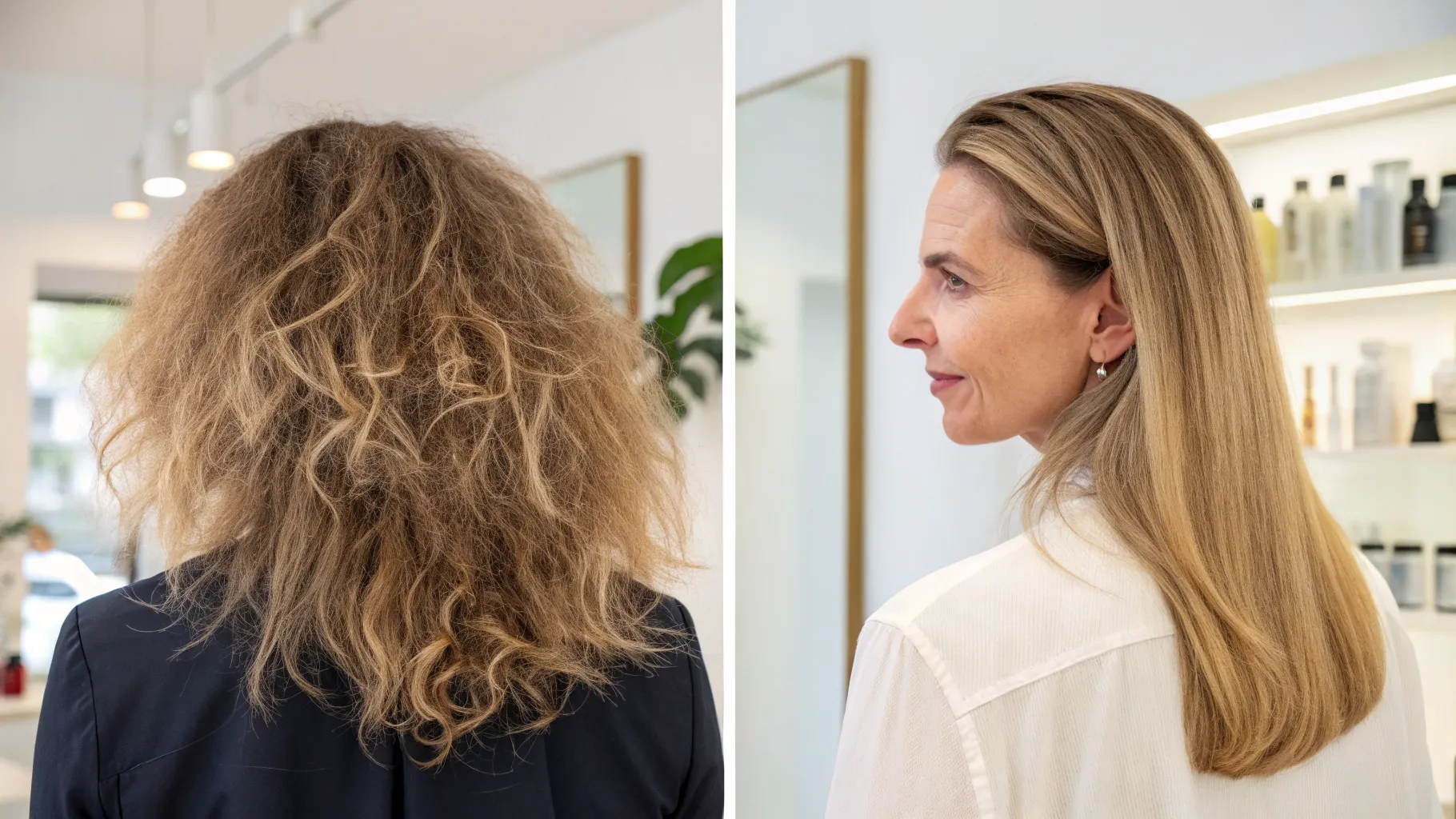
Skipping regular trims might seem like a good way to maintain length, but it frequently backfires. Frazzled, split ends travel up the hair shaft, causing frizz and an overall unkempt appearance. Damaged hair absorbs light rather than reflecting it, leading to a dull finish that can age a person's appearance.
Committing to regular haircuts, even if it is just a microscopic dusting of the ends, keeps the hair looking thick and healthy. Healthy ends provide clean lines that make any style look more polished. Prioritizing the health of the hair over its length is a fundamental principle for maintaining a vibrant and youthful look.