10 Flowers That Bloom in Fall and Winter
Creating a vibrant garden does not have to end when the summer heat fades. Many gardeners assume that once the first frost arrives, their outdoor spaces will be devoid of color until spring. However, selecting the right cold season flowers can transform a bleak landscape into a stunning display of resilient blooms.
1. Chrysanthemums and 2. Asters: The Fall Staples
Chrysanthemums, commonly known as mums, are perhaps the most recognizable fall garden flowers. They come in a wide variety of colors, including deep reds, bright yellows, and rich oranges. These hardy plants begin to bloom as the days grow shorter, providing a massive burst of color just as summer perennials begin to fade.
Asters are another autumn powerhouse that pair perfectly with mums. Known for their delicate appearance and vibrant purple, blue, or pink petals, asters offer a critical late-season nectar source for foraging bees and butterflies. Planting them in well-draining soil ensures they will return year after year, anchoring the autumn landscape.
3. Pansies and 4. Violas: The Cool Weather Classics
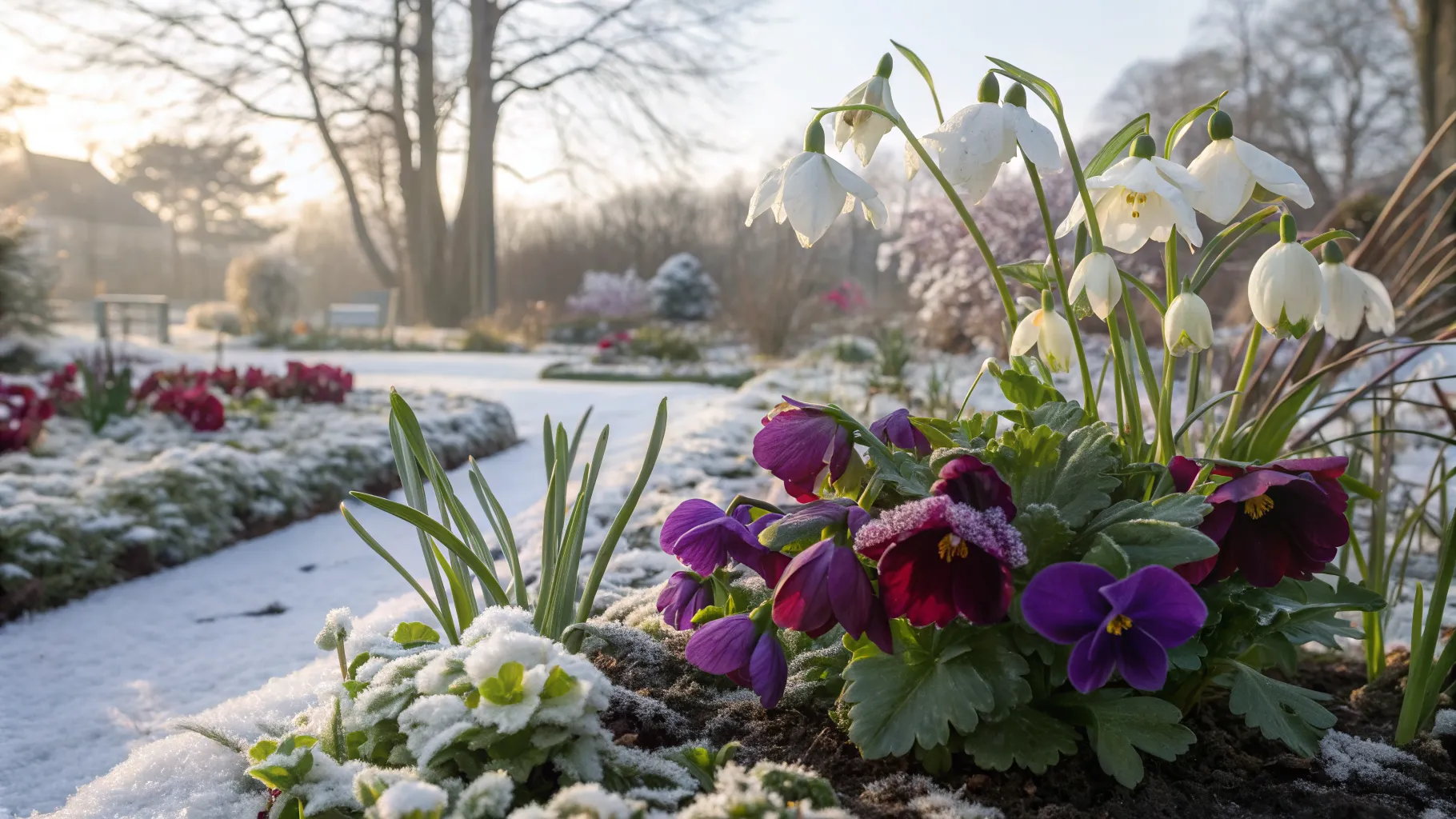
Pansies are incredibly resilient and can survive freezing temperatures, making them a top choice for winter blooming flowers. Their distinctive patterns and wide array of color combinations allow for endless creativity in garden beds and container plantings. In milder climates, pansies will bloom continuously through the winter, taking only short breaks during severe freezes.
Violas, the smaller cousins of pansies, produce an abundance of tiny, delicate flowers. While their blooms are smaller, they often produce more flowers per plant and exhibit exceptional cold tolerance. They can easily bounce back after a heavy frost, with their cheerful yellow, violet, and white petals brightening up gloomy winter days.
5. Hellebores and 6. Snowdrops: Deep Winter Wonders
Hellebores, frequently referred to as the Lenten Rose, are the undisputed royalty of the winter garden. These evergreen perennials push their elegant, cup-shaped flowers through the snow in late winter. Available in shades ranging from creamy white to deep plum, hellebores thrive in shady areas where few other plants succeed.
Snowdrops are tiny bulbous plants that are among the very first to emerge when the weather is still freezing. True to their name, they feature drooping, bell-shaped white flowers that often push right up through the snowpack. These flowers naturalize easily, meaning a small patch will multiply over the years to create a stunning carpet of white.
7. Camellias and 8. Winter Jasmine: Evergreen Elegance
Camellias are beloved in milder regions for their lush, evergreen foliage and large, bold blooms. Depending on the variety, they can bloom anywhere from late fall through late winter. Their petals bring a touch of tropical elegance to the cold season, standing out dramatically against the muted tones of the winter landscape.
Winter Jasmine takes a different approach, dropping its leaves before producing bright yellow, star-shaped flowers on trailing green stems. Blooming in the dead of winter, this scrambling shrub is often trained up trellises or allowed to cascade over retaining walls. The vibrant yellow blooms provide a stark, cheerful contrast to the gray winter skies.
9. Witch Hazel and 10. Cyclamen: Unique Textures and Shapes
Witch Hazel is a fascinating winter-flowering shrub that produces spidery, fringe-like petals in shades of yellow, orange, and red. Besides its highly unique appearance, witch hazel is often intensely fragrant, carrying a sweet, spicy scent through the crisp winter air. The flowers typically appear on bare branches, ensuring they take center stage in the yard.
Cyclamen offers incredible visual interest with its patterned leaves and upswept petals that resemble resting butterflies. While indoor varieties are popular as house gifts, hardy outdoor species bloom in the fall and late winter. They prefer partial shade and look spectacular planted around the base of deciduous trees.
Maximizing the Impact of Fall and Winter Garden Flowers
To get the most out of fall and winter flowers, strategic placement is key. Because you are less likely to spend hours lingering outside during freezing temperatures, consider planting these cold-hardy varieties near walkways, driveways, or windows where they can be appreciated from the warmth of your home. Grouping plants closely together also helps them share warmth and creates a more visually impactful display.
Caring for cold season flowers requires a slightly different approach than summer gardening. While the plants still need moisture, the cooler temperatures mean the soil takes much longer to dry out. Keep these general guidelines in mind to help your late-season garden thrive:
- Apply a thick layer of organic mulch around the base of the plants to insulate the roots from extreme temperature fluctuations.
- Water plants deeply but less frequently, ensuring the soil has proper drainage to prevent root rot during wet winter months.
- Avoid applying heavy nitrogen fertilizers late in the season, as this encourages tender new growth that is easily damaged by frost.
- Deadhead spent fall blooms to keep the garden looking tidy and to prevent the plants from expending unnecessary energy on seed production.