Understanding What Kills Weeds Down to the Root
Eradicating persistent plants in your yard often feels like an endless battle, especially when they keep growing back after being pulled. The secret to permanent garden weed removal lies in destroying the underground structure. When you kill weeds down to the root, you eliminate their ability to regenerate, saving time and effort in long-term landscaping maintenance. There are multiple ways to approach root weed control, ranging from manual extraction to targeted applications that travel through the plant system.
Understanding the Weed Root System
To effectively stop unwanted plants from returning, it is important to understand how their root systems function. Weeds typically fall into two categories when it comes to their underground growth. Annual weeds often have shallow, fibrous roots that are relatively easy to pull out entirely. Perennial weeds, however, frequently develop deep taproots or extensive underground creeping rhizomes that store energy and allow the plant to survive harsh conditions.
If even a small fragment of a perennial taproot or rhizome is left behind in the soil, the plant can generate a new shoot. This survival mechanism is why simply snapping off the visible leafy growth above ground rarely solves the problem. Effective weed removal methods must address the entire subterranean structure to ensure the plant cannot recover.
Manual Weed Removal Methods
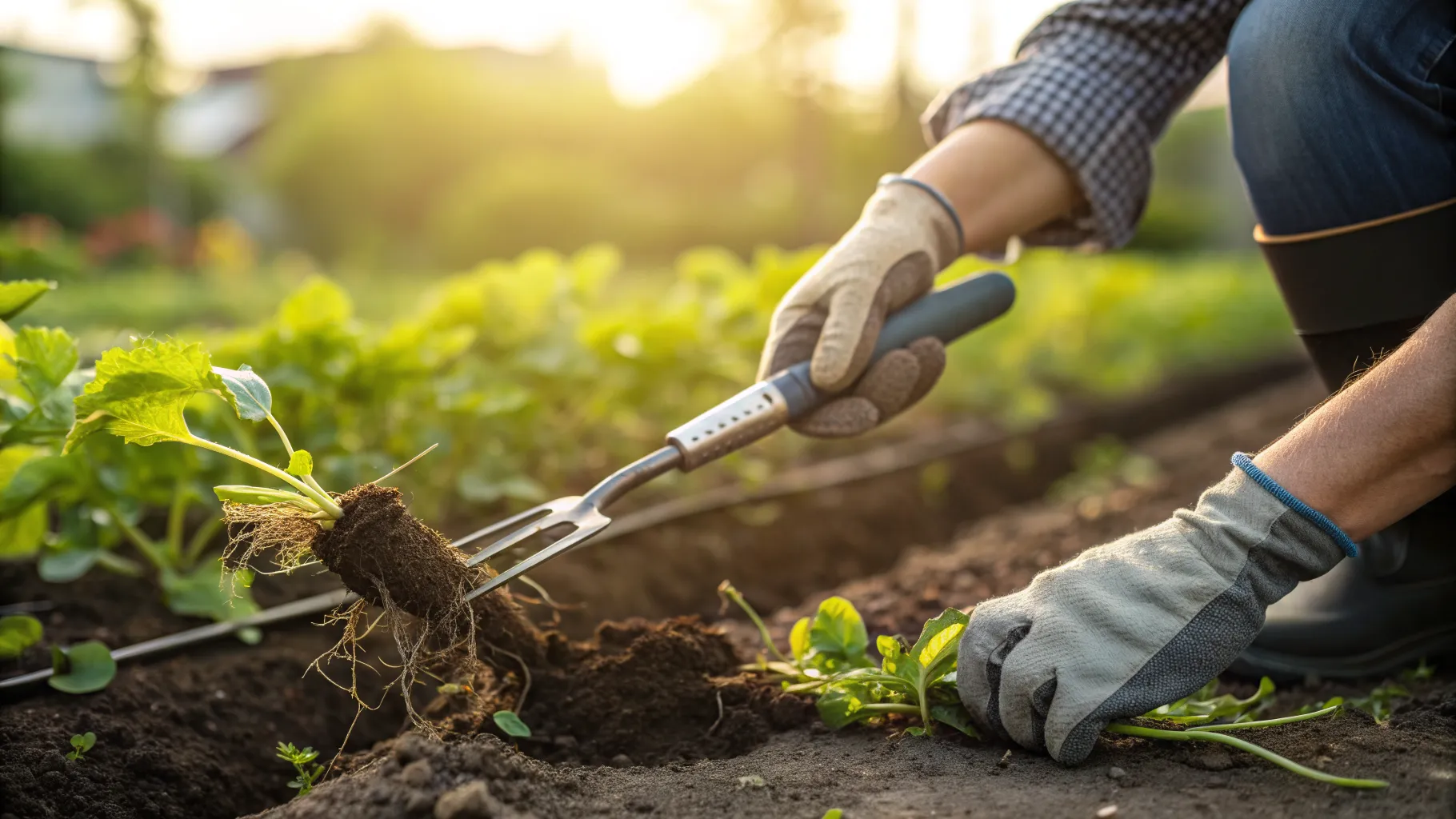
Physical extraction remains one of the most reliable ways to kill weeds down to the root, provided it is done correctly. Pulling by hand is often insufficient for deep-rooted species like dandelions or thistles, as the stem tends to break before the root is fully dislodged. Using specialized gardening tools helps loosen the surrounding soil, allowing for complete extraction without snapping the root.
- Use a long, slender weeding tool or a hori-hori knife to dig deep alongside the main root.
- Water the soil a few hours before weeding, as moist earth relinquishes roots much easier than dry, compacted dirt.
- Grasp the plant as close to the base as possible and apply steady, upward pressure rather than a sudden jerk.
Boiling Water and Thermal Root Weed Control
Applying extreme heat is a highly effective, non-chemical method for destroying unwanted vegetation. Pouring boiling water directly over a plant scalds the leaves and travels down the stem to cook the crown and upper root system. This method works exceptionally well for weeds growing in the cracks of driveways or sidewalks where digging is impossible.
For more extensive areas, gardeners sometimes use flame weeders. These devices pass a targeted flame over the foliage, causing the plant cells to burst. While thermal methods quickly destroy the above-ground foliage and shallow roots, deeply established perennial roots might survive a single treatment and require a few repeated applications to deplete their stored energy completely.
Systemic Solutions for Eradication
When dealing with invasive species or massive overgrowth, systemic applications are often utilized because they are designed to travel through the plant. Unlike contact formulas that only damage the leaves they touch, systemic options are absorbed by the foliage and translocated down into the root system. This internal movement ensures that the entire organism, including the hidden taproot, is destroyed.
It is crucial to apply these solutions when the plant is actively growing, as the vascular system needs to be moving nutrients downward to carry the treatment to the roots. Fall is often considered an ideal time for application, as many perennial plants are actively moving carbohydrates down to their roots for winter storage, pulling the systemic treatment along with them.
Natural Vinegar and Salt Applications
Many homeowners look for household alternatives for garden weed removal, with horticultural vinegar and salt being popular choices. Horticultural vinegar contains a high concentration of acetic acid, which strips the protective coating from leaves and causes rapid dehydration. When combined with salt, the mixture becomes even more hostile to plant life, effectively desiccating the vegetation it touches.
However, it is important to note that vinegar primarily acts as a contact treatment. While it easily kills young weeds with shallow roots, it may not reach the deep roots of established perennials. Furthermore, heavy salt application can alter the soil salinity, making the ground inhospitable for future planting, so this method is best reserved for gravel driveways or patio crevices where no future growth is desired.
Smothering and Soil Solarization
If you have a large patch of land overrun with stubborn weeds, smothering offers a passive yet highly effective way to kill weeds down to the root. By covering the area with thick materials like cardboard, newspaper, or specialized landscape fabric, you completely block sunlight. Without light, the plants cannot perform photosynthesis, eventually starving the root system of essential energy.
Soil solarization takes this concept a step further by utilizing clear or black plastic sheeting pinned tightly over moist soil during the hottest parts of the summer. The plastic traps solar radiation, raising the soil temperature to levels that are lethal to plant roots, seeds, and soil-borne pathogens. This process usually takes several weeks but results in a completely clear planting area without the need for manual digging.
Prevention and Long-Term Maintenance
The most efficient way to manage weeds is to prevent their roots from becoming established in the first place. Applying a thick layer of organic mulch, such as wood chips or shredded bark, creates a physical barrier that stops weed seeds from reaching the soil. Mulch also blocks sunlight, preventing any seeds already in the dirt from germinating and developing roots.
Maintaining dense, healthy desirable plantings also plays a major role in natural weed suppression. Groundcover plants and tightly spaced vegetables or flowers compete for water, nutrients, and light, leaving little room for weeds to take hold. By combining proactive prevention with targeted root weed control, you can maintain a clean, tidy garden with minimal ongoing effort.