15 Leading Centers for AFib Care in the United States
Atrial fibrillation (AFib) is the most common sustained cardiac arrhythmia in the United States, affecting an estimated 10.5 million adults nationwide, a figure that new national estimates show is three times higher than previous projections. 1 With cases rising across all age groups due to population aging, higher rates of obesity, diabetes, sleep apnea, and hypertension, identifying high-quality, specialized care centers has become increasingly consequential for patients and referring physicians alike. 2 AFib significantly increases stroke risk fivefold and doubles the risk of death, making center selection a medically critical decision. 3
The National Framework for AFib Centers of Excellence
In April 2025, the Heart Rhythm Society (HRS) released a formal framework outlining criteria for establishing an Atrial Fibrillation Center of Excellence (CoE). 4 Developed in collaboration with experts from 19 international institutions, the framework specifies requirements for achieving and maintaining CoE status, emphasizing multidisciplinary team composition, early diagnosis protocols, and data-driven treatment to reduce stroke, heart failure, and mortality risk. 4 According to HRS Chair of the AF Centers of Excellence Task Force, T. Jared Bunch, MD, FACC, FHRS, optimal coordinated care for atrial fibrillation is best delivered at Centers of Excellence where comprehensive education, resources, and data-driven approaches ensure the highest standard of treatment. 4
These standards require that centers integrate electrophysiology, cardiothoracic surgery, cardiology, neurology, stroke medicine, and cardiac imaging into a unified care pathway. 5 Published research in the Reviews in Cardiovascular Medicine confirms that multidisciplinary AFib clinics have emerged as the leading model for comprehensive management, improving patient outcomes and reducing overall healthcare burden through coordinated risk factor modification, rhythm control, and thromboembolic prevention. 6
Nationally Ranked Hospital Programs
U.S. News and World Report publishes annual specialty rankings for cardiology, heart surgery, and vascular surgery, evaluating nearly 4,500 facilities on patient outcomes (45%), hospital structure (35%), expert opinion surveys (12%), patient experience (5%), and transparency participation (3%). 7 The most recent rankings placed NYU Langone Hospitals at No. 1 for cardiology and heart surgery, followed by Mount Sinai Hospital at No. 2 and Cleveland Clinic at No. 3, after Cleveland Clinic held the top position for five consecutive years. 7 These programs all maintain dedicated electrophysiology divisions with active AFib treatment pathways.
The following table summarizes 15 leading centers for AFib care identified through national rankings, published clinical programs, and documented procedural capabilities.
| Center | Location | Notable AFib Program Feature |
|---|---|---|
| Cleveland Clinic Heart, Vascular and Thoracic Institute | Cleveland, OH | Led the AVANT GUARD trial; first major study of pulsed field ablation (PFA) as first-line therapy for persistent AFib, published in the New England Journal of Medicine |
| NYU Langone Hospitals | New York, NY | Ranked No. 1 in cardiology and heart surgery by U.S. News; advanced electrophysiology and arrhythmia programs |
| Mount Sinai Hospital (Wiener Cardiovascular Institute) | New York, NY | Ranked No. 2 nationally; minimally invasive AFib interventions and arrhythmia-focused research |
| Mayo Clinic | Rochester, MN | Consistently top-ranked for cardiology; advanced electrophysiology, ablation, and leadless pacemaker services |
| Massachusetts General Hospital (Mass General Brigham) | Boston, MA | Dedicated AFib Program specializing in catheter and surgical ablation; expanded community access through Salem Hospital affiliate |
| Johns Hopkins Hospital | Baltimore, MD | Multidisciplinary AFib care integrating advanced imaging, electrophysiology, and anticoagulation management |
| Michigan Medicine Cardiovascular Center | Ann Arbor, MI | Pioneered catheter ablation research in the early 2000s under Drs. Fred Morady and Hakan Oral; full spectrum of AFib treatments |
| UCLA Medical Center | Los Angeles, CA | Hybrid ablation procedures for persistent AFib; advanced cardiac electrophysiology services |
| Keck Medicine of USC | Los Angeles, CA | Uses intracardiac ultrasound and 3D mapping for personalized AFib treatment planning |
| UC Davis Health | Sacramento, CA | Research shows catheter ablation lowers death and stroke risk; arrhythmia services under Prof. Uma N. Srivatsa |
| Northwell Health | New York, NY | System director of electrophysiology Laurence M. Epstein, MD, leads guideline-aligned rhythm control programs |
| Inova Schar Heart and Vascular | Northern Virginia | Leads region in AFib care; pioneering physiologic pacing to prevent AFib in pacemaker patients |
| WVU Heart and Vascular Institute | Morgantown, WV | State's only dedicated multidisciplinary AFib program; first in WV to perform robotic-assisted AFib ablation; uses WATCHMAN FLX and cryoballoon |
| NCH Rooney Heart Institute (Naples Comprehensive Health) | Naples, FL | Designated AFib Center of Excellence; multidisciplinary team led by Director of AFib Electrophysiology Dr. Dinesh Sharma |
| Ascension St. Vincent's Riverside | Jacksonville, FL | Treated its 1,000th patient with pulsed field ablation as of March 2026, marking rapid regional adoption of next-generation AFib technology |
Procedural Innovations Defining Leading Centers
Pulsed field ablation (PFA) has emerged as a defining technology separating high-volume AFib centers from general cardiology programs. Unlike traditional radiofrequency or cryoablation techniques, PFA uses ultra-rapid electrical pulses to selectively create pores in arrhythmia-generating heart cells, sparing surrounding structures such as the esophagus and nearby nerves. 8 The Cleveland Clinic-led AVANT GUARD trial, presented at the Heart Rhythm Society's annual meeting and simultaneously published in the New England Journal of Medicine, found that PFA as a first-line treatment produced significantly less recurrence of irregular heart rhythms compared to antiarrhythmic drug therapy in patients with persistent AFib. 9
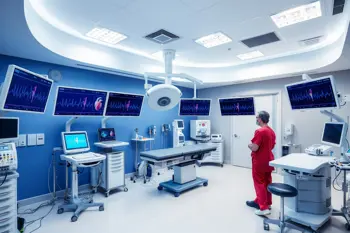
Beyond PFA, leading centers routinely offer intracardiac ultrasound, 3D electroanatomic mapping, robotic-assisted ablation, WATCHMAN FLX left atrial appendage closure devices, cryoballoon ablation, and physiologic pacing methods designed to reduce iatrogenic AFib risk in pacemaker recipients. 10 WVU Heart and Vascular Institute was notably the first program in West Virginia to perform robotic-assisted AFib ablation, while also leading multiple clinical trials and participating in national guideline development. 11 Research at UC Davis Health further reinforces that fewer than 1% of eligible patients currently receive catheter ablation early in their disease course, despite evidence that early intervention lowers mortality and stroke risk. 1
What Distinguishes a High-Quality AFib Center
The most distinguishing structural features of a top-tier AFib center include dedicated multidisciplinary teams, high procedural volume, active participation in clinical trials, and integration of electrophysiologists who hold subspecialty training in cardiac rhythm disorders. Published research notes that AFib ablation success rates for paroxysmal AFib approach 75 to 90 percent with a single procedure at experienced centers, though outcomes are lower for persistent forms and improve meaningfully when intervention occurs earlier in the disease course. 12 Michigan Medicine's clinical associate professor Rakesh Latchamsetty has noted that comorbidities such as diabetes, obesity, and sleep apnea compound AFib risk, reinforcing that leading centers must also address underlying risk factors rather than treating rhythm abnormalities in isolation. 13
A further distinguishing factor is guideline adherence. The American Heart Association, American College of Cardiology, and European Society of Cardiology updated their joint AFib guidelines to prioritize rhythm control and early intervention, a shift that Northwell Health's Dr. Epstein describes as dramatically changing how the condition is managed. 3 Centers that adopt these guidelines as standard protocol, rather than episodically, consistently produce superior outcomes for patients across AFib subtypes.
Risks, Limitations, and Patient Eligibility Considerations
No AFib center, regardless of ranking, eliminates all procedural or clinical risk. Catheter ablation carries recognized complications including vascular access injury, cardiac tamponade, pulmonary vein stenosis, and a small risk of stroke. AFib accounts for an estimated 15% of all strokes in the United States, which underscores that inadequately treated or monitored AFib itself poses greater long-term risk than well-managed intervention. 14 Patients with longstanding persistent AFib, structural heart disease, or significant comorbidities may face lower ablation success rates, and some may require multiple procedures or combination therapy approaches.
Patient eligibility for specific procedures varies by AFib subtype. Paroxysmal AFib (episodes self-terminating within seven days), persistent AFib (lasting more than seven days), and longstanding persistent AFib each require different treatment escalations and risk stratifications. 15 Between 10 and 40 percent of AFib patients report no symptoms, meaning diagnosis often requires proactive cardiac monitoring rather than symptom reporting alone, a point that both UCDavis Health and Lehigh Valley Health Network have publicly emphasized in their patient education programs. 16
Geographic Access and the Role of Regional Programs
Access to leading AFib care is not limited to major academic medical centers. Regional programs at institutions such as the Heart and Vascular Center at Valley View, Augusta Health in Virginia, and HCA Florida Healthcare hospitals have adopted PFA and other next-generation technologies, extending advanced care into communities that previously required travel to metropolitan academic centers. 8 El Camino Health has publicly noted that AFib is increasingly affecting younger, active adults, with U.S. cases expected to reach 12 million by 2030, reinforcing the need for distributed regional expertise. 17
Mass General Brigham's expansion of AFib ablation services to Salem Hospital in communities north of Boston exemplifies how major academic networks are systematically extending subspecialty care to reduce geographic barriers. 18 HCA Healthcare conducted four PFA-related clinical trials across its hospital network, including at St. Mark's Hospital in Salt Lake City, demonstrating that multi-site health systems can accelerate the translation of emerging technologies into broad community-level practice. 19 Patients evaluating care options are advised to consider both the procedural volume and the clinical trial activity of their prospective center, as these factors are consistently associated with superior AFib outcomes in peer-reviewed literature.
Sources
- UC Davis Health - How UC Davis Health meets the growing need for heart rhythm care (health.ucdavis.edu)
- Inova Newsroom - Inova offers two new leading-edge technologies to treat and prevent AFib (inovanewsroom.org)
- Northwell Health - A new era in AFib treatment (northwell.edu)
- Heart Rhythm Society - HRS Announces Framework for Establishing Atrial Fibrillation Centers of Excellence (hrsonline.org)
- Naples Comprehensive Health - Atrial Fibrillation Center of Excellence at NCH Rooney Heart Institute (nchmd.org)
- PubMed Central - Multidisciplinary Atrial Fibrillation Clinics: A Model for Comprehensive Management, Reviews in Cardiovascular Medicine 2025 (pmc.ncbi.nlm.nih.gov)
- Cardiovascular Business - The best heart hospitals in the United States (cardiovascularbusiness.com)
- Valley View Health - Pulse Field Ablation for AFib: Now offered at Valley View (vvh.org)
- Cleveland Clinic Newsroom - Cleveland Clinic-led Trial Shows Pulsed Field Ablation More Effective Than Medications for Persistent Atrial Fibrillation (newsroom.clevelandclinic.org)
- Keck Medicine of USC - Atrial Fibrillation (AFib) Advanced Treatment (keckmedicine.org)
- WVU Medicine - Center for Atrial Fibrillation, WVU Heart and Vascular Institute (wvumedicine.org)
- Dr. Ilyas Colombowala MD - AFib Ablation in Houston, Advanced Cardiovascular Institute (colombowala.com)
- The Michigan Daily - Michigan Medicine Cardiovascular Center offers full spectrum of treatments for growing number of AFib patients (michigandaily.com)
- HCA Florida Healthcare - AFib Awareness: Know the signs and seek treatment (hcafloridahealthcare.com)
- UC Davis Health - Atrial Fibrillation, Heart and Vascular (health.ucdavis.edu)
- Lehigh Valley Health Network - What's AFib and Why Does It Matter (lvhn.org)
- El Camino Health Facebook - AFib increasingly affecting younger adults, cases expected to reach 12 million by 2030 (facebook.com/elcaminohealth)
- Mass General Brigham Facebook - AFib ablation expansion to Salem Hospital communities (facebook.com/MassGeneralBrigham)
- HCA Healthcare Magazine - Advancing Cardiac Care Through Clinical Trials (magazine.hcahealthcare.com)