Best hospitals for cataract surgery in the United States: A Comprehensive Analytical Review of Clinical Outcomes
Patients seeking the best hospitals for cataract surgery in the United States must navigate several high-performing academic medical centers and specialized regional ambulatory clinics. Selecting the appropriate clinical environment is vital for ensuring optimal visual outcomes. This analytical guide evaluates the leading institutions, surgical methodologies, and patient considerations defining the current landscape of ophthalmic care.
The Clinical Landscape of Cataract Surgery
Cataracts represent a natural part of the aging process, characterized by the gradual clouding of the eye's natural crystalline lens. According to clinical data, more than 3.7 million cataract procedures are performed annually in the United States, showcasing the sheer scale of this vision-restoring intervention 1. The National Eye Institute projects that the domestic cataract population could expand to approximately 50 million individuals by the year 2050 2 3.
The primary surgical intervention involves removing the opacified lens and replacing it with a clear synthetic counterpart known as an intraocular lens 2. Organizations such as the American Academy of Ophthalmology highlight that modern technological pathways have transitioned this delicate microsurgery into a highly efficient outpatient procedure 4. Most uncomplicated procedures require only ten to fifteen minutes of active surgical time per eye 1.
Top-Ranked Academic Eye Institutes in the Nation
The annual evaluations published by major health grading organizations highlight a select group of academic medical centers that consistently define the standard of ophthalmic excellence. At the absolute forefront of these rankings is the Bascom Palmer Eye Institute, part of the University of Miami Health System, which has secured the number-one spot for twenty-two consecutive years 5 6.
Close behind are other elite centers such as the Wills Eye Hospital in Philadelphia and the Wilmer Eye Institute at Johns Hopkins Hospital in Baltimore, which regularly rank among the top three specialized programs in the nation 5 7. These institutions operate as major tertiary referral hubs, receiving patients who present with severe ocular comorbidities. The table below outlines the top eleven ophthalmology hospitals in the United States for the 2025-26 cycle, as determined by clinical specialty evaluations 7:
| Rank | Institution | Location |
|---|---|---|
| 1 | Bascom Palmer Eye Institute | Miami, FL |
| 2 | Wills Eye Hospital | Philadelphia, PA |
| 3 | Wilmer Eye Institute | Baltimore, MD |
| 4 | Mass Eye and Ear | Boston, MA |
| 5 | Stein and Doheny Eye Institute | Los Angeles, CA |
| 6 | University of Iowa Health Care | Iowa City, IA |
| 7 | Duke University Hospital | Durham, NC |
| 8 | Kellogg Eye Center | Ann Arbor, MI |
| 9 | John A. Moran Eye Center | Salt Lake City, UT |
| 10 | Cole Eye Institute | Cleveland, OH |
| 11 | UCSF Health-UCSF Medical Center | San Francisco, CA |
Ambulatory Surgery Centers Versus Main Hospital Departments
While prestigious academic medical centers excel in teaching, research, and highly complex pathology, a significant portion of standard cataract procedures has shifted toward outpatient environments. Ambulatory Surgery Centers, often abbreviated as ASCs, represent highly specialized facilities designed exclusively for same-day outpatient procedures 1. Recent evaluations of over 4,400 ASC facilities nationwide indicate that California, Florida, and Texas contain the highest density of top-rated ophthalmology ASCs, with each state hosting more than twenty leading locations 8.
Choosing between a hospital outpatient department and an independent ASC depends on multiple factors, including patient health status and cost structures. Independent ASCs often report lower overall facility fees and high patient throughput, which can contribute to streamlined post-operative workflows and reduced risk of environmental exposure. Conversely, patients with substantial systemic cardiovascular or neurological comorbidities may be more appropriately served within a hospital outpatient department, where immediate access to comprehensive emergency support services is readily available.
Comparative Analysis of Surgical Techniques
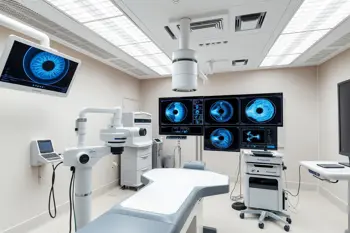
Modern ophthalmic surgery employs two primary methodologies to access and remove a clouded lens: traditional manual phacoemulsification and femtosecond laser-assisted cataract surgery 9. Traditional phacoemulsification utilizes a microscopic manual incision made by a surgeon using a hand-held blade, followed by the application of ultrasonic energy to break apart the cataract before extraction. This method remains the global clinical standard due to its remarkable track record, cost efficiency, and low rate of serious intraoperative complications.
In contrast, femtosecond laser-assisted cataract surgery replaces manual incisions with a computer-guided, high-precision laser 10 11. This technology, utilizing systems like the Catalys Precision Laser, maps the patient's unique ocular anatomy in three dimensions using optical coherence tomography 12. The laser creates precise corneal incisions, performs the capsulotomy with ten times the accuracy of manual tools, and pre-segments the cataract, reducing the amount of ultrasonic energy required 12.
Understanding Intraocular Lens Options
The selection of an intraocular lens represents a critical juncture in the pre-operative planning phase, as the chosen implant dictates the patient's post-surgical visual range. Standard monofocal lenses are designed to focus light at a single distance, typically set for far vision, requiring the patient to utilize reading glasses for intermediate tasks like computer work or near activities 13. Monofocal implants represent the baseline standard and are almost universally covered by basic healthcare plans and public insurance 13 14.
For patients desiring greater freedom from corrective eyewear, premium intraocular lenses offer advanced optical designs. These include multifocal and extended-depth-of-focus lenses, which partition light to facilitate clear vision across multiple focal points, and toric lenses, which are specifically engineered to neutralize corneal astigmatism 13. A highly advanced option, the Light Adjustable Lens, allows clinicians to fine-tune the lens power using ultraviolet light treatments after the surgical wound has fully healed 15.
Financial Considerations and Insurance Frameworks
The total cost of cataract surgery in the United States is composed of several elements, including professional surgeon fees, facility fees, anesthesia administration, pre-operative biometry, and the physical lens implant 13. For patients covered by Medicare, the procedure is considered a covered service when determined to be medically necessary, meaning the cataract significantly interferes with daily activities 16. The standard Medicare-approved rate for basic cataract surgery typically ranges between $2,500 and $3,500 per eye 13.
For patients with private or employer-sponsored insurance, the average out-of-pocket expense across domestic clinics averages approximately $1,653 per eye, depending on deductibles, copayments, and facility networks 14. Without insurance, standard cataract surgery costs generally range from $2,500 to $4,500 per eye when performed at an ambulatory surgery center, and can rise to between $3,500 and $7,000 per eye at a hospital outpatient department 13.
Sources
- Miami Eye Institute
- National Eye Institute
- World Health Network
- American Academy of Ophthalmology
- Ophthalmology Times
- MenaFN
- Becker’s ASC Review
- Becker’s ASC Review
- American Society of Cataract and Refractive Surgery
- Tucson 2020
- Excel Laser Vision Institute
- SightMD
- Free Market Healthcare
- AllClinics
- Alvarado Eye Associates
- Centers for Medicare & Medicaid Services