Affordable used boats for first-time buyers: A Global Industry Report and Practical Selection Guide
Navigating the secondary marine market reveals that finding affordable used boats for first-time buyers requires an analytical approach to mechanical reliability and structural integrity. Across various regions, budget-conscious consumers seek entry-level fiberglass and aluminum vessels as practical starting points. Evaluating these options involves comparing historical pricing averages rather than relying on temporary market fluctuations. Experts advise focusing on documented service histories to mitigate the inherent risks of pre-owned equipment.
Historical market trends indicate that vessels from the late 1990s and early 2000s are highly sought after by those entering the boating world. Fiberglass runabouts and basic utility models represent standard entry-level options balancing purchase cost with operational simplicity. According to market data, approximately 90% of pre-owned vessels priced below a certain threshold may exhibit deferred maintenance or hidden structural wear 1. Consequently, a thorough evaluation of the hull and propulsion systems is crucial for minimizing subsequent repair outlays.
Comparing Fiberglass Bowriders and Runabouts
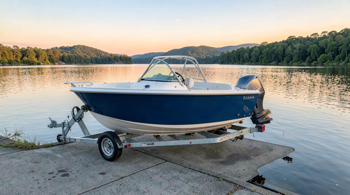
Fiberglass bowriders remain a dominant category for recreational use due to their versatile seating arrangements and balanced handling. Historical records show that models like the 2001 Bayliner 175 Capri, equipped with a 135-horsepower engine, frequently serve as practical starter options 2. These 17-foot vessels are generally easy to launch and recover, making them manageable for individuals learning basic trailering and docking procedures 2.
A similar model, the 2003 Bayliner 175BR, showcases the standard configuration of a single-axle trailer, a 3.0-liter engine, and essential canvas covers 3. While these fiberglass units are highly functional, buyers must examine the condition of the sterndrive bellows, fuel filters, and gear lubricants 3. For those seeking alternative designs, options like the 2022 Bayliner Element M17 utilize an M-hull design to enhance lateral stability, which reduces tipping risks when passengers move about the deck 4.
Aluminum and Utility Vessels for Budget-Conscious Anglers
For individuals focusing on inland waterways, small aluminum vessels represent the most direct entry point into marine recreation 5. These lightweight boats require significantly less horsepower and are highly portable, often transportable via small trailers or truck beds 6. Flat-bottom aluminum hulls, such as those in the Tracker Grizzly series, provide excellent stability for shallow-water operations 7.
The simplicity of aluminum construction also means lower maintenance requirements compared to fiberglass 6. Marine reports note that entry-level fishing setups, such as the Princecraft Seasprite, offer a durable platform for shallow river and estuary access 8 5. However, prospective owners must carefully inspect the hull seams, rivets, and transom reinforcements to verify structural integrity before completing a purchase 6.
Specialized Watercraft: Pontoon Boats and River Cruisers
Pontoon boats have grown in popularity among beginners due to their high passenger capacity, stability, and ease of handling. Traditional models like the 2007 Princecraft Vectra offer spacious layouts suitable for group outings 9. In recent years, alternative designs such as the Sea-Doo Switch have introduced jet-propulsion systems, eliminating exposed propellers and simplifying low-speed maneuverability for novice captains 10. These modular platforms represent a distinct segment of the modern pre-owned market.
For inland river systems, compact river cruisers offer unique living accommodations. Vessels like the 23-foot Viking narrow beam cruiser, powered by a 15-horsepower outboard, provide a four-berth layout with an integrated galley and bathroom 11. These low-maintenance cruisers allow for extended weekend excursions while remaining relatively easy to manage. Larger options, such as the 34-foot Skylark cruiser stern narrowboat, represent potential liveaboard options but require a larger capital investment 12.
Evaluating the True Cost of Ownership
A comprehensive budget for a used vessel must extend far beyond the initial purchase price to prevent unforeseen financial strain. Industry guidance suggests allocating an additional 10% to 15% of the purchase price specifically for immediate maintenance and safety gear 13. Recurring annual expenses include insurance coverage, slip or storage fees, fuel, and routine mechanical servicing 14.
First-time buyers should also evaluate regional registration mandates and taxes, which vary significantly by jurisdiction 15. For example, registering a vessel in states like Oklahoma or Florida involves specific documentation and safety equipment audits 15 16. Understanding these administrative and operational costs beforehand ensures that the investment remains practical over time 16.
Safety Standards, Inspection, and Regulatory Compliance
Prior to finalizing any transaction, conducting a pre-purchase marine survey is highly recommended, particularly for boats exceeding 20 feet in length 13. A certified technician can identify hidden water damage in fiberglass stringers or evaluate engine compression to ensure the vessel is seaworthy 17. Furthermore, the U.S. Coast Guard mandates specific safety practices and onboard equipment, including life jackets, distress signals, and fire extinguishers, which must be verified 18.
Compliance with environmental and safety organizations is another critical aspect of boat ownership. The National Fire Protection Association outlines strict fire prevention measures, especially regarding fuel lines and electrical wiring on pre-owned vessels 19. Additionally, the U.S. Environmental Protection Agency emphasizes the proper handling and disposal of used engine oil during routine maintenance to protect local aquatic ecosystems 20. Finally, buyers should always verify the vessel's hull identification number and title to ensure the transaction is legitimate 21.
Sources
- Fleet Watch - Used Boat Market Analysis
- Boat Shop Group - Bayliner 175 Capri
- Woodard Marine - 2003 Bayliner 175BR
- Aquatic Quays - Bayliner Element M17
- Chivers Marine - Small Aluminium Beginners Guide
- Boat and Sailboat - 10 ft Aluminum Jon Boat
- Ask.com - 5 Affordable Jon Boat Models
- AutoTrader - 2026 Princecraft Seasprite
- AutoTrader - 2007 Princecraft Vectra
- Energy Powersports - Sea-Doo Switch Guide
- Lakeland Leisure Boat Sales - Delilah 23ft Viking
- Lakeland Leisure Estates - Skylark 34ft
- National Marine Lenders Association
- Cope Marine - First-Time Boat Buyer Guide
- Nichols Marine - First-Time Guide OK
- Slipstream Boating - Buy a Boat in Florida
- Boating Magazine
- U.S. Coast Guard
- NFPA
- U.S. Environmental Protection Agency
- FBI