Essential Window Cleaning Tips for a Spotless Home
Maintaining clean windows can dramatically improve the amount of natural light entering a living space while enhancing the overall appearance of a property. While many homeowners view window washing as a tedious chore, understanding a few fundamental window cleaning tips can make the process faster and highly effective. Implementing the right strategies ensures that glass surfaces remain clear, protected, and free from unsightly marks.
The Importance of Choosing the Right Weather
Washing windows on a bright, sunny day might seem like a great idea, but the heat of the sun causes glass cleaner to dry entirely too quickly. This rapid drying process leaves behind stubborn streaks and soap residue before you even have a chance to wipe them away.
A cloudy, overcast day is the optimal time for home window cleaning. The cooler temperatures allow the cleaning solution to remain on the glass long enough to dissolve dirt, dust, and grime without evaporating prematurely. Working on a cooler day provides ample time to meticulously clear the glass for a perfect finish.
Gathering the Essential Supplies
Before starting the task, having the right tools on hand will make window washing much more efficient. A standard paper towel often leaves lint behind and pushes dirt around rather than lifting it off the glass, making it a poor choice for achieving a pristine look.
- A high-quality squeegee with a fresh rubber blade
- Several clean microfiber cloths
- A bucket for your preferred cleaning solution
- A soft scrubber or non-abrasive sponge
Preparing an Effective Cleaning Solution
While commercial glass cleaners are widely available, a homemade solution often provides superior results for streak free window cleaning. A simple mixture of warm water and a few drops of dish soap works exceptionally well to break down grease and general environmental buildup.
For particularly dirty glass, adding distilled white vinegar helps cut through tough spots and mineral deposits. Mixing equal parts water and vinegar creates a natural, highly effective cleaner that leaves windows sparkling without relying on harsh chemicals or heavy artificial fragrances.
Mastering the Proper Squeegee Technique
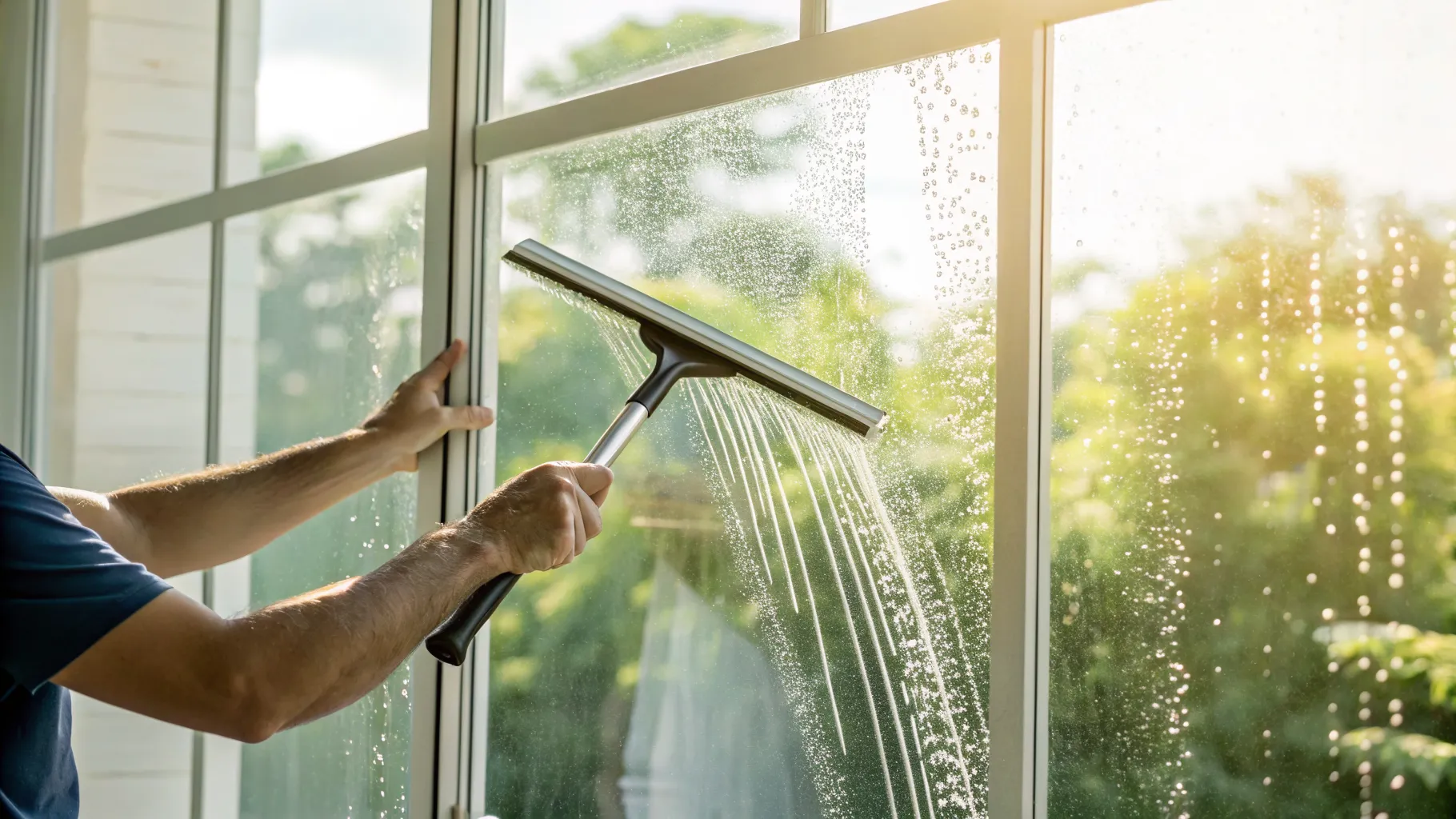
The secret to professional-level window washing tips lies in the proper use of a squeegee. Starting at the top corner of the glass, pull the squeegee straight down or use a continuous, overlapping S-pattern to glide the water away without lifting the blade from the surface.
It is absolutely essential to wipe the rubber blade of the squeegee with a clean cloth after every single pass. A wet or dirty blade will simply transfer water and grime back onto the clean windows, effectively defeating the purpose of the wash and creating more work.
Tackling Tracks and Window Frames First
Many people focus entirely on the glass, forgetting that the frames and tracks harbor a significant amount of dust, dead bugs, and outdoor dirt. If you clean the glass first, any subsequent cleaning of the frames can easily splash muddy water right back onto your pristine surfaces.
Use a vacuum with a brush attachment to remove loose debris from the window tracks. Follow up by wiping down the sills and frames with a damp cloth or a mild all-purpose cleaner to ensure the entire window structure is spotless before you ever touch the glass.
Handling Stubborn Stains and Hard Water
Exterior windows often suffer from hard water spots, bird droppings, or tree sap that regular washing cannot easily remove. Scrubbing too aggressively with abrasive materials like steel wool can permanently scratch the glass and ruin the window.
Instead, apply a targeted cleaner or undiluted vinegar directly to the stubborn spot and let it sit for a few minutes to soften the residue. Gently lifting the stain with a soft sponge or a specialized glass-safe scraper will remove the blemish safely without causing any lasting damage.
Drying and Detailing the Edges
Even with the absolute best squeegee technique, a small amount of water typically pools at the edges and bottom sill of the window. Ignoring these lingering drips can lead to fresh water spots or potential moisture damage to wooden frames over time.
Keep a dry, lint-free microfiber cloth dedicated solely to detailing the perimeter of the glass. Run this cloth carefully along the edges to absorb any remaining moisture, ensuring a truly flawless and professional-looking finish throughout the entire home.