7 Proven Ways to Treat a Weed Infested Lawn | Ultimate Lawn Care Tips
Facts:
- Most common lawn weeds are opportunistic and thrive in stressed turf.
- A major trend for homeowners is adopting integrated pest management for sustainable lawn care.
Reclaiming Your Turf: A Strategic Approach to Weed Removal
A lush, green lawn is the centerpiece of many homes, but a weed infestation can quickly turn that dream into a frustrating reality. Tackling this problem requires more than just occasional pulling; it demands a strategic approach to lawn weed control that addresses both current weeds and their underlying causes. Understanding the most effective ways to remove weeds from lawn areas is the first step toward restoring your turf's health and beauty. This guide provides a comprehensive overview of proven methods and essential lawn care tips to help you win the battle against invasive plants for good.
The Definitive 7 Weed Infested Lawn Treatment Methods
Regaining control over a lawn overrun by weeds involves a multi-faceted strategy. Simply treating the visible problem is a short-term fix. For lasting results, you need to combine removal techniques with practices that promote a healthy, dense turf that can naturally choke out new weeds. Below are seven effective methods that form a complete 7 weed infested lawn treatment plan, incorporating various weed management ideas for long-term success.
1. Manual Removal: The Hands-On Approach
For smaller infestations or specific, stubborn weeds like dandelions and thistles, manual removal is highly effective. The key is to remove the entire plant, including the root system. Using a specialized weeding tool, like a dandelion fork or stand-up weeder, can make this task much easier and more efficient. It's best to pull weeds after a light rain when the soil is moist and loose, which helps the entire root slide out without breaking. This is one of the most fundamental ways to remove weeds from lawn areas and ensures they don't grow back from remaining root fragments.
2. Mowing High and Frequently
One of the best preventative lawn care tips is to adjust your mowing habits. Mowing your lawn too short can stress the grass and expose the soil to sunlight, creating a perfect environment for weed seeds to germinate. By setting your mower to a higher setting (around 3-4 inches for most grass types), you allow the grass blades to grow taller and create a dense canopy. This canopy shades the soil, blocking the sunlight that many weeds need to sprout. Regular mowing also cuts off the heads of flowering weeds before they can go to seed, significantly reducing their spread.
3. Strategic Watering Practices
How you water your lawn plays a crucial role in lawn weed control. Shallow, frequent watering encourages shallow root growth in your grass, making it less resilient to drought and more susceptible to weed invasion. Instead, water deeply but infrequently. This encourages your grass to develop deep, strong roots that can outcompete weeds for water and nutrients. A deep watering once or twice a week is generally more effective than a light sprinkle every day. This is one of the most overlooked but impactful weed management ideas.
4. Pre-Emergent Herbicide Application
Prevention is a cornerstone of effective lawn weed control. Pre-emergent herbicides work by creating a chemical barrier in the soil that prevents weed seeds from germinating. The timing of application is critical for success. They should be applied in early spring before soil temperatures consistently reach 55°F to target summer annuals like crabgrass, and again in the fall to prevent winter weeds. Corn gluten meal is a popular organic alternative that can be effective when used correctly as part of a long-term strategy.
5. Targeted Post-Emergent Herbicide Use
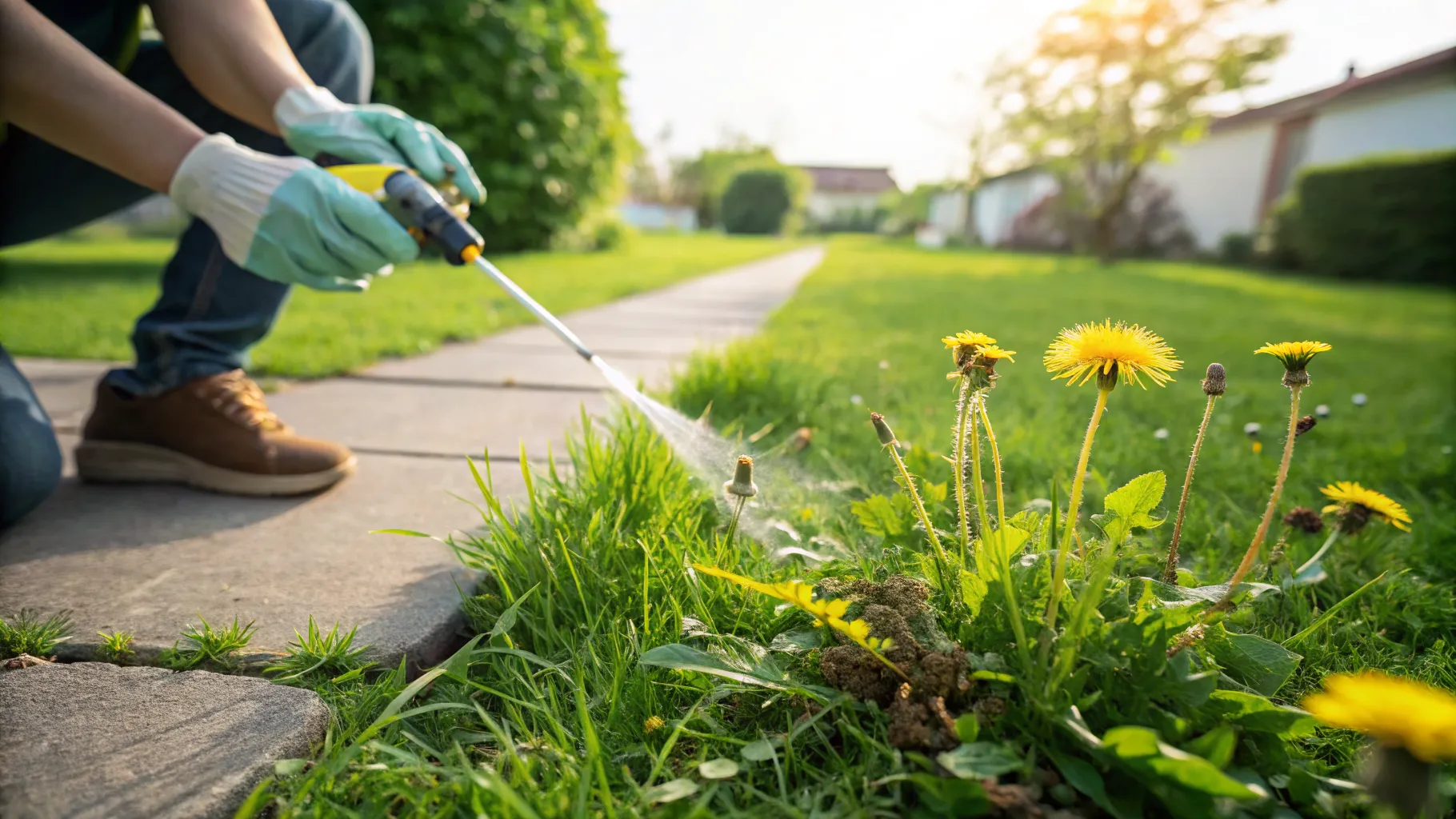
When weeds are already actively growing, a post-emergent herbicide is necessary. It's vital to choose a selective herbicide designed to kill broadleaf weeds without harming your specific type of grass. Always read the label carefully to ensure compatibility and follow application instructions precisely. For scattered weeds, spot-treating with a liquid spray is often more effective and environmentally responsible than broadcasting a granular product over the entire lawn. This targeted approach is a key part of any effective 7 weed infested lawn treatment plan.
6. Lawn Aeration and Overseeding
Compacted soil restricts the flow of air, water, and nutrients to the roots of your grass, weakening it and making it vulnerable to weeds. Core aeration, the process of removing small plugs of soil from the lawn, alleviates compaction and improves turf health. The best time to aerate is during the growing season. Following aeration with overseeding—spreading new grass seed over your existing lawn—is one of the best ways to remove weeds from lawn indirectly. The new grass fills in bare or thin patches, creating a thicker turf that leaves no room for weeds to establish themselves.
7. Improving Soil Health and Fertilization
A healthy lawn starts with healthy soil. Weeds often thrive in soil that is deficient in key nutrients or has an improper pH level. Conduct a soil test to understand what your lawn needs. Based on the results, you can amend the soil and implement a proper fertilization schedule. A well-fed lawn is stronger, denser, and more capable of crowding out weeds on its own. Proper fertilization is one of the most important long-term lawn care tips for sustainable weed prevention.
Actionable Lawn Care Calendar for Weed Prevention
Staying on top of your lawn care is essential for preventing future infestations. Here are some actionable weed management ideas organized by season:
- Early Spring: Apply a pre-emergent herbicide to prevent crabgrass and other summer annuals. Rake up any remaining fall debris.
- Late Spring: Begin your regular mowing schedule, keeping the grass high. Spot-treat any broadleaf weeds that have emerged with a post-emergent herbicide.
- Summer: Water deeply and infrequently to encourage strong root growth. Monitor for insect or disease problems that can weaken turf and allow weeds to take hold.
- Fall: This is the ideal time to aerate and overseed. Fertilize with a winterizing formula to help the grass store nutrients for the coming cold season. A second pre-emergent application can control winter weeds.
Frequently Asked Questions
What is the most effective way for long-term lawn weed control?
The most effective strategy for long-term lawn weed control is not a single action but a comprehensive approach focused on turf health. Combining cultural practices like high mowing, deep watering, and proper fertilization with timely aeration and overseeding creates a thick, resilient lawn that naturally resists weed invasion. Herbicides should be used as tools to manage existing problems while you improve the underlying conditions.
Can I permanently get rid of weeds in my lawn?
While complete and permanent eradication is nearly impossible due to dormant seeds in the soil and seeds blowing in from neighboring areas, you can reduce the weed population to a very manageable level. Consistent application of the 7 weed infested lawn treatment methods discussed will ensure your lawn remains dominant and weeds become a minor nuisance rather than a major problem.
When is the best time to start treating a weed-infested lawn?
You can start implementing better lawn care tips at any time. However, the most impactful times for treatment are early spring and fall. Spring is crucial for applying pre-emergents to stop seeds from germinating, while fall is the best time to kill perennial broadleaf weeds and to strengthen your lawn for the following year through aeration and overseeding.
References
- University of Maryland Extension - Lawn Weed Control Guide
- Purdue University Turfgrass Science Program - Weed Management
- The Royal Horticultural Society - Lawn Weeds: Control
- Cornell University Cooperative Extension - Turfgrass and Landscape Weed ID