Chandeliers for Dining Room: Design, Sizing, and Installation Guide
When planning a dining space, selecting the right lighting is one of the most critical decisions a homeowner can make to establish ambiance and visual balance. Selecting chandeliers for dining room environments requires a careful look at both aesthetic form and mathematical proportion to ensure the fixture enhances the room without overwhelming it. By understanding the relationships between room dimensions, table shapes, and hanging heights, you can transform a standard dining area into a sophisticated, well-lit gathering space.
Sizing Rules and Calculations for Dining Table Harmony
Choosing the correct size for a dining room chandelier involves precise measurements rather than guesswork. An industry-standard method for determining the proper fixture diameter is based on the room’s overall footprint. By adding the length and width of the room in feet and converting that sum directly into inches, you can establish an ideal diameter for the fixture. For example, a dining room that measures 12 feet by 10 feet yields a sum of 22, indicating that a 22-inch diameter chandelier is highly proportional for the space 1.
When sizing a light fixture directly to a dining table, the chandelier’s diameter should ideally measure between one-half and two-thirds of the total width of the table 1. To prevent accidental head bumps and maintain clean visual lines, the fixture should also remain at least 12 inches narrower than the dining table on all sides. This boundary ensures a comfortable perimeter for guests sitting at the table while keeping the overhead scale visually balanced.
Hanging Height and Light Distribution Standards
Positioning the chandelier at the correct height is essential for both functional illumination and comfortable eye contact across the dinner table. For standard ceilings, the bottom of the chandelier should hang exactly 30 to 36 inches above the dining table surface. This height range is widely accepted by design professionals because it provides optimal light distribution without blocking the sightlines of seated guests.
In homes with higher ceilings, adjusting the drop length is necessary to prevent the fixture from looking like it is floating aimlessly in space. For every foot of ceiling height above the standard 8 feet, designers recommend raising the fixture by approximately 3 inches. High-ceiling installations, such as double-height foyers or vaulted dining rooms, benefit from multi-tiered or linear suspension chandeliers that draw the eye upward and anchor the vertical volume 2. Tailoring the drop length to the room’s architectural boundaries ensures the installation feels deliberate and balanced.
Selecting Shapes Based on Table Geometry
Matching the geometry of your dining table to the silhouette of your chandelier creates a cohesive design narrative. Linear chandeliers are highly recommended for elongated rectangular or oval tables, as they distribute light evenly across the entire surface. Circular, square, or drum-shaped fixtures work best over round or square tables, reinforcing the natural lines of the furniture below. Standard guidelines for matching shapes include:
- Linear and Rectangular Fixtures: Best for rectangular tables, long dining surfaces, and double-island open-concept spaces 3.
- Single-Tier Circular Fixtures: Ideal for round tables, creating a centralized, intimate focal point 3.
- Multi-Tiered or Modular Designs: Highly suited for square tables or spacious, tall-ceiling formal dining rooms requiring vertical presence.
Material Choices and Aesthetic Impact
The materials utilized in a chandelier dictate how light behaves in a space. Highly refractive materials like K9 crystal, handblown glass, and polished metals maximize brilliance by scattering light in multiple directions, making them popular choices for formal, traditional dining rooms. Conversely, fixtures featuring matte black metal, woven rattan shades, or concrete domes offer a more subdued, contemporary look by focusing the light downward as functional task illumination 4.
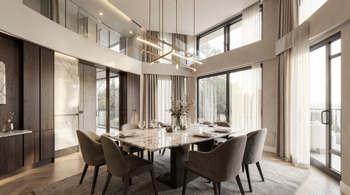
Current design trends highlight a shift toward natural, organic textures and unique mineral elements. Innovations include organic branch frames, white Madagascar crystal, Spanish marble, and cascading layers of sculpted frosted glass panels. These natural materials provide rich, tactile details that add architectural interest to modern luxury interiors, even when the light is turned off.
Illumination Trends and Energy Efficiency Standards
Modern dining room lighting is increasingly dominated by energy-efficient technologies. Integrated LED fixtures now account for more than 60% of new dining room chandelier sales. This transition is largely driven by the long lifespan of LEDs and the incredible design flexibility they offer, allowing for sleek, ultra-slim profiles that would be impossible to achieve with bulky traditional incandescent sockets. Many contemporary fixtures also offer adjustable color temperatures, ranging from a warm 3000K amber glow to a neutral 4000K light, depending on the desired atmosphere.
To achieve a fully functional lighting scheme, integrating dimming capabilities is highly recommended. Dimmable setups allow homeowners to seamlessly transition the room’s mood from bright task lighting for casual family projects to soft, low-level ambient light for formal dinner parties. Modern smart chandeliers can even connect to wall keypads or mobile applications, making it easy to schedule, automate, and customize illumination levels at any time.
Installation, Weight, and Structural Considerations
Prior to purchasing a dining room chandelier, verifying the structural capacity of your ceiling junction box is a safety priority. Standard junction boxes are rated for fixtures weighing up to 50 pounds. Heavy luxury chandeliers crafted from solid marble, thick iron, or dense crystal can easily exceed this limit, requiring the installation of a heavy-duty, commercial-grade support brace. A comparative overview of typical chandelier attributes can help guide preparation:
| Chandelier Category | Typical Materials | Weight Range | Recommended Support |
|---|---|---|---|
| Modern Minimalist / LED | Aluminum, Acrylic, Thin Glass | 10 to 25 lbs | Standard Junction Box |
| Natural Mineral / Luxury | Marble, Alabaster, Selenite | 30 to 70 lbs | Reinforced Ceiling Brace |
| Classic Crystal / Multi-tier | K9 Crystal, Steel, Brass | 40 to 100+ lbs | Heavy-duty Support / Fan Box |
Due to the complex wiring, weight requirements, and delicate nature of high-end materials, professional installation is strongly encouraged. Hiring a licensed electrician ensures the fixture is safely anchored to the ceiling framing and properly wired to compatible dimming systems. Professional labor costs typically vary based on the height of the ceiling and the complexity of the existing electrical infrastructure, but investing in proper installation ensures long-term safety and operational peace of mind.
Sources
- Schoolhouse: https://schoolhouse.com/blogs/how-to/choose-the-right-size-chandelier-or-pendant
- Alibaba Smart Buy Guides: https://smartbuy.alibaba.com/buyingguides/chandler-ceiling-light-chandelier-double-height-roof
- DecorLane: https://www.decorlane.com/blogs/read/modern-dining-room-chandelier-how-to-choose-the-right-style-size-finish
- Visual Comfort & Co.: https://www.visualcomfort.com/s/chandeliers-for-dining-room