Home Repair Classes for Beginners: Your Ultimate Guide to DIY Mastery
Facts:
- DIY home improvement market is projected to grow significantly.
- A rising trend in online workshops for home maintenance training.
Why Enrolling in Home Repair Classes Is Your Smartest Move
Stepping into the world of home ownership can be both exciting and daunting. One of the biggest challenges is dealing with unexpected repairs. Instead of relying on expensive professionals for every minor issue, you can empower yourself by enrolling in home repair classes for beginners. These courses are specifically designed to build your confidence and competence in handling common household fixes. Whether you want to fix a leaky faucet, patch drywall, or understand your electrical panel, a structured course provides the foundational knowledge you need. Investing in beginner home repair classes is not just about saving money; it's about gaining independence and a deeper understanding of the space you live in.
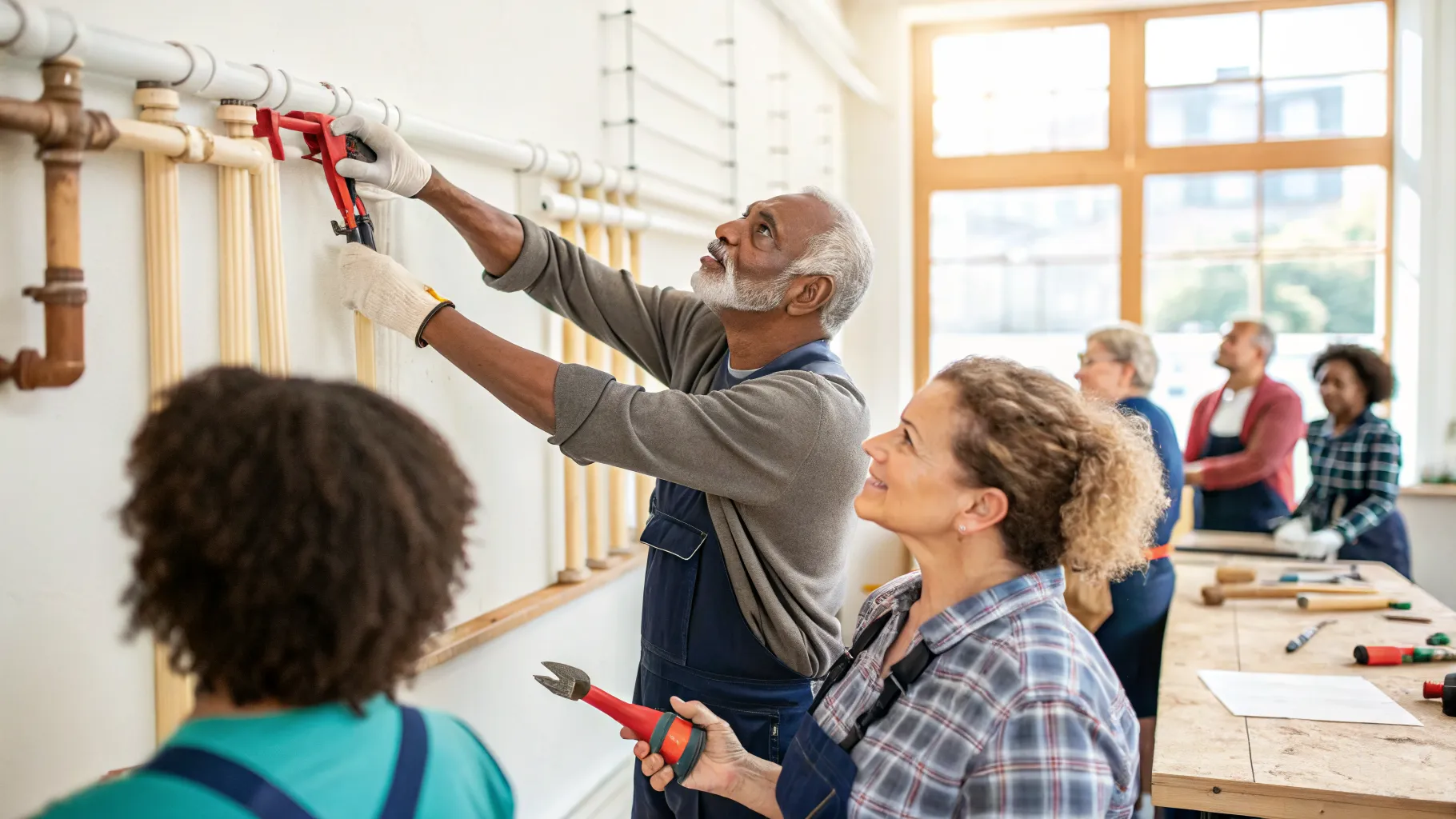
What to Expect in Beginner Home Repair Classes
When you sign up for diy home repair classes, you're embarking on a practical learning journey. Most courses blend theoretical knowledge with hands-on practice in a safe, supervised environment. You'll start with the absolute basics, like tool identification and safety protocols. Instructors will teach you the difference between a Phillips and a flathead screwdriver, how to safely operate a power drill, and the importance of turning off power and water sources before starting a project. From there, the curriculum typically expands to cover core areas of home repair. You can expect modules on basic plumbing, such as fixing running toilets and clearing clogged drains. You will also likely cover simple electrical work, like replacing light fixtures or installing dimmer switches. Other common topics include drywall patching, painting techniques, and basic carpentry, giving you a well-rounded skill set to tackle numerous projects around your home.
Choosing the Right DIY Home Repair Classes for You
With a growing interest in self-sufficiency, the options for where to learn home repair have multiplied. The best choice for you depends on your learning style, budget, and schedule. Community colleges often offer affordable, semester-long courses that provide in-depth instruction. Big-box home improvement stores, like The Home Depot or Lowe's, frequently host free or low-cost workshops on specific topics, which are great for a focused introduction. For those who prefer learning at their own pace, online platforms offer a vast array of home repair classes for beginners with video tutorials and downloadable guides. When comparing options, look at the curriculum, the instructor's qualifications, and reviews from past students. A hands-on component is crucial, so ensure the course, even if online, has practical projects to complete. This practical application is the key to truly mastering the skills taught in any home maintenance training program.
Essential Skills You'll Master
The goal of any good home repair course is to equip you with a versatile set of skills. These are not just about fixing what's broken but also about preventative maintenance. Here are some of the key competencies you will develop:
- Basic Plumbing: You'll learn how to fix leaky faucets, unclog drains using a snake or natural solutions, replace a showerhead, and even stop a running toilet. This is a core part of any beginner home repair classes.
- Simple Electrical Work: Gain the confidence to safely replace light fixtures, install ceiling fans, change out electrical outlets, and understand your circuit breaker panel. Safety is paramount here, and proper training is essential.
- Drywall and Painting: From patching small holes and dings in the wall to preparing a surface and applying a smooth, even coat of paint, these aesthetic skills are invaluable for keeping your home looking its best.
- Basic Carpentry: Learn to use a saw, drill, and level to build simple shelves, repair trim, or fix a wobbly chair. This foundation opens the door to more creative diy home repair classes in the future.
The Long-Term Benefits of Home Maintenance Training
The value of completing a course focused on home maintenance training extends far beyond the classroom. The most immediate benefit is financial savings. The cost of a single professional service call can often exceed the price of an entire beginner's course. By handling minor repairs yourself, you'll save significantly over the lifetime of your home. Furthermore, you gain a critical eye for potential problems. You'll learn to spot a small leak before it becomes a major flood or notice the signs of electrical issues before they become hazardous. This proactive approach to home maintenance prevents costly emergency repairs down the road. Ultimately, the confidence you build is priceless. The ability to independently solve problems and improve your living environment is incredibly empowering and a skill that will serve you for a lifetime. When you learn home repair, you are investing in yourself and your property.
Frequently Asked Questions
What tools do I need to start home repair classes for beginners?
Most in-person classes will provide all the necessary tools for you to use during the sessions. However, it's a good idea to start building your own basic toolkit, which should include a hammer, a set of screwdrivers, pliers, a tape measure, a level, and a utility knife. Your instructor will advise on other essential tools as you progress.
Are online diy home repair classes as effective as in-person ones?
Online classes can be very effective, especially for visual learners who appreciate the ability to pause and re-watch instructions. They offer great flexibility. However, they lack the immediate, hands-on feedback from an instructor that in-person beginner home repair classes provide. A hybrid approach can sometimes be the best of both worlds.
How do I know if I'm ready to learn home repair?
If you have a desire to be more self-sufficient and save money on household fixes, you are ready! The best home repair classes for beginners start from square one, assuming no prior knowledge. All you need is a willingness to learn and a positive attitude.
References
- The Home Improvement Research Institute
- Journal of Consumer Education
- National Association of Home Builders
- DIY Network Archives