Retractable Patio Awning Offers for Home Improvements: A Consumer Intelligence Report
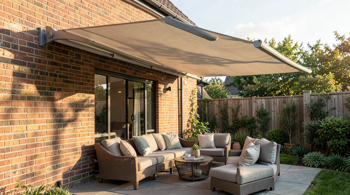
Homeowners exploring retractable patio awning offers for home improvements will find a market that spans a wide range of price points, fabric technologies, motorization systems, and warranty structures. Understanding what distinguishes a functional long-term installation from a short-lived purchase requires examining specifications, climate compatibility, structural requirements, and the real costs of ownership rather than sticker price alone.
How the Retractable Awning Market Is Structured
The retractable patio awning category divides into two primary operational types: manual crank systems and motorized electric or solar-powered models. According to cost data aggregated from multiple installer sources, the average installed cost for a retractable awning in the United States typically ranges from $1,500 to $7,000 or more, depending on size, automation features, fabric quality, and installation complexity. 1 Manual entry-level units are available in the $150 to $400 range for smaller residential dimensions, while professional-grade motorized systems from established manufacturers start near $3,500 and scale upward with width and projection. 2
The market includes both direct-to-consumer retail formats and dealer-installed custom configurations. Retailers such as The Home Depot and Lowe's carry patio awning product categories for outdoor shade projects, while specialized installers offer custom-built units measured to exact wall dimensions. 3 Solar-powered motorized systems represent an emerging category, with models such as the Furrion Lumina, described as the residential industry's first solar-powered smart awning with internal Wi-Fi connectivity, starting at approximately $6,250 for a 12-foot by 10-foot configuration. 4
Performance Specifications Homeowners Should Benchmark
Fabric performance is the most technically consequential variable in long-term awning value. According to the U.S. Department of Energy, properly installed retractable awnings can reduce solar heat gain by up to 77% when positioned over south-facing windows, which directly lowers indoor temperatures and reduces reliance on air conditioning. 5 Some premium acrylic fabrics, including those meeting specifications cited for high-grade commercial awning systems, deliver 99% UVA and UVB blockage. 6 Solution-dyed acrylic is the industry standard for fade resistance and water repellency, and Sunbrella-branded acrylic fabric is widely referenced across mid-to-premium product lines for its mold, mildew, and UV resistance. 7
Frame geometry and structural ratings also vary significantly. Manual awnings in the entry-level segment typically use powder-coated aluminum and steel combinations rated for wind resistance at level 2, meaning they should be retracted during moderate gusts. 8 Higher-specification motorized units incorporate aluminum alloy frames rated for wind pressure up to 23 MPa, with wind sensors that automatically trigger retraction when speeds exceed a defined threshold, providing passive weather protection without manual intervention. 9 Projection depth in custom installations ranges from approximately 5 feet to over 13 feet outward from the wall, while widths can extend to 40 feet in premium custom-built systems. 10
Motorization and Smart Integration Technologies
Motorized retractable awning systems have expanded considerably beyond basic remote-control operation. Current mid-to-premium models incorporate Somfy motor systems, which support remote control, wall switch activation, and smartphone app integration. 11 Smart home compatibility allows awnings to be incorporated into broader home automation platforms, enabling scheduling and condition-based automation. Built-in dimmable LED lighting is now a standard inclusion on several premium product lines, extending the functional hours of the covered patio space into evening use. 12
Solar-powered motorization represents a notable development for homeowners concerned about electrical infrastructure costs. The solar-powered category eliminates the need to run power lines to the exterior mounting location, reducing installation complexity and associated electrical contractor fees. Wind sensors that automatically retract the awning during gusts are featured as standard equipment on several motorized product lines, not as optional add-ons, which affects both safety outcomes and long-term fabric preservation. 13
Warranty Structures and Long-Term Coverage Expectations
Warranty terms differ substantially across market segments and should be treated as a primary evaluation criterion rather than a secondary marketing note. Entry-level retail awnings commonly carry two-year warranties covering materials and workmanship. 14 Mid-market professional installations typically offer separate warranty periods for frame, fabric, motor, and finish components. One example structure documented in the premium custom segment covers a lifetime frame warranty, a 12-year fabric warranty, an 8-year motor warranty, and a 5-year finish warranty, described by the manufacturer as among the most comprehensive in the industry. 15
Non-prorated and transferable warranty terms represent a meaningful difference for homeowners who may sell their property within the warranty period. A 10-year non-prorated transferable warranty, documented on certain motorized awning product lines, means the full remaining coverage applies to a subsequent owner, which carries a measurable implication for home resale positioning. 16 Homeowners should review warranty documents carefully for exclusions related to wind damage, improper installation, or failure to retract during adverse weather, as these conditions frequently void coverage in standard terms.
Installation Requirements and Structural Considerations
Proper installation is a significant determinant of both safety and long-term performance. Most wall-mounted retractable awning systems specify minimum mounting surface requirements, including the ability of the mounting wall to bear the structural load of the extended awning under wind conditions. Manual awning specifications commonly require the mounting surface to hold a minimum of 52 pounds, while larger motorized units impose greater structural demands. 17 Surfaces suitable for mounting include brick, concrete, wood-frame walls, and vinyl siding, though some substrates require specialized hardware or blocking within the wall cavity to achieve adequate load distribution.
Homeowners in regions with active homeowners associations or local building codes should investigate permit requirements before ordering. Some municipalities classify wall-mounted exterior structures as additions requiring permits, particularly when the installation involves electrical work for motorized systems. 18 Professional installers with licensed and insured crews provide documentation trails useful for permit applications. Installation timelines for professionally completed custom units are generally cited as a single day for standard residential configurations, though site-specific conditions can extend this estimate.
Energy Impact, Property Value, and Objective Limitations
The energy efficiency case for retractable awnings is supported by documented performance data. Studies from the Colorado Springs market note that properly installed awnings can reduce the cooling load on air conditioning systems by up to 20% during peak summer months, with particularly measurable effects on west-facing windows during afternoon hours. 19 By limiting UV penetration into interior spaces, awnings also reduce the rate of fading and deterioration of flooring, furnishings, and curtains, extending the replacement cycle of interior assets. These secondary preservation benefits are harder to quantify but represent a recognized component of total ownership value across multiple industry analyses.
Homeowners should also account for realistic maintenance obligations. Retractable awning fabrics require regular cleaning to prevent mold and mildew buildup, even on treated surfaces, and should be retracted during high winds, heavy rain accumulation, and snow loading to avoid structural stress. Entry-level polyester fabrics with polyurethane coatings, while more affordable, offer reduced fade resistance compared to solution-dyed acrylic and typically require earlier replacement. The pitch-adjustability of motorized systems, commonly ranging from 0 to 45 degrees in documented specifications, allows users to manage rainwater runoff and sun angle coverage, but standing water on flat-pitched configurations can cause fabric damage over time. 20
Sources
- EasyHomeService.com - Retractable Awning Costs Guide
- Angi - How Much Do Retractable Awnings Cost
- The Home Depot and Lowe's - Outdoor Awning Product Categories
- Furrion.com - Furrion Lumina Solar-Powered Retractable Awning
- U.S. Department of Energy - Outdoor Shading and Sun Control
- ThinkAssemble.co.uk - Olympus Awnings Athena Product Specifications
- Marygrove.com - Best Retractable Awning for Patio Full Guide
- Outsunny.com - 16x10 Retractable Awning Product Specifications
- Yoolax.com - Motorized Retractable Awnings Product Specifications
- RainierShade.com - Olympus Retractable Awning Specifications
- RainierShade.com - Rainier Retractable Awning Motorization Details
- CurtainAvenue.com - Shade Sense Outdoor Motorized Retractable Awnings
- Furrion.com - Wind Sensor and Solar Motor Features
- Outsunny.com - 2-Year Warranty Terms on Manual Retractable Awnings
- RainierShade.com - Olympus Awning Industry-Leading Warranty Structure
- CurtainAvenue.com - 10-Year Non-Prorated Transferable Warranty Details
- Outsunny.com - Structural Load Requirements for Awning Installation
- ALHomeImprovement.com - Building Code and HOA Considerations for Awnings
- ALHomeImprovement.com - Cooling Load Reduction Data for Colorado Springs
- Furrion.com - Pitch Adjustment and Fabric Care Guidelines