Inversion Tables for Back and Core: A Data-Driven Clinical and Consumer Guide
Inversion tables for back and core training represent one of the more clinically debated categories in home rehabilitation equipment. Whether the goal is temporary relief from disc-related compression, improved spinal mobility, or an active core training environment, the category spans simple entry-level frames to sophisticated hybrid systems that combine decompression with structured exercise. Understanding what the research actually supports, which populations are excluded, and how product specifications translate into real-world use requires a closer look at both the science and the hardware.
How Inversion Therapy Works: The Mechanics of Gravity-Assisted Decompression
Inversion therapy, also referred to as spinal traction, operates on a straightforward mechanical principle. When the body is tilted head-down, gravity reverses its compressive effect on the intervertebral discs, creating space between vertebrae and temporarily relieving pressure on spinal nerves. Pain management specialist Haren Bodepudi, MD, of Cleveland Clinic explains that hanging inverted allows gravity to briefly take pressure off the nerves of the lower back and gives the squishy discs between vertebrae room to relax. 1 Most modern inversion tables allow users to control the degree of tilt, from a slight recline to a full 180-degree position, using angle tethers and manual handlebars.
Research data from FitCore360 identifies 60 degrees as the optimal inversion angle for disc decompression, rather than the commonly assumed full 90-degree inversion. 2 Recommended starting duration for new users is one to three minutes per session, with gradual progression as tolerance builds. A 2012 study conducted at Newcastle University found that patients with sciatica who practiced inversion therapy were significantly less likely to require surgery compared to those who did not use the therapy. 3 A separate study cited by ChiroHer confirmed that inversion at 60 degrees reduced back pain and improved flexibility over an eight-week period. 4
Clinical Evidence and Medical Context: What Doctors and Therapists Report
According to orthopedic spine surgeon Max Shlykov, MD, at the Maryland Spine Center, inversion tables tend to be especially helpful for people with chronic back issues including herniated discs, sciatica, degenerative disc disease, muscle spasms, and general stiffness. 5 Physical therapist Cody Barnett, PT, noted that inversion therapy can be very helpful for conditions leading to compression of the joints, especially of the hips and spine. 6 Inversion therapy may also improve mobility in people with spondylolisthesis, scoliosis, lumbar osteoarthritis with sciatica, and coccydynia. 6
However, medical professionals consistently emphasize that an inversion table will not cure back pain or fix the underlying cause of it, and that it functions best as a complement to manual therapy or corrective exercises rather than as a standalone intervention. 5 Brooklyn Pain Doctors note that managing radiculopathy requires relieving pressure on the affected nerve root and that inversion therapy can play a valuable supporting role within a structured rehabilitation plan. 7 Doctors rarely prescribe inversion tables without accompanying exercise protocols, and the Mayo Clinic states that inversion therapy may provide temporary relief but is not a long-term cure. 8
Safety Contraindications and Medical Exclusions
A significant body of clinical guidance restricts the use of inversion tables for specific populations. Harvard Health Publishing notes that inversion tables increase heart rate and blood pressure, making them risky for people with cardiovascular issues. 9 WebMD outlines physical contraindications including pregnancy, bone disorders, glaucoma, and uncontrolled hypertension. 10 The Medisonic inversion table sold through major retailers explicitly advises consumers to always consult with a licensed physician before use, noting that some medical conditions may not be suitable. 11 YOLEO similarly cautions buyers to consult a licensed physician before using any of its inversion table models. 12
Physical therapists caution against using inversion tables as a primary treatment without professional guidance, citing the risk of blood pressure spikes and mechanical falls during unsupervised inversion. 8 The American Physical Therapy Association emphasizes proper individualized assessment rather than one-size-fits-all devices, particularly for complex spinal presentations. 13 Users with retinal conditions face an elevated risk because inversion increases intraocular pressure, a documented concern in ophthalmological literature.
Inversion Tables as Active Core Training Platforms
Beyond passive decompression, many inversion tables support a range of active exercises. According to ChiroHer founder Dr. Michelle Andrews, DC, common exercises performed on inversion tables include inverted crunches and sit-ups, inverted squats and back extensions, spinal twists, and gentle hip and neck stretches. 4 The inverted environment targets core muscles including the abdominals, obliques, and erector spinae, as well as the glutes, hamstrings, and quadriceps. Reduced spinal compression in the inverted position makes these movements more accessible and less mechanically stressful on the back compared to the same exercises performed on solid ground.
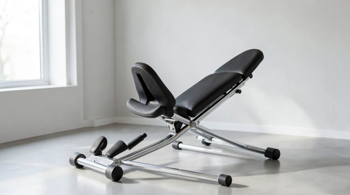
The Teeter Dex II Inversion and Core Training System represents the most developed hybrid in this category, combining forward-rotating seated inversion with hip support and active core exercise capability. Unlike standard inversion tables that use ankle suspension, the Dex II uses a hip-supported 90/90 posture to decompress the hips and spine, making it an inversion table alternative for users who cannot tolerate ankle loading. 14 Teeter is an FDA-registered manufacturer, and the Dex II carries the same build standards as the FitSpine range, with a 300-pound weight capacity, a height range of 4 feet 8 inches to 6 feet 6 inches, and a five-year limited warranty. Assembly typically takes 45 to 90 minutes with two people recommended. 14
Key Product Specifications Across Market Segments
The inversion table market segments broadly into entry-level, mid-range, and premium configurations. Entry-level models, such as the Teeter EP-560, start at approximately $130 and carry the same core rotation system and FDA registration as higher-tier FitSpine models, making them a clinically credible starting point. 2 The Best Fitness BFINVER10B, priced at $280, accommodates users from 4 feet 10 inches to 6 feet 6 inches with a 250-pound maximum user weight and a two-pin folding mechanism for compact storage. 15
| Model | Weight Capacity | Height Range | Notable Feature | Approximate Price |
|---|---|---|---|---|
| Teeter EP-560 | 300 lbs | 4'8" to 6'6" | ComforTrak backrest, FDA registered | ~$259 |
| Teeter FitSpine X1 | 300 lbs | 4'8" to 6'6" | FlexTech bed, 8-point suspension, gravity boots included | ~$369 |
| Teeter FitSpine X3 | 300 lbs | 4'8" to 6'6" | Deluxe EZ-Reach ankle system, Stretch Max handles | ~$399 |
| Teeter FitSpine LX9 | 300 lbs | 4'8" to 6'6" | Ergo arched frame, raised boarding platform, storage caddy | ~$499 |
| Teeter Dex II | 300 lbs | 4'8" to 6'6" | Hip-supported forward inversion, active core training | $400–$600 |
| Best Fitness BFINVER10B | 250 lbs | 4'10" to 6'6" | Two-pin folding frame, breathable nylon backboard | ~$280 |
| Medisonic 510100B | 300 lbs | 4' to 6' | Preset angles at 20, 40, 60, 90 degrees, lumbar pad included | ~$99–$150 |
The Teeter FitSpine X3 is widely cited as the best-value mid-range option due to its Deluxe EZ-Reach ankle system with an aerospace-grade stainless steel handle and a gravity-activated secondary lock, which makes routine sessions noticeably more comfortable than T-pin closure systems. 16 The FitSpine LX9 adds a raised boarding platform and a larger ergonomic arched frame useful for users who need easier mounting after extended sessions. 16
What to Evaluate Before Selecting an Inversion Table
Dr. Shlykov advises that the best inversion tables are sturdy enough to support the user's height and weight and offer adjustable angles, while noting that lighter models may be easier to set up and use. 5 Beyond weight capacity and height range, ankle locking systems represent the most important functional differentiator across models. EZ-Reach systems reduce forward bending during setup, a meaningful advantage for users with acute lower back presentations. Tether straps that preset maximum inversion angle at 20, 40, and 60 degrees are essential for beginners who should not approach full inversion without clinical guidance.
Space requirements and assembly complexity deserve equal attention. The Teeter Dex II, for example, measures approximately 28 inches wide, 58 inches long, and 60 inches tall in use, and requires 45 to 90 minutes to assemble. 14 Foldable models, including those from Yoleo, Medisonic, and Best Fitness, can collapse to a fraction of their in-use footprint, making them practical for multi-use rooms. Users who intend to perform active core exercises such as inverted crunches, spinal twists, or back extensions should confirm that their chosen table includes stable handhold positions and a backrest with sufficient body slide to support rotational movements during inversion.
Sources
- Cleveland Clinic Health Essentials – health.clevelandclinic.org
- FitCore360 – fitcore360.com
- Teeter Blog – teeter.com
- ChiroHer Blog – chiroher.com
- MSU Health Care / Men's Health – healthcare.msu.edu
- Health.com – health.com
- Brooklyn Pain Doctors – brooklynpaindoctors.com
- Mayo Clinic – mayoclinic.org
- Harvard Health Publishing – health.harvard.edu
- WebMD – webmd.com
- Walmart / Medisonic Product Listing – walmart.com
- Yoleo Gear – theyoleogear.com
- American Physical Therapy Association – choosept.com
- ChoiceCheck / BestInversionTables.org – choicecheck.org / bestinversiontables.org
- Everything Gyms – everythingyms.com
- Best Inversion Tables – bestinversiontables.org