Seductive Bikini Styles: A Complete Analytical Guide to Cuts, Fabrics, and Fit
The Architecture of Seductive Bikini Styles: How Silhouette Defines Appeal
Seductive bikini styles are architecturally defined by the relationship between fabric coverage, strap configuration, and cut geometry. The bikini itself was introduced in 1946 by fashion designer Louis Réard and has since generated a significant number of design variants, many smaller and more revealing than the original. 1 Modern fashion industry terminology now classifies any two-piece swimsuit as a bikini, with the amount of coverage ranging from a string bikini with very little fabric to a full-cut design with maximum coverage. 1
Among the most analytically significant design decisions is whether a top uses a triangle, bandeau, halter, or structured underwire construction. Triangle tops feature two fabric panels forming a bra shape and slim straps, creating a minimalist, refined silhouette. 2 Bandeau and strapless tops provide a versatile styling option that can transition between strap and strapless configurations depending on the occasion. 3 Underwire and structured tops incorporate engineered cup support to enhance shaping across multiple cup sizes, combining comfort with a flattering outline. 5
Bottom Cuts and Coverage Vocabulary
The bottom half of a seductive bikini set carries its own extensive classification system used by US retailers to differentiate silhouettes and communicate thigh, hip, and rear coverage levels. Terms such as high-cut, cheeky, Brazilian, thong, G-string, and Y-shape are consistently used across major swimwear product pages to specify how much fabric covers the hips and legs. 10 Brazilian-cut bikini bottoms specifically feature higher leg cuts and offer fuller back coverage compared to traditional styles, creating the optical effect of elongated leg lines. 2
Tie-side bikini bottoms represent a distinct construction category that allows adjustable fit and customizable coverage levels, making them structurally versatile across different body proportions. 6 High-waisted bikini bottoms sit above the natural waistline and have emerged as a dominant market trend that delivers classic styling with modern coverage appeal suited to a wide range of body types. 1 Cheeky-cut bottoms, such as the Y-shape and ring tie designs from Kulani Kinis, are engineered to sit higher on the hips and create the visual illusion of longer legs through their curved, dipped waistlines and high leg openings. 1
Structural Design Features: Cutouts, Straps, and Hardware
Beyond basic cut categories, seductive bikini styles are differentiated by applied structural details including cutouts, crisscross strips, hollow panels, V-cut backs, and decorative hardware. Cutout bikinis featuring strategic openings at the sides, front, or back have gained sustained popularity as statement pieces in contemporary swimwear collections. 4 Crisscross strip designs and front hollow panel constructions add visual complexity to solid-color bases, accentuating natural curves while maintaining versatility for beach accessory pairing.
Hardware elements such as O-rings, gold-toned rings, and metal side clips serve both functional and aesthetic purposes. Marlies Dekkers' Tanit collection, for example, incorporates gold-toned rings engraved with the brand's logo at the hips, neck, and between the breasts to create structured pleats and a glamorous styling reference. 1 Simone Pérèle's Intrigue bikini uses all-over seamless microfiber flanked by embroidered hip accents, designed for an invisible undergarment effect. 1 These hardware and embellishment choices affect both the perceived formality and the practical durability of the swimwear.
Fabric Composition and Performance Characteristics
The fabric composition of seductive bikini styles directly governs stretch recovery, chlorine and saltwater resistance, opacity when wet, and long-term shape retention. Nylon and spandex blends are the dominant material profile across the market, with compositions commonly reading 80% nylon and 20% elastane or comparable ratios. 1 Recycled material constructions have entered the mainstream, with brands such as Kulani Kinis marketing their RE-KINI SHIMMER fabric as crafted from recycled materials produced with 75% less CO2 than standard swimwear fabrics, composed of 80% recycled nylon and 20% spandex. 1
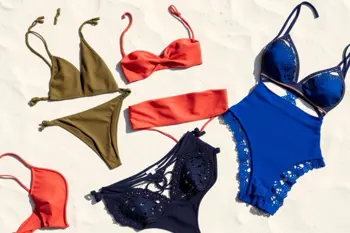
Playaluxe's Santorini Seamless Bandeau Bikini Set uses 84% recycled polyester and 16% spandex with GRS-certified recycled fabric and OEKO-TEX certified nickel-free metal trims, illustrating how sustainability certifications have become material specifications alongside performance attributes. 1 Consumer reviews of products like Elluis's seductive monochromatic bikini top note that fabric thickness and opacity when wet are primary concerns, with reviewers specifically confirming whether a material becomes see-through after swimming. 1 Fabric weight and surface finish, whether matte, shimmer, or crinkle-textured, also affect the overall visual impression of seductive silhouettes at the beach or poolside.
Sizing Systems and Fit Considerations
US swimwear size guidance consistently recommends measuring bust, waist, and hip circumferences and consulting brand-specific size charts rather than relying solely on traditional letter sizing to improve overall fit accuracy. 7 Many of the styles described as seductive or alluring in product listings use free-size or stretch-fit constructions marketed as accommodating size ranges from S through XL, which relies on the stretch recovery properties of nylon-spandex blends to compensate for sizing variance.
Mix-and-match purchasing configurations, where tops and bottoms are sold as independent units with separate sizing, are a structurally important feature of the contemporary seductive swimwear market. 12 This allows consumers to select a size M top with a size L bottom, for example, resolving proportional fit issues that matched sets cannot address. Push-up and enhanced-lift bikini tops incorporate structured cups or internal padding to increase bust shaping and alter silhouette presentation, a category explicitly described in retail product listings using terms like twist push-up and very sexy push-up configurations. 11 Fit runs can vary significantly by brand, and multiple consumer reviews note the importance of sizing up when between stated sizes.
Care Protocols, Durability Factors, and Purchase Considerations
The long-term performance of seductive bikini styles is materially affected by care practices. Standard industry guidance across multiple swimwear brands recommends rinsing swimwear after each wear, hand washing or machine washing on a cold delicate cycle inside a mesh bag, and drying flat in the shade rather than tumble drying. Exposure to chlorine, saltwater, sunscreen, oils, and fake tan should be managed carefully, as these elements degrade fabric elasticity and color saturation over time. Marlies Dekkers specifically advises hand washing without rubbing, washing with similar colors, and avoiding bleaching, ironing, dry cleaning, and tumble drying for microfiber constructions. 1
Online return and exchange policies represent a practical purchasing variable when evaluating seductive bikini styles, particularly because fit assessments are subjective and size variance between brands is common. US online retailers' return and exchange policies for swimwear determine whether multiple sizes or styles can be evaluated and returned within a policy window, making policy review a recommended step before finalizing an order. 14 Consumer reviews across platforms like Elluis and Oliviamark indicate that color accuracy on screen frequently differs from the received product, with reviewers noting brighter or lighter tones than photographed, which underscores the value of understanding return terms before committing to a color-specific seductive style. 1
Sources
- Wikipedia - Bikini Variants (en.wikipedia.org/wiki/Bikini_variants)
- Swimwear Industry Association - Brazilian Cut Bikinis (swimwear.org)
- Elle - A Guide to Bikini Styles (elle.com)
- Harper's Bazaar - Cutout Swimwear Trends (harpersbazaar.com)
- Swimming Magazine - Bikini Support Guide (swimmingmagazine.com)
- Fashion Nova - Bikinis Collection (fashionnova.com)
- SwimOutlet - Swimwear Size Charts (swimoutlet.com)
- Revolve - Bikinis Category (revolve.com)
- ASOS - Women's Swimwear Bikinis (asos.com)
- Victoria's Secret - Bikini Bottom Cheeky (victoriassecret.com)
- La Blanca - Bikinis Collection (lablanca.com)
- Roxy - Women's Swimwear Bikinis (roxy.com)
- One Stop Outdoors - Swimwear Fabric and Care (onestopoutdoors.com)
- Revolve - Customer Service Returns (revolve.com)