Joint replacement clinics: 12 best options across the United States: An Industry Analysis of Leading Orthopedic Programs
Patients searching for premier joint replacement clinics and orthopedic specialties across the United States often face a complex array of choices. Selecting a highly qualified surgical team is one of the most critical decisions a patient can make, directly impacting long-term mobility and surgical success. Across the country, specialized orthopedic hospitals and academic medical centers offer advanced joint reconstruction services, combining high procedural volumes with robotic assistance to deliver superior clinical outcomes for those suffering from chronic joint pain.
Evaluating Clinical Standards for Premier Arthroplasty Programs
When evaluating joint replacement clinics, clinical volume and specialized surgeon credentials serve as the primary benchmarks for quality. General orthopedic surgeons manage a wide array of bone and muscle issues, but dedicated joint reconstruction specialists complete additional fellowship training and focus almost exclusively on hip, knee, and shoulder arthroplasty 1. High-volume centers, which perform thousands of joint replacements annually, consistently demonstrate lower complication rates and more reliable long-term patient outcomes 2.
Furthermore, top-tier clinics integrate multidisciplinary care teams, including board-certified orthopedic surgeons, anesthesiologists, specialized physical therapists, and comprehensive rehabilitation experts 3. These teams coordinate care from initial diagnostic imaging through post-operative physical therapy 1. Many leading facilities utilize advanced technologies, such as computer-assisted navigation and semi-autonomous robotic systems, to optimize implant positioning and preserve surrounding healthy tissue 4.
Premier Orthopedic Institutions in the Northeast Region
The northeastern United States houses some of the most prestigious orthopedic centers globally, recognized for high surgical volumes and clinical innovations. The New York City-based Hospital for Special Surgery, known as HSS, ranked as the number one hospital for orthopedics for the sixteenth consecutive year in the 2025 to 2026 national assessments 5. Specializing exclusively in musculoskeletal care, HSS is globally renowned for its high success rates in total knee and hip replacements 6.
Other top-performing institutions in the region include NYU Langone Hospitals in New York City and Massachusetts General Hospital in Boston 5 7. These academic medical centers deliver advanced joint reconstruction alongside comprehensive research and clinical trials 7. Additionally, Brigham and Women's Hospital in Boston and North Shore University Hospital at Northwell Health in Manhasset consistently rank among the leading facilities for complex joint replacement surgery 5.
Top Joint Reconstruction Centers in the Midwest and South
In the Midwest, the Mayo Clinic in Rochester, Minnesota, stands as a global leader in integrated orthopedic care, utilizing a multidisciplinary model that supports highly personalized treatment plans for complex joint reconstructions 6. Similarly, Midwest Orthopaedics at Rush University Medical Center in Chicago is nationally recognized, particularly for pioneering outpatient hip and knee replacement programs 5 8. Specialists at Rush have performed thousands of same-day joint replacements utilizing minimally invasive techniques 8.
In the southern region, Houston Methodist Hospital in Texas and the Cleveland Clinic in Ohio provide exceptional volume and technical expertise 5 6. The Cleveland Clinic's orthopedic department is widely recognized for combining high procedural capacity with advanced clinical research 6. Additionally, specialized regional groups such as the Fondren Orthopedic Group in Houston utilize robotic-assisted systems and patient-centered rehabilitation pathways to support recovery 1.
Leading Western Orthopedic Programs and Specialist Hubs
The western United States features several highly ranked health systems specializing in total joint arthroplasty. Cedars-Sinai Medical Center in Los Angeles and UCSF Health-UCSF Medical Center in San Francisco are recognized for outstanding clinical performance and patient outcomes in complex joint replacement 5 7. These centers frequently handle revision surgeries, which address failing joint implants from previous procedures and require highly specialized techniques to restore mobility 9.
Stanford Health Care in Stanford, California, and Santa Monica-UCLA Medical Center and Orthopedic Hospital are also leading options 5. Stanford provides comprehensive joint replacement services with specialized focus on computer-assisted navigation and tissue-sparing techniques 9. These institutions combine high-volume academic research with individualized physical therapy programs, ensuring that patients receive structured, evidence-based post-operative support that accelerates the overall recovery timeline 9.
Technology Trends and Estimated Surgical Costs
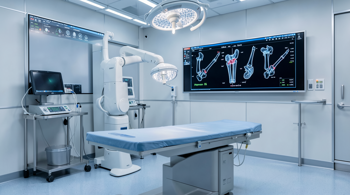
Technological integration has rapidly transformed joint replacement surgery, particularly through semi-autonomous robotic systems like the MAKO robotic arm 4. Clinical data from real-world evaluations demonstrates that robotic-assisted procedures achieve high precision, with alignment deviations of three degrees or less in over 95 percent of analyzed cases 4. Furthermore, the final implanted components matched pre-operative size planning in over 99 percent of cases, contributing to improved post-operative flexion and extension 4.
Estimated orthopedic treatment costs vary significantly across the United States depending on the facility, region, and insurance coverage. For instance, knee replacement surgery at top-tier institutions generally ranges from 35,000 to 65,000 USD, while total joint replacements at other major centers can range from 40,000 to 75,000 USD 6. Some regional outpatient clinics and specialized programs offer comprehensive care paths to optimize outcomes and manage overall healthcare expenditures 8.
| Hospital or Clinic Name | Primary Location | Key Specialty Focus |
|---|---|---|
| Hospital for Special Surgery | New York City, NY | Total Knee & Hip Arthroplasty |
| Mayo Clinic | Rochester, MN | Complex Joint Reconstruction |
| NYU Langone Hospitals | New York City, NY | Advanced Joint Replacement |
| Cleveland Clinic | Cleveland, OH | High-Volume Joint Arthroplasty |
| Cedars-Sinai Medical Center | Los Angeles, CA | Musculoskeletal Specialty Care |
| Midwest Orthopaedics at Rush | Chicago, IL | Outpatient Joint Programs |
| Stanford Health Care | Stanford, CA | Computer-Assisted Navigation |
| Massachusetts General Hospital | Boston, MA | Surgical Joint Reconstruction |
| UCSF Health-UCSF Medical Center | San Francisco, CA | Complex & Revision Surgery |
| Houston Methodist Hospital | Houston, TX | Total Joint Arthroplasty |
| Brigham and Women’s Hospital | Boston, MA | Orthopedic Rehabilitation |
| North Shore University Hospital | Manhasset, NY | Joint & Muscle Care |
Patient Eligibility, Clinical Risks, and Recovery Realities
Before undergoing joint arthroplasty, patients must undergo a thorough medical evaluation to determine eligibility. Arthroplasty is commonly recommended for individuals suffering from severe osteoarthritis, rheumatoid arthritis, hip fractures, or avascular necrosis, where non-surgical interventions like physical therapy or injections have failed 10. However, surgical eligibility must balance coexisting health factors, including bone density changes, diabetes, and cardiovascular health, which require pre-operative coordination with anesthesiologists and primary care physicians 11.
Like any major surgical procedure, joint replacement involves inherent risks that patients must carefully weigh. These complications can include post-operative infections, blood clots, implant misalignment, and nerve damage 10. The standard recovery period typically ranges from six to twelve weeks, requiring a structured rehabilitation protocol and consistent physical therapy to restore full joint function, balance, and long-term stability 9 12.
Sources
- Psychreg
- Plancher Orthopedics
- 9to5stocks
- Meditech Today
- Becker’s Spine Review
- US.Djodishaa
- Newsweek
- Becker’s Spine Review (Outpatient Leaders)
- Stanford Health Care
- Wp Magic Tech
- Dr. Vijay Ortho
- American Academy of Orthopaedic Surgeons