How vacuum therapy systems for men work
Men researching drug-free options for erectile dysfunction frequently encounter vacuum therapy systems as a clinically supported alternative. These devices, also called vacuum erection devices (VEDs) or vacuum constriction devices (VCDs), operate on a well-understood physical principle and have been used in urology for over 30 years. 1 The American Urological Association lists them as a first-line treatment option for erectile dysfunction in appropriate candidates, placing them alongside oral medications as an initial therapeutic consideration rather than a last resort. 2
The Mechanical Principle: How Negative Pressure Creates an Erection
The core operating mechanism of a vacuum therapy system is negative pressure physiology. When the pump removes air from the cylinder placed over the penis, the atmospheric pressure inside the device drops significantly, typically ranging from approximately -150 to -350 mmHg. 3 This pressure differential causes arterial dilation and drives blood into the corpora cavernosa, the two spongy chambers running the length of the penis that fill during a natural erection. The process mechanically replicates what the nervous and vascular systems accomplish during sexual arousal, without requiring hormonal signals, nerve function, or pharmaceutical intervention. 4
During a natural erection, blood flows into the corpora cavernosa and veins at the surface compress to prevent outflow. In men with erectile dysfunction, this process is disrupted either by insufficient arterial inflow, often caused by diabetes, hypertension, or cardiovascular disease, or by poor venous compression. 5 The vacuum device bypasses the initiating signals entirely and mechanically achieves the same vascular result. Once adequate engorgement is achieved, a constriction ring placed at the base of the penis replicates the venous compression that maintains tumescence.
Core Components of a Vacuum Therapy System
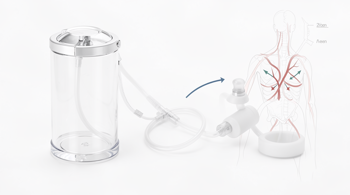
Every medical-grade vacuum erection device shares three essential components, each serving a distinct physiological function. Understanding the role of each part is necessary for both safe use and realistic expectations about outcomes.
| Component | Material | Function |
|---|---|---|
| Cylinder chamber | Rigid acrylic or polycarbonate | Encloses the penis and contains the negative pressure environment |
| Pump mechanism | Manual hand pump or battery/electric motor | Removes air from the cylinder to generate suction |
| Constriction ring | Medical-grade silicone or rubber | Placed at penile base to maintain blood retention after cylinder removal |
Medical-grade devices also incorporate safety features including pressure gauges and quick-release valves, which prevent the vacuum from exceeding safe physiological thresholds. 3 Consumer-grade devices sold without these regulatory controls carry a meaningfully higher injury risk. The technology has evolved from basic manual pumps to battery-operated and app-controlled models, though clinical outcomes across device generations remain broadly comparable when correct technique is applied. 3
Who Vacuum Therapy Systems Are Clinically Indicated For
Vacuum therapy systems are documented as appropriate for a wide range of men with erectile dysfunction. ED affects an estimated 30 million men in the United States alone, and over 50% of men globally at some point in their lives. 6 Physicians commonly recommend VEDs for men who cannot tolerate oral PDE5 inhibitors such as sildenafil or tadalafil due to cardiovascular contraindications, unstable blood pressure, or a history of stroke. 7 Men with diabetes represent a significant user group, as high blood sugar damages both blood vessels and nerve pathways, creating ED that does not always respond adequately to oral medications alone.
A particularly well-documented clinical application is penile rehabilitation after radical prostatectomy. Even in nerve-sparing prostate surgery, the cavernous nerves controlling erections are frequently stretched or disrupted. Nerve regeneration can take anywhere from six months to two years. 8 During this recovery window, sustained tissue hypoxia can cause structural damage to erectile tissue. The European Association of Urology (EAU) guidelines list vacuum erection devices as a conservative treatment option for both erectile dysfunction and Peyronie's disease, a condition involving fibrous scar tissue causing penile curvature. 9
Efficacy Data and Documented Success Rates
Clinical evidence for vacuum therapy systems is substantially more robust than for many non-prescription health devices. A systematic review published in the French Journal of Urology in 2026 examined the full body of evidence on VEDs in erectile dysfunction management, reflecting ongoing academic interest in optimizing protocols. 10 Across studies covering varying underlying causes of ED, reported success rates range from 60% to 90%, with the higher end of that range documented in men who receive proper instruction and use devices consistently. 11
Vacuum therapy has also been studied in combination with oral PDE5 inhibitors for men who do not respond adequately to either treatment alone. Research has examined combined sildenafil and VED therapy specifically in diabetic men who failed sildenafil monotherapy, finding improved outcomes with the combination approach. 10 The global market for vacuum therapy devices reflects this sustained clinical utility, with a compound annual growth rate of approximately 6.8% forecast through 2035, driven by aging demographics and increasing patient preference for minimally invasive home-based therapy. 12
Safe Use Parameters and Session Guidelines
Proper technique is central to both safety and effectiveness. Most clinical guidance recommends applying a water-based lubricant around the base of the cylinder before use to ensure an airtight seal and reduce friction. The pump is then activated gradually, building negative pressure incrementally rather than maximizing suction immediately. Most men require approximately 5 to 10 minutes of controlled pumping to achieve adequate tumescence suitable for sexual activity. 11
The constriction ring must be transferred to the base of the penis once the cylinder is removed, and this ring should never remain in place for more than 30 minutes. 1 Exceeding this time limit restricts venous and arterial circulation beyond what tissue can safely tolerate. Men with bleeding disorders, those taking anticoagulant medications, or those with significant penile curvature require specific clinical evaluation before beginning vacuum therapy. 13 Combining multiple pumping sessions in a single period without adequate intervals may increase the risk of priapism, a prolonged erection requiring medical attention.
Known Risks, Limitations, and Contraindications
Vacuum therapy systems do not cure the underlying cause of erectile dysfunction. They produce a temporary mechanical response, and the constriction ring must be used at each session, comparable in that respect to oral medications that require dosing before each sexual encounter. 7 Side effects are generally mild when devices are used correctly and include penile bruising, petechiae (small surface hemorrhages), temporary numbness, a cooler skin temperature compared to a natural erection, and mild discomfort during initial sessions. 6 Serious complications are rare but become more likely with overuse, excessive pressure, or prolonged ring placement.
A clinically important distinction exists between medical-grade devices and unregulated consumer products marketed for cosmetic enlargement. No peer-reviewed clinical evidence supports the claim that vacuum pump use produces permanent structural size increase. 4 Vacuum-induced engorgement is temporary and reverses within minutes to hours after device removal. Medical-grade vacuum erection devices are FDA-cleared instruments for treating erectile dysfunction, a categorically different regulatory and clinical classification from unregulated enhancement products. A thorough medical evaluation remains essential before beginning any vacuum therapy protocol, as erectile dysfunction can indicate underlying blood vessel disease, diabetes, hormonal disorders, or other conditions requiring independent diagnosis and management. 13
Sources
- Arcus Medical - Vacuum Erection Devices: A Plain-Language Guide (arcusmed.com)
- American Urological Association - Erectile Dysfunction Guidelines (auanet.org)
- TAF Clinic - Vacuum Therapy Devices Explained: Uses, Types, and Benefits (tafclinic.com.sg)
- Urosculpt Medical Education - Penis Pumps: Medical Uses vs Enhancement Claims (upsizematters.com)
- Rena Malik MD - Vacuum Erection Devices: Do They Really Work? A Urologist's Evidence-Based Guide (renamalikmd.substack.com)
- Medical Department Store - How to Use a Penis Pump for ED Therapy and Penile Rehabilitation (medicaldepartmentstore.com)
- ED Clinics UK - Vacuum Pumps For Erectile Dysfunction: Worth A Try? (edclinics.co.uk)
- Augusta Medical Systems - Penile Rehabilitation After Prostatectomy: Complete Guide (augustams.com)
- Medimarket - Penile Rehabilitation After Prostate Surgery: VED Protocol (medimarket.com)
- French Journal of Urology - Vacuum Erection Devices in the Management of Erectile Dysfunction: A Systematic Review, 2026 (doi.org/10.1016/j.fjurol.2026.103134)
- National Library of Medicine - Clinical Efficacy of Vacuum Erection Devices (ncbi.nlm.nih.gov)
- IndexBox - Vacuum Therapy Devices Market Forecast to 2035 (indexbox.io)
- Acibadem International - Penis Pump: A Complete Medical Overview (acibademinternational.com)