How Penile Traction Therapy Devices Work: A Clinical and Mechanistic Overview
The Mechanical Design of Traction Devices
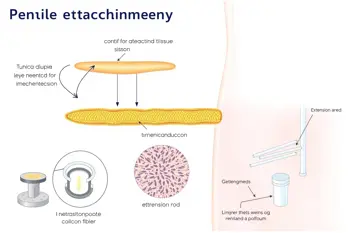
Penile traction devices, also referred to as penis extenders, are mechanically structured around three core components: a base ring that anchors against the pubic area, two adjustable extension rods that run along the lateral sides of the shaft, and a distal cradle or strap that holds the glans in place. 1 The rods are incrementally lengthened as tissue accommodates the stretching force, maintaining a consistent longitudinal tension across the penile shaft. Clinically validated devices operate within a therapeutic tension window of approximately 900 to 1,500 grams-force, equivalent to 9 to 15 Newtons, which is reached only after a controlled habituation phase. 2
The direction and magnitude of the pulling force can be adjusted to accommodate anatomical variation and treatment goals. Newer second-generation devices have incorporated enhanced ergonomic designs that reduce required daily wear time and improve patient comfort, which directly influences treatment adherence. 3 Some device categories include rod-based extenders, all-day stretchers, vacuum traction systems, and penile weights, each operating on the same underlying biological principle but through different mechanical configurations. 4
The Biological Mechanism: Mechanotransduction
The foundational science behind penile traction therapy is mechanotransduction, which is the process by which living cells convert sustained mechanical strain into biochemical signals that trigger tissue growth and remodeling. 5 When sustained tension is applied to penile tissue, cell membranes detect the stretching force, the internal cytoskeleton responds, and biochemical pathways activate that stimulate cellular proliferation and collagen synthesis. This is the same biological mechanism used in orthopedic bone lengthening procedures such as distraction osteogenesis and in skin tissue expansion for reconstructive surgery. 6
In penile tissue specifically, the primary target structure is the tunica albuginea, the dense fibrous sheath that surrounds the erectile chambers known as the corpora cavernosa. Research published in the Journal of Sexual Medicine confirmed that tractional forces alter the protein composition of the tunica albuginea, showing changes in proteins involved in tissue remodeling. 7 The method was first invented in 1994 by Dr. Jorn Ege Siana, a plastic surgeon, and Danamedic ApS of Denmark, and has since been evaluated in more than 15 peer-reviewed clinical studies. 8
Clinical Evidence and Measured Outcomes
A 2023 meta-analysis by Almsaoud et al. (PMID: 36895692) pooled data from 12 studies involving over 1,000 patients and confirmed a weighted mean length gain of 1.9 cm with penile traction therapy. 9 Across clinical trials, flaccid length gains generally range from 1.3 to 2.3 cm over three to six months of consistent use, while erect length gains tend to be smaller and less consistent across studies. 10 In one randomized controlled trial, the Toussi 2021 RCT, the traction group documented a 1.6 cm gain versus 0.3 cm in controls, with 87 percent of participants willing to repeat the therapy. 11
The evidence base for girth improvement is substantially weaker. Available research does not support meaningful girth increases from traction alone, making traction a length-specific intervention that addresses a different anatomical dimension than filler-based approaches. 1 Modern devices such as RestoreX and Penimaster PRO have demonstrated mean curvature reductions of 20 to 30 percent in Peyronie's disease patients, with penile length gains averaging 1.5 to 2.3 cm and adherence rates exceeding 85 percent in clinical settings. 12
Medical Applications Beyond Cosmetic Use
Penile traction therapy has its most firmly established clinical role in the management of Peyronie's disease, a connective tissue disorder where scar tissue or plaque forms within the tunica albuginea, producing penile curvature, indentation deformity, pain, and length loss. 13 The European Association of Urology includes traction devices in its guidelines for Peyronie's disease management, recognizing PTT as a reasonable conservative strategy particularly for men prioritizing length preservation. 7 When used in combination with collagenase Clostridium histolyticum injections, PTT enhanced curvature correction by an additional 5 to 10 percent compared to injection therapy alone. 14
A 2026 review published in UroPrecision (DOI: 10.1002/uro2.70043) examined PTT following radical pelvic surgeries such as prostatectomy, cystoprostatectomy, and rectal cancer surgery. Sexual dysfunction including erectile dysfunction and penile shortening are frequent consequences of these procedures, primarily resulting from nerve injury and hypoxia-induced corporal fibrosis. Preliminary randomized controlled trial evidence suggests that early initiation of PTT may help maintain or improve penile length and erectile function in this post-surgical population. 3 Traction devices also have an established role in post-ligamentolysis protocols as an adjunct to surgical lengthening procedures. 1
Treatment Protocol and Compliance Requirements
Clinical protocols standardized across multiple studies require 4 to 6 hours of daily device wear over a period of 3 to 6 months. 2 This cumulative wear time is typically accumulated through split sessions rather than one uninterrupted block, and progress is tracked by measuring stretched penile length monthly using a standardized ruler placement protocol. 15 Short-duration protocols using higher-tension second-generation devices, ranging from 30 to 90 minutes per day, have shown similar or improved efficacy compared to older devices requiring prolonged daily wear in some Peyronie's disease trials. 12
Compliance is documented as the primary practical barrier to achieving measurable outcomes. Intermittent or insufficient application of tension fails to sustain the mechanotransduction signals required for tissue remodeling. Earlier device generations required up to 10 hours of daily wear, while modern protocols with newer devices have reduced that requirement to 4 to 6 hours, improving feasibility. 16 The distinction between FDA-registered Class II medical devices and unregulated consumer products is clinically relevant; certified devices operate within a validated force range and are subject to Quality System Regulation, labeling compliance, adverse-event reporting, and post-market surveillance obligations. 17
Safety Profile, Risks, and Practical Limitations
Across the clinical literature covering more than 1,000 patients, no serious adverse events have been reported from penile traction therapy when devices are used within prescribed protocols. 10 Mild side effects occur in approximately 11 to 14 percent of users and are primarily described as erythema, glans numbness, and transient skin irritation, all of which are self-limited and resolve after session adjustments. 11 Bruising, discomfort, and minor pain have also been documented when devices are worn incorrectly or tension is set above the therapeutic window.
Several important limitations apply to any evaluation of PTT outcomes. Effects on erect length are consistently more modest than gains in flaccid or stretched length across studies. 1 The precise chain of biological signals from mechanical force to measurable tissue elongation has not been fully mapped, meaning researchers can observe that tissue changes occur without having completely characterized the molecular pathway. Individual variation in anatomy, baseline tissue composition, and adherence patterns all influence results substantially. 7 Men with Peyronie's disease, erectile dysfunction, post-surgical anatomy, or significant psychological distress related to penile size are generally advised to consult a urologist before beginning any traction protocol, as clinical indication and device selection should be guided by a qualified healthcare provider.
Sources
- Urosculpt Medical Education: Penile Traction Devices: Do Extenders Actually Work? (urosculpt.com)
- Sizegenetics.com: How to Do Penile Traction Therapy, Gontero 2009 PMID 19138361 (sizegenetics.com)
- UroPrecision 2026, Vol. 4, Issue 1: Penile traction therapy after radical pelvic surgery, Albayrak and Usta, DOI: 10.1002/uro2.70043 (journal.hep.com.cn)
- SizeTalk.com: Types of Penile Stretching Devices: A Complete Guide (sizetalk.com)
- Andromedical.com: The Principle of Medical Traction: The Science Behind Tissue Growth (andromedical.com)
- ScienceInsights.org: Do Penis Extenders Work? What the Research Shows (scienceinsights.org)
- ScienceInsights.org: Does Penile Traction Really Work? Evidence and Results (scienceinsights.org)
- Sizegenetics.com: Penile Traction Therapy FAQ, Danamedic ApS historical background (sizegenetics.com)
- Sizegenetics.com: Penile Traction Therapy FAQ, Almsaoud et al. 2023 meta-analysis PMID 36895692 (sizegenetics.com)
- Sizegenetics.com: Penile Traction Therapy FAQ, clinical evidence base summary (sizegenetics.com)
- SizeGenetics Official YouTube: Does Penile Traction Therapy Work? Toussi 2021 RCT data (youtube.com)
- UroToday: Penile Traction Therapy for Peyronie's Disease, Contemporary Narrative Review, RestoreX and Penimaster PRO outcomes (urotoday.com)
- Dr Jack Crozier: Penile Traction Therapy for Peyronie's Disease: Evidence, Results and Safety (drjackcrozier.com.au)
- Cureus 2025: Penile Traction Therapy for Peyronie's Disease: A Contemporary Narrative Review, Gopi et al., DOI: 10.7759/cureus.97544 (exa.ai)
- Sizegenetics.com: How to Do Penile Traction Therapy, stretched penile length measurement protocol (sizegenetics.com)
- Andropenis.com: 25 Years of Andropenis, Non-Surgical Penis Enlargement protocol evolution (andropenis.com)
- Sizegenetics.com: FDA-Registered Penile Traction Devices: What Class II Means (sizegenetics.com)