Market Report: Warehouse clearance sales of Italian suede boots Reveal Significant Price Reductions on Premium Designer Footwear
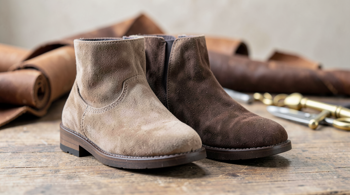
The market for high-end European footwear frequently relies on warehouse clearance sales of Italian suede boots to manage luxury supply chains and reallocate surplus inventory 1. These structured liquidation events allow global distribution networks to transition premium seasonal items into secondary retail channels. Understanding the pricing dynamics, material specifications, and maintenance realities of these luxury goods is essential for buyers navigating the off-season footwear market.
Pricing Reductions and Liquidation Metrics
Documented data from international luxury outlets indicates significant adjustments from traditional manufacturer suggested retail prices (MSRP). For instance, Moorer Bruschi suede ankle boots, originally cataloged at €750.00, are frequently processed through specialized platforms at €187.50, representing a historical 75% reduction 1. Similarly, hand-crafted options like the Officine Creative Dahlia 001 in taupe suede experience structural price changes from €630.00 to €378.00 2. These metrics confirm that warehouse clearance channels offer access to authentic luxury goods at restructured market values.
The following table outlines verified pricing structures observed across various Italian suede footwear manufacturers within clearance networks:
| Brand and Model | Original MSRP | Clearance Price | Reduction |
|---|---|---|---|
| Moorer Bruschi 1 | €750.00 | €187.50 | 75% |
| Officine Creative Dahlia 2 | €630.00 | €378.00 | 40% |
| Michele Lopriore Carmen 3 | $375.00 | $300.00 | 20% |
| Elena Iachi E4494-B 4 | $546.00 | $328.00 | 40% |
Material Specifications and Tannery Standards
Genuine Italian suede boots are valued for their rigorous tanning processes. Manufacturers like Quince utilize premium Italian sheep suede from Leather Working Group (LWG) Gold-certified tanneries, adhering to strict environmental protocols regarding water and energy usage 5. These boots often incorporate advanced design elements, such as a 4mm OrthoLite insole for arch support, a protective TPU insert on the outsole for traction, and sheep leather linings for comfort 5.
Traditional construction techniques remain a hallmark of high-caliber Italian footwear. Brands such as UnityPureMax employ the classic Goodyear welt method, where a hand-stitched leather welt securely bonds the cowhide suede upper to the sole, facilitating professional resoling and extending the product life cycle 6. Furthermore, premium boots like the Moorer Bruschi utilize a 100% calf suede exterior combined with a vulcanized rubber sole for enhanced durability in temperate climates 1.
Sizing Discrepancies and International Conversions
One of the primary complexities encountered when navigating warehouse clearance listings is the variation in international sizing systems. Italian footwear is manufactured according to the European (EU) size run, which differs significantly from United States (US) and United Kingdom (UK) standards. For instance, an Elena Iachi women's size 38 EU typically translates to a US size 8 or a UK size 5, corresponding to a measured foot length of approximately 25.0 centimeters 4. A precise understanding of these metrics is essential to prevent fitment issues.
Men's sizing displays similar structural variances across brands and regions. A men's European size 42 generally aligns with a US size 9 or a UK size 8, representing a standard foot length of 26.2 centimeters 4. Some high-end brands, such as Moorer and Gianvito Rossi, design their lasts to fit true to size, while others may run slightly large or narrow depending on the toe box shape, such as snip toe or square toe configurations 1, 7, 8.
Logistical Considerations and Shipping Policies
Acquiring footwear from overseas warehouses involves complex logistical networks that affect total cost. International outlets like Glamood ship from Italy using carriers such as UPS and DHL Express 1. While domestic shipping within Italy costs €4.90, rates to the US and UK generally range from €14.90 to €19.80, with transit times spanning two to four business days 1. These fees and potential customs duties must be factored into the overall valuation.
Return policies represent another critical friction point within warehouse clearance environments. Under standard European Union regulations, many online retailers permit returns within 14 days of delivery, though return shipping costs and duties are frequently deducted from the final refund amount 2, 9. Conversely, certain liquidation platforms and specialty stores enforce strict 'Final Sale' terms, meaning items cannot be returned or exchanged under any circumstances unless a verified manufacturing defect is present 10, 11.
Maintenance Realities and Material Risks of Suede
Suede is a delicate leather variant with a soft, napped finish, presenting unique maintenance challenges compared to smooth grain leather. The material is highly susceptible to water spotting and environmental abrasion, necessitating preventative care treatments prior to wear. Specialists recommend applying protective suede spray to establish a hydrophobic barrier and using a brass brush to restore the nap and remove surface dust.
Storage conditions are equally vital in preserving the structural integrity of premium Italian suede boots. Because natural suede is highly vulnerable to UV light exposure, prolonged contact with direct sunlight can lead to irreversible color fading, particularly in darker hues such as navy blue, dark brown, or black 4, 11. Experts advise storing these boots in cool, dry, well-ventilated environments, utilizing cedar shoe trees to maintain the shape of the toe box and absorb internal moisture, thereby preventing mold growth over time.
Market Liquidation Trends and Platform Integrity
The modern landscape of luxury liquidation is increasingly decentralized, with inventory distributed across digital marketplaces, dedicated brand outlets, and bulk pallet warehouses. Wholesale operators, such as Stockport Pallet Warehouse, occasionally process massive liquidation lots containing up to 200 mixed footwear units for flat rates of approximately £650.00, illustrating how excess retail stock is distributed to regional discount merchants 12. Simultaneously, peer-to-peer resale networks and high-end consignment sites provide a channel for pre-owned or new-with-box designer pieces from brands like Brunello Cucinelli and Gianvito Rossi 8.
Verifying product authenticity remains paramount. Trusted luxury resale platforms implement multi-step verification protocols to inspect material quality, stitching alignment, and brand-specific stamping 8. However, decentralized marketplaces present risks regarding counterfeit goods or minor structural defects not visible online. Referencing official manufacturer catalogs represents the most reliable strategy for validating genuine craftsmanship.
Sources
- Glamood Outlet
- Officine Creative Store
- Michele Lopriore
- Nokwol Store
- Quince
- UnityPureMax
- Lane Boots
- Grailed
- Mascheroni Store
- Teskeys
- Dolce Vita
- Stockport Pallet Warehouse