Latest bridal shapewear trends: An Analytical Report on Modern Foundation Garments
When evaluating the latest bridal shapewear trends, fashion analysts observe a major paradigm shift where comfort is no longer sacrificed for structural support. Modern brides are prioritizing foundations that allow for natural movement and multi-hour wear, transitioning away from the highly restrictive garments of the past 1. Today's market focuses heavily on technological advancements such as seamless fabrications, targeted compression mapping, and custom skin-tone matching to ensure that bridal bases remain completely invisible under diverse silhouettes 2.
The Rise of Seamless Technology and Laser-Cut Edges
The development of seamless manufacturing processes represents one of the most critical transformations in the foundation wear sector. Traditional cut-and-sew shapewear styles have largely been replaced by seamless garments, which have seen rapid adoption in retail collections globally 3. By eliminating bulky stitched seams, manufacturers can create base layers that fit like a second skin, preventing visible lines even under form-fitting crepe or delicate silk satin gowns 4.
Advanced construction techniques, including laser-cut edges and bonded hems, ensure that the leg openings and waistbands of contemporary shaper shorts lay entirely flat against the body 4. This precise structural engineering minimizes friction, shifting, and rolling, allowing the undergarment to perform its shaping duties without creating localized pressure points or awkward indentations that might otherwise show through lightweight bridal fabrics 5.
Silhouette-Specific Support for Modern Gowns
A core principle of modern bridal styling is that undergarment selection must be dictated entirely by the gown's specific architecture and textile weight rather than general brand trends 6. Heavy mikado silk ball gowns often feature integrated internal corsetry, which provides significant chest and waist support naturally, thereby requiring lighter mid-thigh shaper shorts for thigh chafing prevention and basic abdominal smoothing 6 7. Conversely, slinky fabrics such as crepe demand completely seamless, medium-compression pieces like high-waisted briefs 5 8.
To navigate the options, the following matrix outlines the primary designs for specific dress cuts:
| Gown Silhouette | Recommended Style | Primary Function |
|---|---|---|
| Ball Gown / A-Line | High-Compression Sculpting Bodysuit | Abdominal control under full skirts 7 8 |
| Fitted / Mermaid | Seamless High-Waist Thong | Zero visible lines under close fits 4 8 |
| Plunging / Backless | Low-Back Convertible Bodysuit | Discreet bust stabilization 7 11 |
Innovations in Backless and Low-Cut Solutions
The growing popularity of backless wedding dresses and deep plunge necklines has forced a parallel wave of innovation in low-back shapewear design 9. Traditionally, achieving bust lift and midsection smoothing under a backless dress was difficult, but the introduction of specialized convertible bodysuits with ultra-low back drops has addressed this market gap 10. These garments feature creative anchoring mechanisms, such as clear multi-way straps, reinforced side-panel mesh, and silicone-lined bands that grip the skin to prevent slipping 11.
In international design centers like France and Spain, where delicate open-back gowns are bridal staples, manufacturers are engineering customized backless shapewear built around specific dress lines 9 12. Rather than relying on standard global shapes, these advanced pieces focus on strategic compression mapping, ensuring that the back neckline of the undergarment sits safely below the dress line while still supporting the wearer's posture and stabilizing the bust through specialized lateral tension systems 9 13.
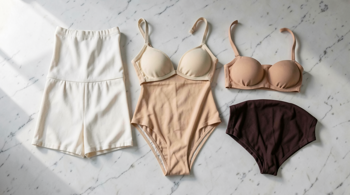
Focus on Material Breathability and All-Day Wear
Because bridal events routinely span eight to ten hours, modern consumers and fabric technologists are placing a much higher premium on fabric breathability over extreme, high-pressure compression 6 10. Industry analysts note that heavy, non-breathable materials often cause physical discomfort, localized sweating, and skin irritation, particularly during outdoor or summer ceremonies 10. Consequently, manufacturers are transitioning toward lightweight, moisture-wicking synthetic blends such as modal, eco-friendly recycled nylon, and highly elastic cooling fibers 14 3.
The integration of flexible power mesh panels has also emerged as a significant design trend, providing targeted abdominal compression where required while maintaining overall structural flexibility 11. This dual-fabric approach enables the undergarment to move in harmony with the body during activities such as walking, sitting, dining, and dancing, thereby ensuring that the wearer remains comfortable throughout the entire celebration without needing to adjust shifting layers 10 15.
Inclusivity in Shade Matching and Sizing
The push for greater industry inclusivity has fundamentally changed how brands approach color palettes and sizing structures in the bridal shapewear segment 3 16. Standard, limited selections of beige or white have been expanded into broad, multi-tonal skin-matching ranges designed to disappear under sheer lace, ivory, or champagne fabrics 17 18. Experts emphasize that matching the undergarment to the wearer's precise skin tone, rather than the exact color of the wedding dress, is the most effective technique to prevent the silhouette from showing through under intense venue lighting 2 19.
Furthermore, the market's expansion of size ranges ensures that brides of all body types can obtain precise structural support without having to settle for poor fits 3 16. Modern bridal shapewear lines are frequently offered in extended size ranges up to 4XL, allowing for highly targeted compression zones that gently enhance natural curves rather than awkwardly flattening the body's natural proportions or compressing the hips 1 8.
Practical Operational Guidelines for Bridal Fittings
To ensure absolute compatibility between the foundation wear and the wedding gown, specialists recommend conducting a full dress rehearsal at least two weeks before the event 8. It is essential to wear the exact shapewear, undergarments, and shoes during final alterations so the tailor can adjust the hemline and bust fit precisely 2. Trying on the combined layers for four to six hours helps identify performance issues under specific lighting conditions 8.
Additionally, brides should consider professional tailoring modifications, such as having bras sewn directly into the gown's bodice to completely eliminate the need for strapless bands 2. This simple adjustment can prevent the constant shifting that often compromises a bride's comfort during the reception 2 20. Matching foundation strategies to the structural realities of the dress ensures a seamless, secure look that remains completely invisible 21 22.
Sources
- The Knot
- Shapermint
- Shaper Factory
- Charm Vows
- FanCDesigns
- Photo-space.live
- David's Bridal Blog
- Fashion Couture UK
- S-Shaper French Low Back
- Glamour US
- Trend Hunter
- S-Shaper Spanish Wedding
- S-Shaper Japan Wedding
- Daily Front Row
- Prism News
- Yahoo Shopping
- The Hub Flx
- Cupid Intimates
- Beky Adventures
- StyleCaster
- Woolworth On Fifth
- Brides on a Mission