Whole-house generators on sale: A Comprehensive Market and Buyer's Intelligence Report
Whole-house generators on sale attract strong consumer attention, particularly after storm events leave tens of thousands of residents without power for extended periods. As recently as July 2026, powerful summer storms swept through Monmouth County, leaving many homes in the dark for days as utility crews worked to restore service. 1 The standby generator market has responded with a wide spectrum of product configurations, capacity tiers, and pricing structures that require careful evaluation before any purchase decision is made.
Understanding Capacity Tiers and What They Power
Whole-house standby generators typically range in power capacity from 10kW to 48kW, with most residential models falling between 20kW and 35kW. 2 At the lower end, a 10kW unit such as the Generac 7171 10kW model targets essential circuit backup, covering refrigerators, lighting, and select outlets. Mid-range units in the 14kW to 22kW bracket, such as the Generac Guardian Series 14kW (SKU 7225) and the 22kW model (SKU 7043), provide backup power for essential home circuits including HVAC systems. 3 At the top of the air-cooled residential category sit 26kW and 28kW configurations, including the Generac 7282 and 7328 models, which are engineered to handle entire homes with multiple simultaneous electrical loads during extended outages. 4
For homeowners with large square footage or high-demand appliances, liquid-cooled units extend coverage further. The Generac Protector Series XG04045ANAX delivers 40,000 watts of whole-home backup power on dual fuel (liquid propane or natural gas) and is described as designed for large residential whole-home backup power with remote monitoring capability. 5 Unlike portable units, whole-house standby generators can power an entire home including HVAC, refrigeration, and water heaters simultaneously, and they activate automatically within seconds of power loss without any manual intervention. 2
Current Market Price Ranges Across Categories
Market pricing observed across authorized dealer channels shows significant variation by capacity and bundle configuration. The Generac Guardian 14kW with whole-house switch and WiFi monitoring (SKU 7225) carries a listed price of approximately $5,289, compared to a higher reference price of $5,817.90. 3 The 22kW version (SKU 7043) with whole-house switch and WiFi is positioned at approximately $6,839 against a reference of $7,522.90. 6 Stepping up to the 26kW and 28kW tier, the Generac 7328 26kW unit with a 200A automatic transfer switch is listed at $8,059 in one channel and $7,253 in another, reflecting the price variation common in this segment. 4
| Model | Capacity | Configuration | Market Price Range |
|---|---|---|---|
| Generac 7225 | 14kW | With whole-house switch, WiFi | ~$5,289 |
| Generac 7043 | 22kW | With whole-house switch, WiFi | ~$6,839 |
| Generac 7282 | 28kW | Unit only, dual fuel | $7,199 to $8,470 |
| Generac 7328 | 26kW | With 200A transfer switch | $7,253 to $8,059 |
| Generac 7329 | 28kW | With 200A switch and ecobee | ~$9,319 |
| Generac Protector XG04045ANAX | 40kW | Liquid-cooled, residential | ~$23,399 |
Fuel Types and Dual-Fuel Configurations
Propane and natural gas are the most common fuel types for whole-house generators, with natural gas being less expensive per unit of energy but requiring active pipeline access. 2 Most current Generac Guardian Series models in the 14kW to 28kW range are factory-configured for dual fuel operation, allowing the homeowner to run on liquid propane (LP) or natural gas (NG) interchangeably. The DuroMax XP28000iH, a high-output portable inverter alternative, uses gasoline or propane dual-fuel technology and delivers 28,000 watts with advanced inverter circuitry for clean sine-wave power suitable for sensitive electronics. 7 The Westinghouse WGen20000c reaches 28,000 peak watts and 20,000 running watts from a 999cc V-Twin OHV engine, with transfer-switch-ready outlets and less than 5% total harmonic distortion, making it suitable for direct charging of sensitive electronics. 8
Tri-fuel configurations represent a growing niche. The Predator 13,000 Watt Tri-Fuel Portable Generator from Harbor Freight runs on gasoline, propane, or natural gas, offering over 12 hours of runtime per fill-up and remote start capability. 9 For homeowners evaluating portable versus standby options, the critical distinction remains automatic activation: standby systems connected to a transfer switch engage within seconds of outage detection, while portable units require manual setup and outdoor placement to avoid carbon monoxide risks.
Bundle Configurations and Transfer Switch Considerations
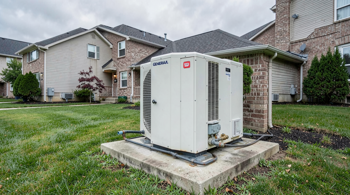
Value bundles that include the generator unit, an automatic transfer switch (ATS), and a monitoring system typically reduce total cost compared to purchasing components individually. 2 The Generac 7329 28kW package includes the generator unit, a 200-amp automatic transfer switch with integrated surge protection and load management, and an ecobee smart thermostat for active energy management during outages, along with built-in cellular monitoring, all in one purchase. 10 Similarly, the Generac 7328 26kW bundle combines 26kW output with a matched 200A automatic transfer switch and built-in cellular monitoring. 4 Buyers who purchase the generator unit alone at a lower upfront price should factor in the separate cost of an appropriately rated transfer switch before drawing comparisons across configurations.
Monitoring technology has become a standard feature at mid-to-upper price points. Generac's Mobile Link WiFi monitoring module enables real-time remote status checks, while the Guardian Series 14kW includes free Mobile Link Remote Monitoring and a Quiet-Test weekly self-test mode that runs at lower RPM to reduce fuel consumption and noise during routine checks. 3 These features add convenience but also introduce ongoing connectivity dependencies that buyers should evaluate against their infrastructure.
Installation Costs, Permits, and Ongoing Maintenance
Installation costs for whole-house generator systems generally run $3,000 to $6,000 in addition to equipment cost, requiring licensed electricians, permit filings, and in many cases, fuel line extensions or upgrades. 2 When combined with equipment pricing, total installed costs for a mid-range 22kW system with transfer switch can reach $12,000 to $15,000 or more, depending on local labor rates, utility connection requirements, and local code compliance inspections. Equipment-only price comparisons observed in the market therefore represent only a portion of the true total investment. Homeowners should obtain multiple installation quotes before committing to any specific unit, as labor costs vary substantially by region.
Annual maintenance for standby generators typically costs $150 to $300 and includes oil changes, air filter replacements, spark plug inspection, coolant level checks (for liquid-cooled units), and battery testing. 2 Neglecting maintenance schedules voids manufacturer warranties on most units and can result in failure during an actual outage, which defeats the primary purpose of the system. The Generac Guardian 14kW carries a 5-year limited warranty, and most Guardian Series models include a full manufacturer warranty as part of the standard configuration. 3
Financing, Federal Tax Credits, and Buyer Risk Factors
Financing options such as 18-to-24-month interest-free plans are commonly available through major home improvement retailers and some authorized dealers. 2 Afterpay and equipment financing through platforms like APPROVE are also offered by some online dealers, with applications processed in approximately 60 seconds and no stated credit score impact for the initial application inquiry. 6 Federal tax credits of up to 30% are available for qualifying residential generator installations through 2032 under the Inflation Reduction Act, according to Energy.gov guidance. 11 Homeowners should consult a tax professional to verify eligibility based on their specific installation type, fuel system, and property classification, as not all configurations qualify under the same credit structure.
Risk factors that buyers should weigh carefully include the distinction between list pricing and final installed pricing, the variability of local permit requirements, fuel supply reliability for propane-dependent systems during high-demand weather events, and the physical site requirements for generator placement (setback distances from windows and doors, concrete pad installation, and HOA restrictions in some communities). Major manufacturers including Generac, Kohler, Cummins, and Briggs and Stratton all offer residential standby lines, and comparing warranty terms, service network density, and parts availability in a buyer's specific region is as important as comparing unit pricing alone. 2
Sources
- The Monmouth Journal Eastern - themonmouthjournaleastern.com
- Consumer Reports - consumerreports.org/generators/whole-house-generators
- Equipment Outfitters - equipment-outfitters.com (Generac 14kW SKU 7225)
- IB Lighting - iblighting.com (Generac 7328 26kW listings)
- IB Lighting - iblighting.com (Generac Protector Series 40kW XG04045ANAX)
- Equipment Outfitters - equipment-outfitters.com (Generac 22kW SKU 7043)
- AllPro Generators / Generator Factory Outlet - DuroMax XP28000iH listings
- Frikum - frikum.com (Westinghouse WGen20000c)
- Harbor Freight - harborfreight.com (Predator 13000W Tri-Fuel Generator SKU 71386)
- IB Lighting - iblighting.com (Generac 7329 28kW with 200A and ecobee)
- Energy.gov - energy.gov/energysaver/backup-power-systems