Tactical Durability: Analyzing the Ex-military outdoor and camping field gear available for Modern Expeditions
The Evolution and Durability of Military Surplus Field Gear
Outdoor enthusiasts increasingly seek robust equipment, making ex-military outdoor and camping field gear available a popular study for tactical campers 1. This field gear has evolved from heavy canvas to modern lightweight synthetics, ensuring durability in harsh environments. By utilizing materials like 1000D Cordura nylon, government contractors build equipment to withstand extreme abrasion, heavy loads, and weather exposure 2. These fabrics prevent failure during critical field deployments, offering physical resilience that commercial gear rarely reproduces.
Furthermore, tactical field gear must pass rigorous military specification protocols before entering active service. This testing ensures that every load-bearing seam and zipper system functions reliably in sub-zero environments or extreme tropical humidity. While recreational campers prioritize minimal weight, military-grade materials focus on structural longevity and functional redundancy. As a result, ex-military field equipment remains a highly viable alternative for survival, forestry work, and demanding bushcraft applications where equipment failure could introduce significant safety risks.
Tactical Shelter and Bivouac Solutions
When evaluating temporary field shelters, ex-military gear offers highly modular configurations ranging from simple tarpaulins to multi-person combat tents. For lightweight operations, the Austrian Army military heavy-duty tarpaulin measures 320 by 120 centimeters and provides versatile configurations as a windbreak, groundsheet, or emergency shelter 3. Similarly, the USMC MARPAT shelter half provides a reversible setup utilizing Woodland MARPAT on one side and Coyote Brown on the other 4. This reversible design uses 1.9-ounce waterproof nylon ripstop fabric, weighing approximately four pounds 4.
For structured base camps, military units deploy engineered tents capable of resisting high winds and heavy snow loads. The USMC 2-man combat shelter, manufactured by specialized contractors like Eureka, serves as an all-weather, four-season tactical tent trusted for durability 5. On a larger scale, the French Army F1 polycotton tent incorporates a sewn-in groundsheet and stable structural poles, offering an intermediate shelter option 6. These shelter systems demonstrate how tactical engineering prioritizes weather resistance and environmental concealment.
Modular Sleep Systems and Environmental Adaptability
Achieving proper thermal regulation in unpredictable outdoor climates is a core focus of military survival design. The US Army Modular Sleep System (MSS) consists of a four-piece configuration engineered to keep personnel insulated in temperatures ranging from 50 degrees Fahrenheit down to extreme cold environments 7. This setup includes a lightweight foliage green patrol bag rated to 30 degrees, an intermediate cold weather bag rated to negative ten degrees, a breathable three-layer GORE-TEX bivy cover, and a heavy-duty compression stuff sack 7.
Other international systems, such as the British Army FESCA modular sleeping bag system, utilize similar multi-part nesting strategies to allow field operators to customize their insulation levels based on local climate demands 6. For mild conditions, soldiers historically rely on the classic wet-weather poncho liner, colloquially known as the 'woobie' 8. Built under official national stock numbers, the poncho liner uses a ripstop nylon outer shell combined with quilted polyester batting to trap body heat without adding unnecessary bulk to pack weight 8.
Advanced Load-Bearing Packs and Rucksacks
Efficiently transporting equipment over long distances requires robust weight distribution, which is why military load-bearing systems are designed with rigid internal or external frames. The USMC Gen 2 ILBE APB03 field pack, designed by Arc'teryx, features a 4500-cubic-inch main compartment constructed from 720D Cordura fabric 9. Capable of carrying up to 120 pounds, this pack utilizes an internal frame with aluminum ribs and adjustable compression straps to ensure ergonomic weight distribution across the user's hips and shoulders 9.
For alternative tactical configurations, the USGI MOLLE II Large Rucksack offers over 4000 cubic inches of capacity utilizing a heavy-duty 1000D Cordura nylon shell and an external frame system 2. If a smaller footprint is desired, day packs such as the German Army Einsatzsystem day pack, manufactured under contract by Tatonka, provide a compact 30-liter alternative for shorter missions 6. These variable pack capacities enable outdoor enthusiasts to select the exact volume and frame configuration required to match their specific expedition duration.
Hydration, Cooking, and Essential Field Accessories
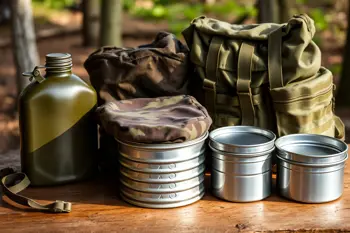
In addition to shelter and load-bearing gear, ex-military field accessories provide essential support for sustenance and survival operations in remote environments. Traditional tactical hydration relies on standardized containers like the original US Military 0.75-liter plastic canteen 3. This canteen fits securely inside an insulated fabric cover designed for easy attachment to modular webbing systems 3. By keeping water easily accessible, these canteens ensure that outdoor operators can maintain hydration without needing to repeatedly unpack primary rucksacks.
Field cooking systems also prioritize nesting efficiency and durable metal construction to withstand direct exposure to open campfires. The genuine British military aluminum mess tin set features a nesting design that minimizes storage volume inside a pack while providing robust cooking vessels 6. These nesting sets allow users to boil water, prepare field rations, and store loose items without carrying heavy, specialized commercial cookware. The practical design of these classic mess tins highlights the military philosophy of multi-functional utility.
Market Friction Points: Understanding Condition Grading and Maintenance
Acquiring surplus equipment requires an understanding of the military grading system, as item conditions range from unissued surplus to heavily used field gear. Grade A items typically represent gear that looks almost new, exhibiting minor storage wear or distinct warehouse odors but retaining full structural integrity 3. Grade B or serviceable items may require minor repairs, showing visible abrasions, faded camouflage patterns, or slight cosmetic blemishes 4. Understanding these distinctions is critical for buyers to ensure that they select functional gear capable of meeting safety requirements.
Proper ongoing maintenance is also vital to preserve the protective qualities of ex-military field equipment. Specialized technical fabrics, such as the three-layer GORE-TEX laminates used in bivy covers, must be washed according to precise instructions to prevent the degradation of water-repellent coatings 10. Users should avoid bleach or harsh chemical detergents, opting instead for gentle, cold-water cycles and low-temperature drying 10. Regular inspection of load-bearing seams and metal hardware ensures that the gear remains reliable for future use.
Sources
- GoArmy
- Fury28
- GoMilitar
- KommandoStore
- One Shear
- MilitaryMart
- Venture Surplus
- Keep Shooting
- B and M Military Surplus
- Gorilla Outfitters