Central Air Conditioning Units on Sale: A Buyer's Research Guide to Specs, Pricing, and Efficiency Tiers
What the Central AC Market Currently Looks Like
Central air conditioning units on sale across online HVAC distributors today span a broad range of tonnage, efficiency ratings, and refrigerant types. Entry-level condenser-and-coil bundles for smaller homes typically carry market price points starting around $2,376 for a 2-ton, 13.4 SEER2 configuration using R32 refrigerant, while larger whole-system packages with gas furnaces included can reach $5,373 or more for a 3-ton, 15.2 SEER2 system. 1 At the high-efficiency end, ducted central systems rated at 17 SEER2 with 53,000 BTU capacity are positioned above $4,500 for equipment alone, reflecting the premium associated with inverter-driven compressors and next-generation refrigerants like R454B. 2
The online direct-to-consumer HVAC channel has meaningfully expanded the price reference range available to buyers. Platforms listing brands such as ACiQ, Goodman, and Trane publish configured system prices that include the outdoor condenser, indoor evaporator coil or air handler, and optional accessories such as line sets, electric heat kits, and thermostats. A 4-ton, 15.5 SEER2 ACiQ bundle with a vertical cased coil, for example, was listed at $2,868 through specialty HVAC retailers, compared to a stated original price of $3,368. 3 These publicly listed price differences reflect standard distributor markdown structures, not time-limited events, and buyers should treat them as baseline market averages rather than guaranteed purchase prices.
SEER2 Ratings and What They Mean for Operating Costs
The SEER2 metric, which replaced the older SEER standard effective January 2023, measures cooling output per unit of electrical energy consumed under updated Department of Energy test conditions designed to more closely replicate real-world installation pressures. Units rated at 13.4 SEER2 represent the federally mandated minimum efficiency floor for most U.S. climate regions, while systems rated at 15.2 to 17 SEER2 occupy the high-efficiency tier. 4 High-efficiency central AC units can reduce energy consumption by roughly 20 to 30 percent compared to equipment installed 15 or more years ago, which translates to measurable reductions in summer utility bills depending on local electricity rates and annual cooling hours. 5
Inverter-driven compressors, now standard on many mid-range and premium central systems, allow the unit to modulate output continuously rather than cycling fully on and off. This approach maintains more consistent indoor temperatures, reduces peak electrical demand, and lowers mechanical wear on the compressor over time. The ACiQ Extreme Series 3-ton heat pump split system, rated at 17.4 SEER2 with R454B refrigerant and hyper-heat capability down to negative 22 degrees Fahrenheit, illustrates how efficiency and cold-climate performance can coexist in a single ducted platform. 6 Buyers evaluating SEER2 ratings should note that higher-rated systems carry larger upfront equipment costs, and the payback period depends heavily on local climate zone and existing system inefficiency.
Refrigerant Transitions: R410A, R32, and R454B
A significant technical shift is reshaping the central AC market as manufacturers phase out R410A refrigerant in response to federal regulations targeting high global-warming-potential substances. Two replacement refrigerants now appear across current product listings: R32, which carries a global warming potential approximately 68 percent lower than R410A, and R454B, which achieves an even lower potential of roughly 78 percent below R410A while maintaining comparable thermodynamic performance. 7 Goodman has deployed R32 across its current residential condenser lineup, with 2-ton and 2.5-ton models pre-charged at the factory, while ACiQ has adopted R454B for its newer split system and furnace bundle configurations.
This refrigerant transition carries practical implications for buyers of central air conditioning systems today. Equipment certified for R454B is not backward-compatible with R410A systems in most configurations, meaning homeowners who upgrade only the outdoor condenser while retaining an older indoor coil must confirm refrigerant compatibility with a licensed technician before purchasing. Systems listed as R410A inverter condensers, such as the ACiQ 3.5-ton 15.5 SEER unit, are positioned as compatible replacement units for existing R410A coil-and-furnace setups, which addresses a common cost concern for partial system replacements. 8 Buyers should request refrigerant type documentation and verify that their contractor holds current EPA Section 608 certification for the applicable refrigerant category.
System Sizing and Capacity Categories
Central air conditioning equipment is sized in tons, where one ton equals 12,000 BTUs of cooling capacity per hour. Residential systems available through online distributors currently span 1.5 tons through 5 tons, with each tier mapped to approximate square footage ranges under standard conditions. A 2-ton system is generally appropriate for homes between 1,000 and 1,300 square feet, while a 5-ton configuration, such as the Trane RunTru 14.3 SEER2 gas furnace and AC bundle priced at $5,417, addresses larger homes in the 2,500-square-foot-and-above range. 9 The DELLA 53,000 BTU (approximately 4.4-ton) ducted system with air handler targets spaces up to 2,500 square feet and operates across a climate range of negative 5 degrees to 125 degrees Fahrenheit. 2
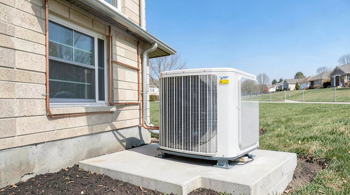
Oversizing and undersizing central AC units both create measurable performance and efficiency problems. An oversized system short-cycles, meaning it reaches thermostat setpoint quickly without running long enough to adequately dehumidify the space, leading to a cool but clammy indoor environment. An undersized unit runs continuously during peak heat, struggles to maintain setpoint, and accumulates operating hours that accelerate component wear. Energy Star guidance emphasizes that proper load calculation using Manual J methodology, performed by a licensed HVAC contractor, is the only reliable method for determining correct system tonnage for a specific structure. 10
Federal Tax Credits and Financing Considerations
Qualified high-efficiency central air conditioning systems may be eligible for the federal Residential Energy Credits program, administered through IRS Form 5695. Homeowners who install Energy Star certified central air systems can potentially claim credits up to $2,000 depending on the equipment category and the year of installation. 11 The critical compliance detail is that the credit applies to the tax year in which the installation is completed, not the year of purchase. Equipment bought in late autumn but installed the following January would be claimed on the subsequent year's return, a timing distinction that affects how buyers should plan major HVAC replacements relative to their annual tax filing. Documentation, including manufacturer certification statements and itemized installation invoices, should be retained even though it is not submitted with the return itself.
Financing structures associated with central AC equipment vary significantly by retailer and by whether the buyer is purchasing equipment-only for contractor installation or opting for a turnkey installed package. Equipment-only purchases through online distributors may carry financing options, while full-installation contracts through regional HVAC contractors often include manufacturer rebate programs and utility company incentives that online-only buyers would not automatically receive. Central air conditioning systems have an average equipment lifespan of 15 to 20 years, making financing terms and total cost of ownership calculations relevant to the purchase decision alongside upfront price comparisons. 5
Installation Complexity, Warranty Requirements, and Buyer Risks
The vast majority of central air conditioning manufacturers require installation by a licensed HVAC technician as a condition of warranty coverage. Goodman, for example, offers a 10-year parts warranty on its R32 condenser line when registered online within a specified period after installation, but warranty terms typically specify that improper installation voids coverage. 12 Installation costs, which are separate from equipment prices, generally range from $1,500 to $3,000 depending on regional labor markets, system complexity, and whether ductwork modification or electrical panel upgrades are required. Buyers who purchase equipment online and arrange independent contractor installation should obtain written confirmation from the installer that the work meets manufacturer installation specifications before requesting warranty registration.
Beyond warranty considerations, buyers should anticipate that online-listed prices for condenser units or split system bundles may not include all components required for a fully functional installation. Line sets, condensate drain lines, electrical disconnect boxes, mounting pads, and thermostat wiring represent additional costs that vary by installation site. A 3-ton ACiQ R454B split system listed at $3,727 for the condenser and air handler, for instance, carries optional line set additions ranging from $381 to $524 depending on length and insulation type. 13 Buyers conducting total cost comparisons between online equipment and contractor-supplied turnkey installations should account for all ancillary components to produce an accurate comparison figure.
Sources
- HVACDirect.com - Goodman 2 Ton 13.4 SEER2 R32 Air Conditioner with Upflow/Downflow 17.5" Cased Coil
- DellaHome.com - DELLA 53,000 BTU 17 SEER2 Ducted Central Air Conditioner with Air Handler
- HVACDirect.com - ACiQ 4 Ton 15.5 SEER2 Air Conditioner with Vertical 21" Cased Coil - R410A Single Stage
- HVAC.com - Central Air Conditioning Pricing and Efficiency Guide
- General LLM Research Data - Central AC Lifespan and Energy Efficiency Statistics
- HVACDirect.com - ACIQ Extreme Series 3 Ton 17.4 SEER2 High Efficiency Heat Pump Split System - R454B Inverter
- General LLM Research Data - R32 and R454B Refrigerant Global Warming Potential Comparison
- HVACDirect.com - ACiQ 3.5 Ton 15.5 SEER High Efficiency Central Air Conditioner Condenser - R410A Inverter
- HVACDirect.com - Trane 5 Ton 14.3 SEER2 80% 120,000 BTU Furnace and AC System - R454B Multi-Positional
- Energy Star - Central Air Conditioning Sizing and Installation Guidance
- PremierAirColorado.com - How do I claim the HVAC tax credit? (IRS Form 5695 Reference)
- ACUnitsForLess.com - Goodman 2.0 Ton 13.4 SEER2 Product Listing and Warranty Information
- HVACDirect.com - 3 Ton 16 SEER2 ACiQ R454B Air Conditioner Split System - Multi-Positional