A Traveler's Guide to 10-Night Italy and Greece Cruises
A 10-night cruise combining the ancient wonders of Italy with the sun-drenched beauty of the Greek Islands offers a fantastic way to experience the heart of the Mediterranean. This duration provides a perfect balance, allowing for deeper exploration of several key destinations without feeling rushed, while also giving you ample time to relax and enjoy the amenities of your ship as you sail between ports.
What to Expect on a 10-Night Itinerary
A 10-night cruise offers a more comprehensive journey than shorter week-long trips. You can anticipate visiting between six and eight different ports, which typically translates to a schedule with one or two relaxing 'sea days'. These days at sea are perfect for recharging, exploring the ship’s features like pools, spas, and restaurants, or simply watching the waves from your balcony. The pace is generally relaxed, giving you a full day in most ports to explore at your leisure.
The overall experience blends cultural immersion with vacation-style relaxation. Mornings might be spent wandering through ancient Roman ruins or exploring a vibrant Greek village, while afternoons and evenings are spent back on board enjoying meals, entertainment, and the comforts of your floating hotel. This structure removes the logistical stress of traveling between countries, as you unpack only once and wake up in a new, exciting location almost every day.
Common Departure and Arrival Ports
Most Italy and Greece cruises depart from major Italian port cities that are well-connected to international airports. This makes it convenient for travelers to fly in a day or two early to overcome jet lag and explore the departure city before embarking. Some itineraries may also start or end in Athens, Greece, offering a different perspective on the journey.
- Rome (Civitavecchia): As the largest port serving the Italian capital, this is one of the most popular starting points. Travelers often spend a few days in Rome exploring its iconic landmarks before their cruise.
- Venice (or nearby ports like Ravenna/Trieste): Starting your journey in this magical city of canals provides an unforgettable beginning. Due to regulations, large ships now often dock in nearby ports, with transportation arranged to Venice.
- Athens (Piraeus): Some cruises, particularly those focusing more heavily on the Greek Islands, will start or end in the main port for Athens, allowing for easy access to the Acropolis and other ancient sites.
Classic Italian Ports of Call
The Italian portion of your cruise will immerse you in history, art, and incredible cuisine. While itineraries vary, most will include a selection of Italy's most celebrated coastal destinations. Each port serves as a gateway to a region rich with unique sights and experiences, from ancient history to stunning natural landscapes.
Shore excursions are the best way to make the most of your time. You might explore the remarkably preserved ruins of Pompeii from the port of Naples, take a day trip to Florence and Pisa from Livorno, or discover the rugged beauty of the Sicilian coast from Messina. Other common stops include Sorrento, known for its dramatic cliffs, or Cagliari in Sardinia, offering beautiful beaches and fascinating history.
Exploring the Greek Islands and Mainland
After soaking in the culture of Italy, your cruise will typically head across the Adriatic or Ionian Sea to Greece. The Greek portion of the itinerary is often the highlight for many, featuring a mix of iconic islands and historically significant mainland ports. You'll be greeted by whitewashed villages, stunning blue waters, and archaeological treasures that bring ancient myths to life.
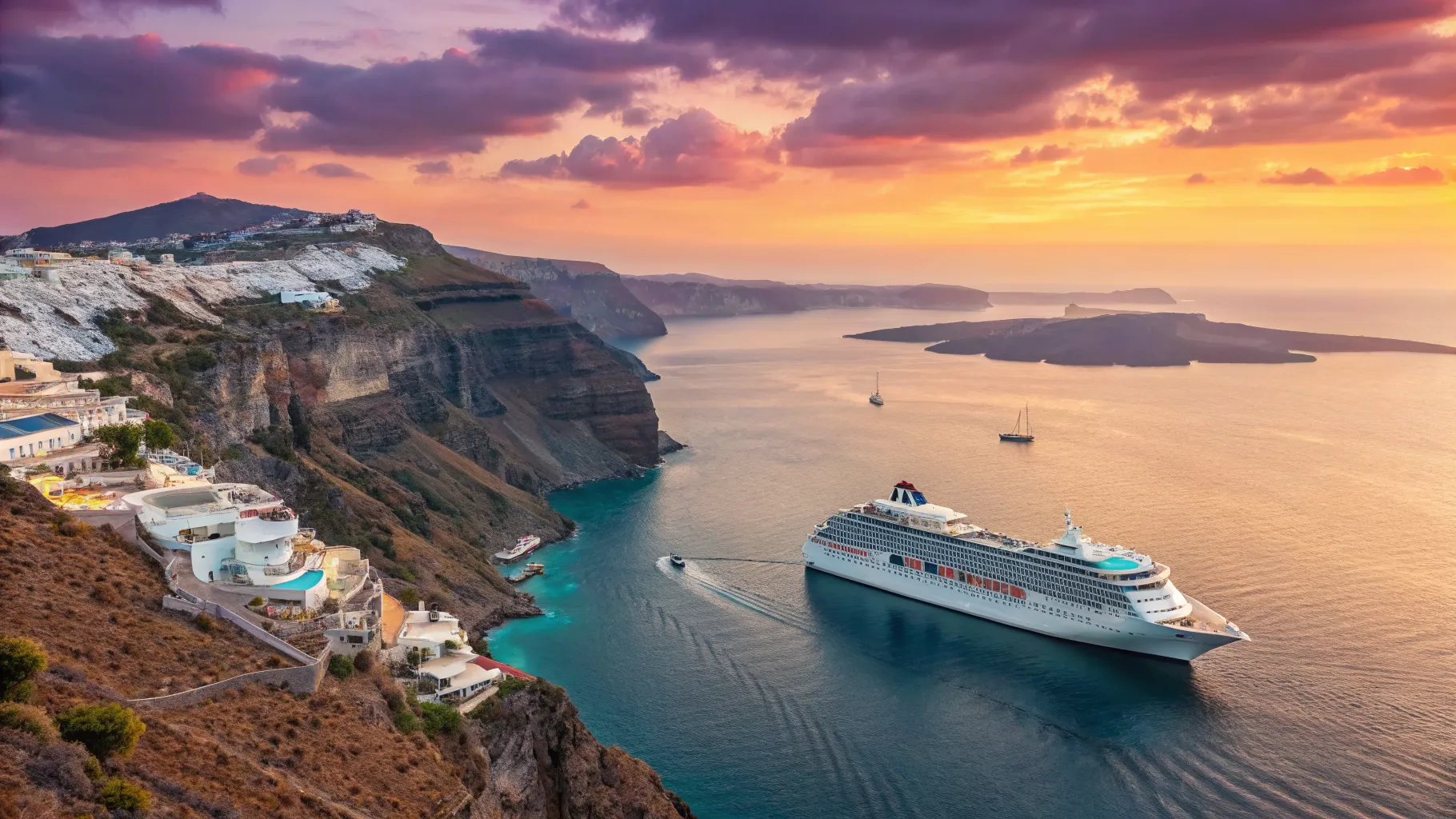
Popular island stops include Santorini, famous for its breathtaking sunsets and cliffside towns of Oia and Fira, and Mykonos, known for its charming windmills, beautiful beaches, and lively atmosphere. Other potential ports are Rhodes with its medieval Old Town, Crete with its Minoan palaces, and Corfu with its lush landscapes and Venetian architecture. A stop at Athens (Piraeus) is also common, offering a chance to visit the Acropolis and Parthenon.
Choosing the Right Cruise Line and Ship
The type of cruise line you choose will significantly shape your onboard experience. The industry offers a wide spectrum of options, from large, family-friendly mainstream lines with extensive entertainment to smaller, premium, and luxury lines that focus on fine dining, personalized service, and more intimate atmospheres. Consider what kind of vacation you are looking for: a bustling resort-style ship with countless activities or a quieter, more refined vessel.
The size of the ship is another important factor. Larger ships are destinations in themselves, boasting amenities like water slides, Broadway-style shows, and a huge variety of dining venues. Smaller ships, on the other hand, can often dock in more unique, less-trafficked ports that are inaccessible to mega-ships. They also tend to offer a more personal and less crowded experience on board.
Planning and Booking Your Voyage
The best time to take an Italy and Greece cruise is during the shoulder seasons, which are late spring (May and June) and early fall (September and October). During these months, the weather is pleasant, the summer crowds have thinned out, and pricing can be more favorable. The peak summer months of July and August can be very hot and crowded in popular ports.
When budgeting, remember to look beyond the initial cruise fare. Your fare typically covers your cabin, meals in the main dining rooms and buffet, and some drinks and onboard entertainment. However, you should plan for extra costs such as shore excursions, specialty dining restaurants, alcoholic beverages, spa treatments, and daily gratuities for the crew. Booking your cruise several months in advance often provides the best choice of cabins and potential early-booking promotions.