A Guide to What Kills Weeds Down to the Root
Dealing with stubborn weeds requires more than just removing the visible leaves and stems. To truly eliminate these unwanted plants, it is essential to understand what kills weeds down to the root and how to apply these methods effectively.
Understanding How Weeds Grow and Spread
Weeds are incredibly resilient plants that have adapted to survive in various conditions. Many of the most difficult weeds to manage rely on extensive underground root systems. When only the top portion of the plant is removed, the root system stores enough energy to generate new shoots rapidly.
Perennial weeds are especially notorious for their deep taproots or sprawling rhizomes. To achieve long-term success, effective weed management must target this underground network. Leaving even a small fragment of a rhizome behind can result in a completely new plant emerging a few weeks later.
The Science of Systemic Weed Treatments
Systemic treatments are designed specifically to travel through the vascular system of the plant. Once applied to the leaves, the active ingredients are absorbed and transported downward. This process is often what kills weeds down to the root most reliably in large agricultural or landscaping settings.
Because systemic solutions take time to move through the plant, results are rarely instantaneous. It can take several days or even weeks for the foliage to show signs of wilting and for the root system to completely die. Patience is a key component when using systemic methods to ensure the entire root network is neutralized.
Natural and Organic Approaches to Weed Control
For those who prefer to avoid synthetic chemicals, there are natural weed removal methods available. While some household solutions primarily damage the visible foliage, certain organic techniques can impact the roots if applied correctly and consistently.
- Boiling water: Pouring boiling water directly over the crown of the plant can cook the upper roots of shallow weeds.
- Horticultural vinegar: High-concentration vinegar breaks down plant cell walls, which can exhaust the root system over multiple applications.
- Solarization: Covering an area with clear plastic during the hottest months traps heat, effectively baking the weeds and their seeds in the top layer of soil.
Mechanical and Manual Weed Removal Methods
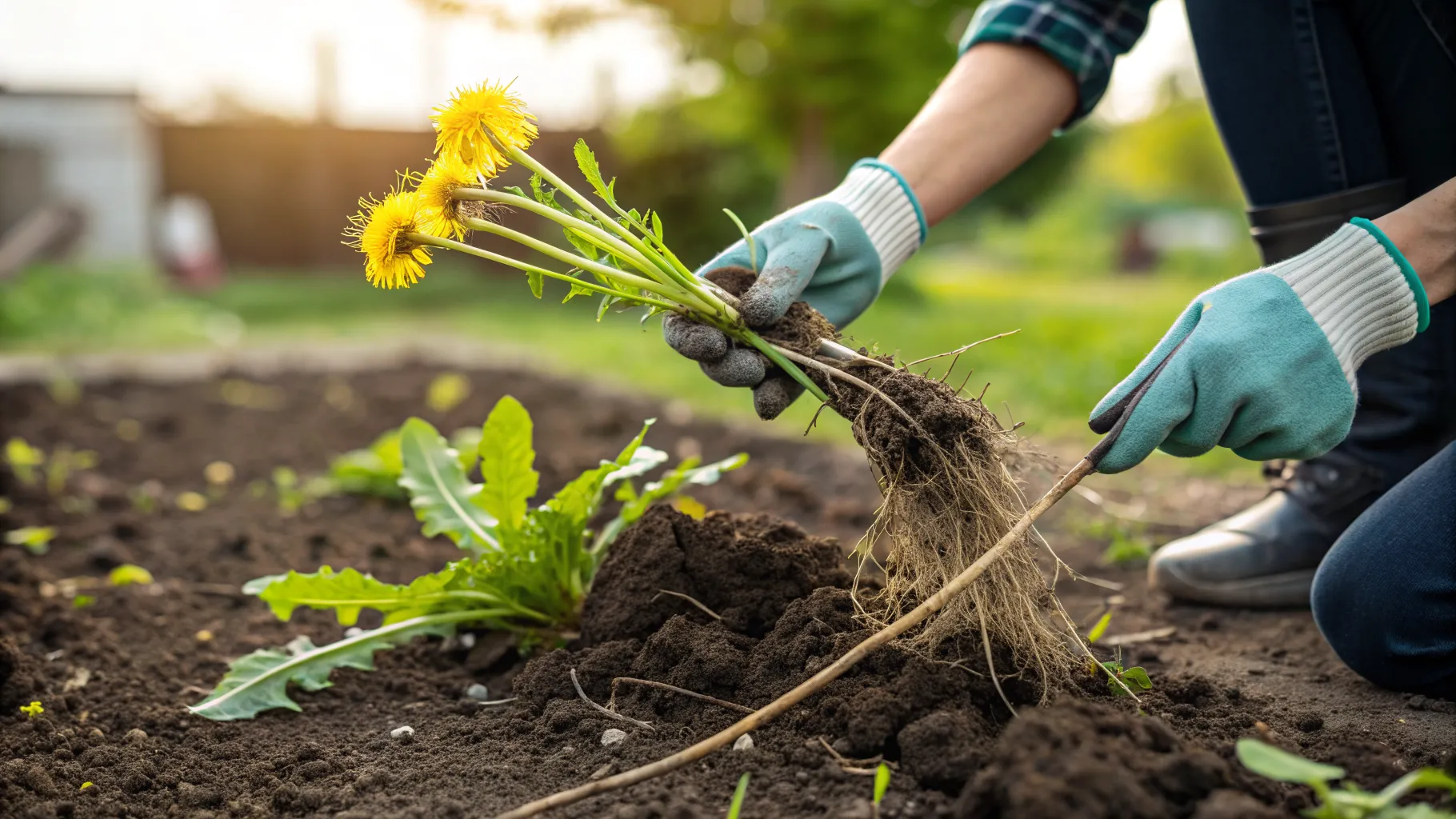
Sometimes the most straightforward approach to how to kill weeds involves physical labor. Manual removal is highly effective if the entire root system is extracted intact. Using specialized tools like a dandelion digger or a collinear hoe can help loosen the soil deep enough to retrieve the taproot.
Timing plays a crucial role in the success of mechanical removal. Pulling weeds after a light rain is generally much easier because the moist soil allows roots to slide out without snapping. If the soil is too dry or compacted, the roots are highly likely to break, leaving pieces behind to regrow.
The Role of Soil Health in Weed Management
Weeds often serve as indicators of poor soil conditions. For instance, compacted soil or areas with poor drainage tend to attract specific types of resilient weeds that thrive where cultivated plants struggle. Improving the overall health of the soil can naturally suppress these unwanted invaders.
Adjusting the soil pH, increasing organic matter, and aerating compacted areas give desirable plants a competitive advantage. When the garden or lawn is dense and healthy, it blocks sunlight from reaching weed seeds and leaves less room for weed roots to establish themselves.
Preventive Measures to Stop Weeds Before They Start
The most efficient weed control tips always include prevention. Stopping weeds from germinating in the first place reduces the need to worry about root eradication later on. Mulching is one of the most common and effective barriers used in gardening.
- Apply a thick layer of organic mulch to block sunlight and prevent seeds from sprouting.
- Use pre-emergent treatments in early spring to stop weed seeds from developing roots.
- Maintain a thick, healthy lawn to crowd out potential weed invaders naturally.
- Clean gardening tools regularly to avoid spreading root fragments and seeds between different beds.
Common Mistakes in Eradicating Weeds
One of the most frequent errors in weed management is simply using a string trimmer to cut weeds down to the soil line. While the area may look tidy temporarily, the root remains completely intact and will quickly produce new growth. This practice can even encourage certain weeds to grow back thicker.
Another mistake is applying treatments at the wrong time of day or year. Many methods require the plant to be actively growing to absorb the treatment effectively. Applying a solution during a drought or extreme heat wave often leads to poor results because the plant has shut down its vascular system to conserve water.