A Guide to 10-Day Iceland and Norway Cruises
Embarking on a 10-day cruise through Iceland and Norway is a popular way to experience the spectacular natural beauty of Northern Europe. This type of voyage combines the volcanic landscapes and glaciers of Iceland with the breathtaking fjords and charming coastal towns of Norway, all from the comfort of a modern cruise ship. It's a journey that appeals to travelers seeking adventure, dramatic scenery, and cultural immersion in a relatively short amount of time.
Typical Itineraries and Routes
A 10-day cruise itinerary to Iceland and Norway is carefully designed to maximize sightseeing while balancing time at sea. Most of these cruises depart from major European ports such as Copenhagen, Amsterdam, or Southampton in the United Kingdom. The route typically heads north, often including a stop in the Shetland or Faroe Islands before reaching Iceland for several port calls over two to three days.
After exploring Iceland, the ship sails east towards the Norwegian coast. The journey will then focus on navigating the famous fjords and visiting key coastal cities. Expect a couple of full days at sea, which provide opportunities to enjoy the ship's amenities, attend educational lectures about the region's geology and history, or simply watch the stunning ocean scenery from the deck.
Exploring Iceland's Wonders
The Icelandic portion of the cruise typically includes stops at several key ports. Reykjavik, the capital, is almost always on the itinerary, serving as a gateway to the famous Golden Circle tour. This excursion allows visitors to see the Gullfoss waterfall, the Geysir geothermal area, and Þingvellir National Park. Many shore excursions from Reykjavik also offer visits to the world-renowned Blue Lagoon for a relaxing soak in its mineral-rich waters.
Other common Icelandic ports of call include Akureyri in the north, known as the 'Capital of North Iceland,' and Ísafjörður in the remote Westfjords. From Akureyri, travelers can explore the Lake Mývatn area with its unique volcanic craters and lava formations. Ísafjörður offers a glimpse into a more isolated part of Iceland, with opportunities for hiking, kayaking, and wildlife spotting, including puffins and arctic foxes.
Navigating the Majestic Norwegian Fjords
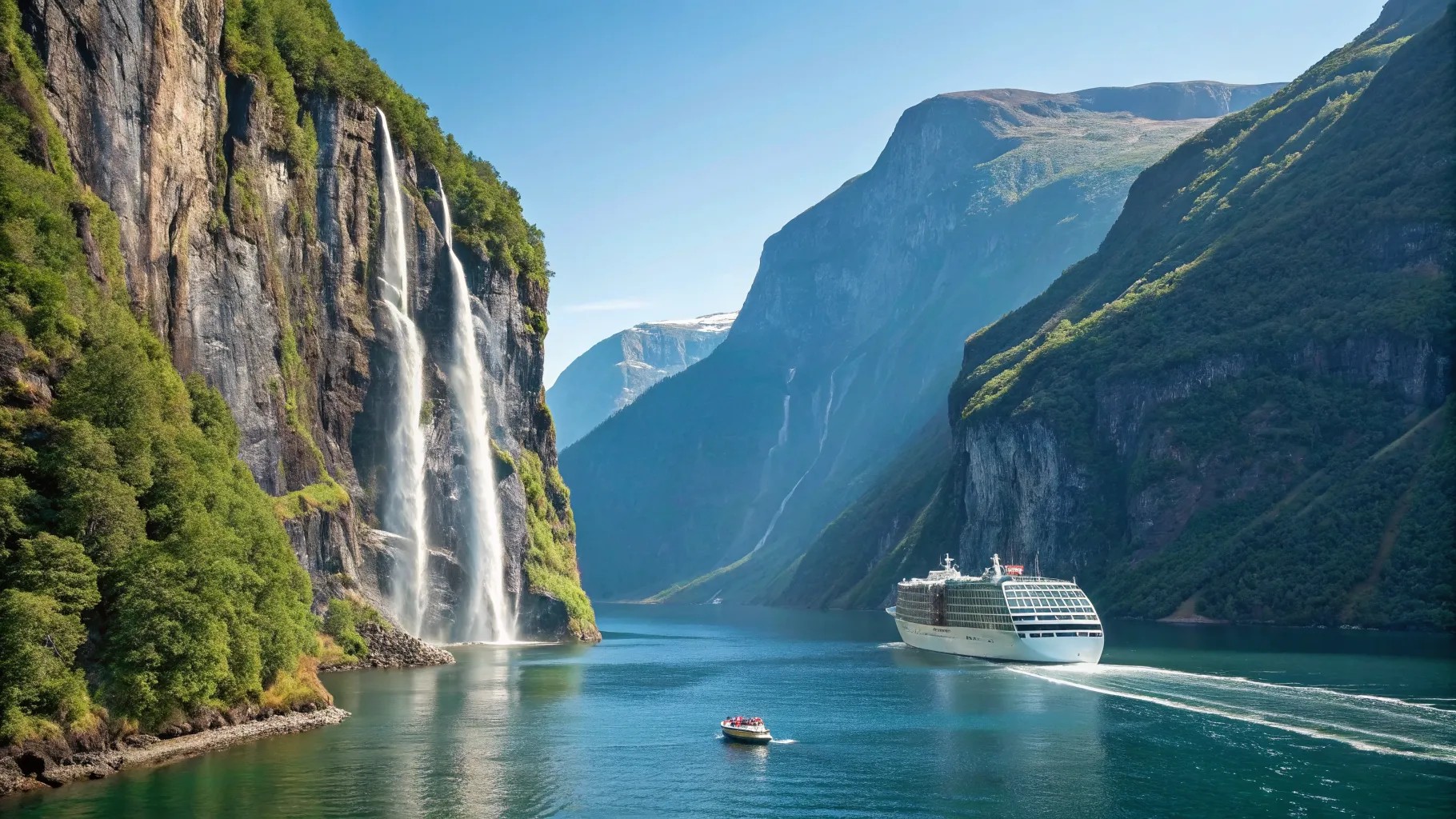
Once the cruise reaches Norway, the focus shifts to the country's iconic fjords. These deep, narrow inlets are flanked by steep mountains and cliffs, creating some of the most dramatic landscapes on Earth. Ships often spend a full day or more scenic cruising, sailing slowly through fjords like Geirangerfjord, a UNESCO World Heritage site famous for its waterfalls like the Seven Sisters, or Sognefjord, Norway's longest and deepest fjord.
Port calls in Norway allow for deeper exploration. Bergen, with its historic Bryggen wharf, is a frequent stop, offering a charming blend of history and culture. Other potential ports include Stavanger, the gateway to the famous Pulpit Rock hike; Ålesund, renowned for its Art Nouveau architecture; and smaller villages like Flåm, from where you can ride the scenic Flåm Railway for incredible mountain views.
The Onboard Cruise Experience
The type of ship you travel on can significantly shape your experience. Routes to Iceland and Norway are served by a wide range of vessels, from massive resort-style ships with thousands of passengers to smaller, more intimate expedition-focused ships. Larger ships offer a vast array of amenities, including multiple restaurants, theaters, spas, and kids' clubs, making them a good option for families or those seeking lots of entertainment.
Smaller or expedition-class ships, on the other hand, often provide a more in-depth educational experience. They may have a team of experts on board, such as naturalists, geologists, and historians, who give lectures and guide excursions. These ships can also sometimes access smaller ports and more remote fjords that are inaccessible to larger vessels, offering a different perspective on the region.
Best Time of Year to Cruise
The vast majority of 10-day Iceland and Norway cruises operate during the late spring and summer months, from May through September. This period offers the most favorable weather conditions and the phenomenon of the Midnight Sun, where daylight extends late into the evening, providing more time for sightseeing. Summer is peak season, so you can expect larger crowds and higher demand for excursions.
Cruising during the shoulder seasons of late May, early June, or September can be a great alternative. The weather is still generally pleasant, but there are fewer tourists compared to July and August. While the full Midnight Sun experience may have passed, you still get very long days. For those hoping to catch a glimpse of the Northern Lights, a cruise in late September offers a small but possible chance, especially in the more northern latitudes of Iceland and Norway, though it is never guaranteed.
What to Pack for Your Northern Voyage
Packing for a cruise to Iceland and Norway requires careful planning due to the highly variable weather. Even in summer, temperatures can be cool, and rain is always a possibility. The key is to pack in layers that you can easily add or remove as conditions change throughout the day.
A well-prepared packing list should include:
- A waterproof and windproof outer jacket is essential.
- Warm layers such as fleece jackets, sweaters, and thermal underwear.
- Comfortable, waterproof walking shoes or hiking boots for shore excursions.
- Smart casual attire for dinners on the ship; some cruise lines may have formal nights.
- Accessories like a warm hat, gloves, and a scarf, even in summer.
- Binoculars for spotting wildlife like puffins, whales, and eagles from the deck.
- A reusable water bottle to stay hydrated during excursions.