10 Flowers That Bloom in Fall
As summer fades and temperatures begin to drop, many gardens start to lose their vibrant colors. However, the arrival of autumn does not mean the end of beautiful blooms. There is a wide variety of flowers that thrive in cooler weather, providing a fresh burst of life to outdoor spaces.
Understanding which plants peak during this season can help gardeners and nature lovers maintain a lively landscape well into November. The following ten flowers are known for their spectacular fall displays.
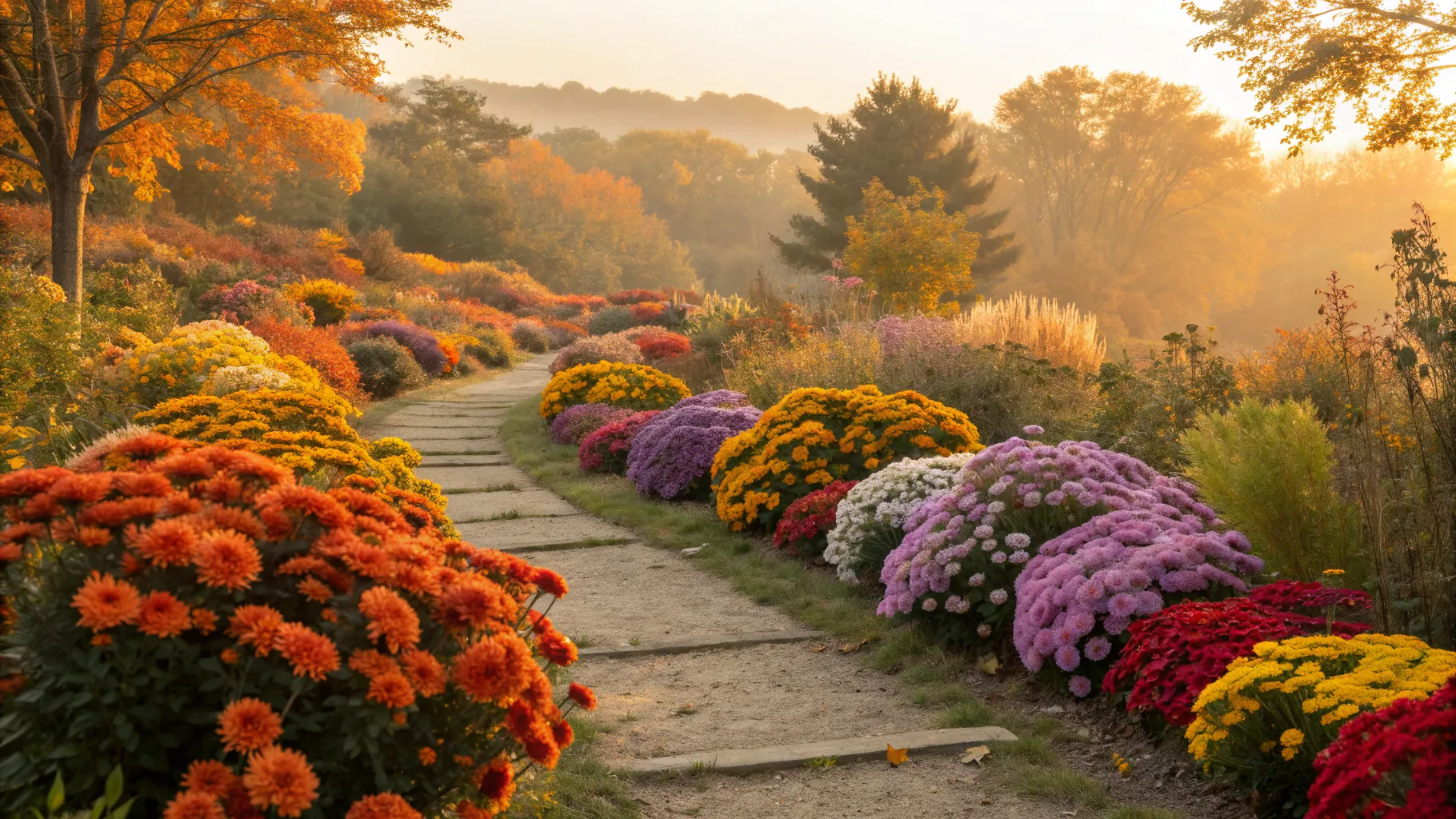
1. Chrysanthemums
Often referred to simply as mums, these are arguably the most iconic fall flowers available. They come in a staggering array of colors, including deep reds, bright yellows, warm oranges, and pure whites. The tight, globe-like blooms of traditional garden mums provide a concentrated splash of autumn hues that perfectly complements the changing foliage of nearby trees.
Chrysanthemums are typically divided into two categories, which are floral mums and garden mums. Garden mums are hardy perennials that, when planted early enough, can establish a strong root system and return year after year. They thrive in full sun and require well-draining soil to prevent root rot during the wetter autumn months.
2. Asters
Asters are daisy-like flowers that provide a crucial late-season nectar source for pollinators. Their star-shaped blooms emerge just as many summer flowers begin to fade, creating a seamless transition of color in the garden. These plants are most commonly found in shades of purple, blue, pink, and white, featuring bright yellow centers that attract bees and migrating butterflies.
There are many varieties of asters, with the New England and New York asters being among the most popular for fall gardens. They range in height from low-growing alpine varieties to towering plants that can reach several feet tall. Planting them in a spot that receives plenty of sunlight ensures the most prolific blooming period.
3. Japanese Anemones
For gardens that feature partial shade, Japanese anemones are an exceptional choice for late summer and fall color. These plants produce tall, wiry stems that dance gracefully in the autumn breeze, topped with elegant, cup-shaped flowers. The blooms are typically crisp white or varying shades of soft pink, adding a touch of delicate beauty to darker corners of the landscape.
Japanese anemones can take a year or two to become fully established, but once they settle in, they spread steadily through underground rhizomes. They prefer rich, moist soil and are highly resistant to most common garden pests, making them a relatively low-maintenance addition to seasonal beds.
4. Pansies
Pansies are famous for their remarkable cold tolerance, making them a staple in fall and winter gardens. These cheerful flowers often feature a distinct face-like pattern on their petals and are available in nearly every color of the rainbow. Because they prefer cooler soil temperatures, planting them in September or October allows them to thrive without the stress of summer heat.
In many mild climates, pansies will continue to bloom straight through the winter and into the following spring. Even in regions that experience moderate freezes, these resilient plants will often bounce back once the frost melts. They are perfect for container gardens, window boxes, and front border plantings.
5. Sedum
Sedum, particularly the tall border varieties, offers incredible structural interest in the fall garden. During the summer, these succulent plants form dense mounds of pale green, fleshy leaves topped with broccoli-like flower buds. As autumn approaches, these flower heads open to reveal tiny, star-shaped blooms in shades of dusty pink.
As the season progresses and temperatures drop, the flowers deepen into a rich, rust-red or copper color. Even after the blooms fade and dry out, the sturdy flower stalks remain standing through the winter, catching snow and providing visual interest. Sedums are highly drought-tolerant and thrive in poor, rocky soils.
6. Helenium
Also known as sneezeweed, Helenium is a must-have for anyone looking to incorporate quintessential autumn colors into their landscape. The flowers boast prominent, raised centers surrounded by downward-sweeping petals, resembling small shuttlecocks. Their color palette perfectly mimics a fall sunset, featuring fiery reds, burnt oranges, and golden yellows.
Despite its common name, Helenium does not cause allergies, as its pollen is heavy and not carried by the wind. These plants are native to damp meadow environments, meaning they prefer soils that retain moisture rather than drying out completely. They grow quite tall and often look best when planted toward the middle or back of a flower border.
7. Russian Sage
Russian sage bridges the gap between late summer and early fall with its airy, lavender-blue flower spires and silvery-grey foliage. The delicate, wand-like branches create a hazy, cloud-like effect in the garden, providing a cooling contrast to the warm, fiery tones typical of autumn plantings. The finely cut leaves are highly aromatic, releasing a sage-like scent when brushed against.
This tough plant is extremely heat and drought-tolerant, but it truly shines as the days begin to shorten. Russian sage requires excellent drainage and full sun to prevent it from flopping over. Its late-season blooms are a magnet for bumblebees and hummingbirds preparing for migration or winter dormancy.
8. Sweet Alyssum
While often thought of as a spring annual, sweet alyssum actually hits a second peak of spectacular blooming when the weather cools down in autumn. This low-growing plant forms a dense carpet of tiny, four-petaled flowers that smell strongly of sweet honey. It is most commonly found in white, but purple, pink, and apricot varieties are also widely available.
Sweet alyssum is an excellent choice for trailing over the edges of fall planters or filling in gaps between larger perennials. It can withstand light frosts, allowing it to maintain its vibrant display well past the point when tender summer annuals have died back. Regular trimming encourages continuous blooming until a hard freeze finally ends its season.
9. Goldenrod
Goldenrod is a North American native plant that bursts into brilliant golden-yellow plumes from late August through October. It is often unfairly blamed for seasonal hay fever, though the true culprit is typically the wind-pollinated ragweed that blooms at the same time. Goldenrod pollen is sticky and heavy, relying entirely on insects for transfer.
Because it is a native wildflower, goldenrod is incredibly hardy, drought-tolerant, and requires virtually no maintenance once established. It spreads easily and is best suited for naturalized areas, meadow gardens, or large perennial beds where it has room to roam. The bright yellow flowers are essential for late-season pollinators stocking up on food.
10. Toad Lilies
For a truly unique addition to the fall garden, toad lilies offer exotic, orchid-like flowers that bloom just as other plants are going dormant. These fascinating flowers feature heavily speckled petals in shades of purple, pink, and white. They bloom along the leaf axils of tall, arching stems, drawing the eye and inviting close inspection.
Toad lilies are woodland plants by nature, making them perfect for deep shade environments where few other fall flowers can survive. They require consistently moist, humus-rich soil to perform their best. Because their intricate details are best appreciated up close, they are ideally planted near garden paths or shaded patios.