Tankless Water Heater on Sale: A Journalistic Analysis of On-Demand Heating Systems, Pricing Trends, and Market Options
Homeowners exploring modern utility upgrades frequently monitor market fluctuations for a tankless water heater on sale to lower the initial capital required for these high-efficiency appliances. Transitioning from a traditional storage tank to an on-demand system represents a significant shift in household infrastructure. These modern units heat water directly as it flows through the heat exchanger, eliminating the standby energy losses associated with maintaining a massive reservoir of hot water. Real-world performance metrics show that this continuous heating method can reduce household energy consumption by 24% to 34% compared to traditional storage tanks.
Understanding the actual capabilities and financial realities of tankless technology is crucial before purchasing a system. While promotional pricing and seasonal retail events often present lower hardware costs, the total cost of ownership depends heavily on fuel configuration, regional labor rates, and physical compatibility with existing home piping. This analysis provides an objective overview of the technical specifications, market options, and installation considerations of on-demand hot water technology.
Comparative Analysis of Fuel Sources and Performance Metrics
When analyzing tankless options, fuel type is the primary factor determining hot water capacity and operational costs. Systems are generally divided into natural gas, liquid propane, and electric models. Gas-powered units typically provide flow rates of 3 to 5 gallons per minute (GPM), making them highly suitable for multi-fixture households. Electric units, by contrast, usually deliver 1 to 2 GPM, which often limits their application to smaller homes, single bathrooms, or dedicated point-of-use fixtures.
The performance of specific models from industry retailers illustrates these capacity differences:
| Brand & Model | Fuel Source | Heating Capacity (BTU / kW) | Flow Rate (GPM) | Efficiency Rating (UEF / Thermal) |
|---|---|---|---|---|
| Rinnai RE199iP 1 | Propane Gas | 199,000 BTU 1 | Varies by Temp Rise | 0.82 UEF 1 |
| ThermoMate CZ480NG 2 | Natural Gas | 114,000 BTU 2 | 5.28 GPM 2 | 0.86 UEF 2 |
| ThermoMate ET360 3 | Electric (240V) | 36 kW 3 | 7.03 GPM (at 35°F rise) 3 | 99.8% Efficiency 3 |
| Noritz NRCR111-DV-NG 5 | Natural Gas | 199,900 BTU 5 | 11.1 GPM 5 | 0.98 UEF 5 |
| State ProLine GTS-240-PIH 13 | Propane Gas | 160,000 BTU 13 | Varies by Temp Rise | Condensing Efficiency 13 |
As detailed above, heavy-duty gas units like the Noritz NRCR111-DV-NG deliver up to 11.1 GPM, providing sufficient hot water for high-demand residential applications 5. Conversely, high-power electric models like the ThermoMate ET360 require robust 240V electrical infrastructure to achieve their 36kW heating capacity, highlighting the need to verify existing home utility services before purchase 3.
Condensing vs. Non-Condensing Technology
Tankless water heaters are further categorized into condensing and non-condensing designs, which directly impacts their heating efficiency and installation requirements. Non-condensing units, such as the Rinnai RE199iP, vent exhaust gases at high temperatures, requiring specialized, heat-resistant metal venting material 1. These units have a lower Uniform Energy Factor (UEF), typically around 0.82 1, but they are often more compact and carry a lower initial hardware price.
Condensing units capture and reuse the heat from exhaust gases that would otherwise escape through the vent. This process cools the exhaust significantly, allowing for the use of inexpensive PVC venting pipes rather than costly metal vents. Condensing models, such as the ThermoMate CZ480LP, achieve much higher energy efficiency, boasting UEF ratings up to 0.91 or higher 4. However, the condensing process produces an acidic liquid runoff that requires a dedicated condensate drain or neutralizer system, adding a structural requirement to the installation environment.
The Economics of Transitioning to Tankless Systems
Evaluating the financial impact of a tankless water heater requires looking beyond the initial retail price. While hardware units generally cost between $800 and $2,500 depending on fuel type and heating capacity, the comprehensive installation costs typically range from $1,500 to $3,000. This disparity is primarily due to the mechanical and electrical upgrades often needed to support the high power demands of on-demand heating.
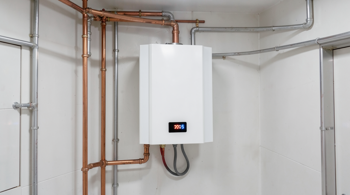
For instance, gas-powered units require high BTU inputs, often necessitating upgraded gas supply lines and specialized ventilation paths. Electric models require high-amperage breakers and heavy-gauge wiring, which may demand a costly upgrade to the home's main electrical panel. However, these upfront investments are balanced by a longer operational lifespan. Tankless water heaters typically operate for 15 to 20 years with proper maintenance, compared to the 10 to 15 years expected from conventional storage tanks. Additionally, local utility companies frequently offer financial incentives, with some regions providing rebates of up to $1,200 for qualified ENERGY STAR certified models.
Scale Prevention, Maintenance, and Operating Risks
While tankless water heaters offer continuous hot water, they are not immune to operating challenges. The most common technical issue is scale buildup within the heat exchanger. When hard water is heated, dissolved minerals like calcium and magnesium precipitate out of the water and cling to the copper or stainless steel walls of the exchanger. Over time, this scale layer acts as an insulator, forcing the burners or heating elements to run longer and hotter to heat the same volume of water. This leads to reduced efficiency, increased energy bills, and eventual component failure.
To combat scale buildup, several manufacturers integrate specialized prevention systems. For example, selected State Water Heaters models utilize X3 Scale Prevention Technology to protect internal components and preserve thermal efficiency without requiring annual descaling flushes 8. For systems without integrated scale protection, homeowners must perform an annual chemical flush using a vinegar solution or a descaling kit to maintain their warranty coverage and operational efficiency.
Common Operational Issues and the Cold Water Sandwich
Homeowners transitioning to tankless systems should be aware of specific operational behaviors unique to on-demand heating. Unlike a storage tank that keeps hot water pre-heated at the valve, a tankless unit must detect water flow before activating its heating elements. Most units require a minimum flow rate of 0.5 GPM to trigger ignition. If a user runs a faucet at a very low trickle, the unit may fail to ignite, resulting in cold water.
Another common phenomenon is the cold water sandwich. This occurs when a user turns a hot water faucet on, shuts it off briefly, and then turns it back on. The initial draw receives the hot water already in the pipes, followed by a brief pocket of cold water that passed through the unit while the burners were igniting, followed again by hot water. To resolve this, premium models like the Noritz NRCR111-DV-NG incorporate integrated recirculation pumps, which keep hot water moving through the plumbing lines to eliminate wait times and minimize water waste 5.
Purchase Guidelines for Consumers Evaluating Sales
When searching for a tankless water heater on sale, consumers must evaluate the complete package rather than the advertised discount price alone. Some retail listings show low prices because they exclude critical installation accessories, such as the mandatory isolation valves, specialized venting kits, or outdoor conversion kits. Omitting these components from the initial purchase can lead to unexpected expenses during installation.
Furthermore, warranty terms can vary significantly based on who performs the installation. Many major brands restrict or void their warranties if the unit is not installed by a licensed, certified professional. Buyers should carefully read the exact SKU warranty terms to understand the requirements for parts and labor coverage. By balancing initial hardware discounts with realistic installation, utility, and maintenance requirements, homeowners can make an informed decision that delivers reliable, energy-efficient hot water for decades.
Sources
- HVAC Store: Rinnai 199,000 BTU Tankless Propane Gas Water Heater (RE199IP) Details
- ThermoMate: 5.28 GPM Condensing Residential Natural Gas Tankless Water Heater (CZ480) Specifications
- ThermoMate: 36kW Tankless Electric Water Heater (ET360) Product Page
- ThermoMate: 5.28 GPM Condensing Residential Propane Gas Tankless Water Heater (CZ480LP) Manual
- HVACDirect: Noritz 11.1 GPM 199,900 BTU Natural Gas Tankless Water Heater (NRCR111-DV-NG)
- State Water Heaters: Adapt Premium Condensing 199,000 BTU Natural Gas Tankless Water Heater (STHR-199X3 100)
- State Water Heaters: ProLine XE Indoor 160,000 BTU Condensing Propane Tankless Water Heater (GTS-240-PIH 101)