Unlock Space and Fun with the Best Kids Loft Beds
Fast Facts:
- Loft beds are surging in popularity for urban living.
- Space-saving beds for children's bedroom solutions trend for maximizing functionality.
Transforming Small Rooms with Innovative Kids Loft Beds
Finding adequate space in a child's bedroom can be a significant challenge, especially in smaller homes or apartments. This is where kids loft beds emerge as an ingenious solution, offering a multi-functional furniture piece that elevates the sleeping area to create valuable floor space below. These space-saving beds are not merely for sleeping; they are comprehensive children's bedroom solutions designed to integrate study zones, play areas, and storage, all within the footprint of a single bed. Opting for DIY loft bed kits provides families with the flexibility to customize the bed to their specific needs and aesthetic preferences, making it a truly personalized addition to any child's room.
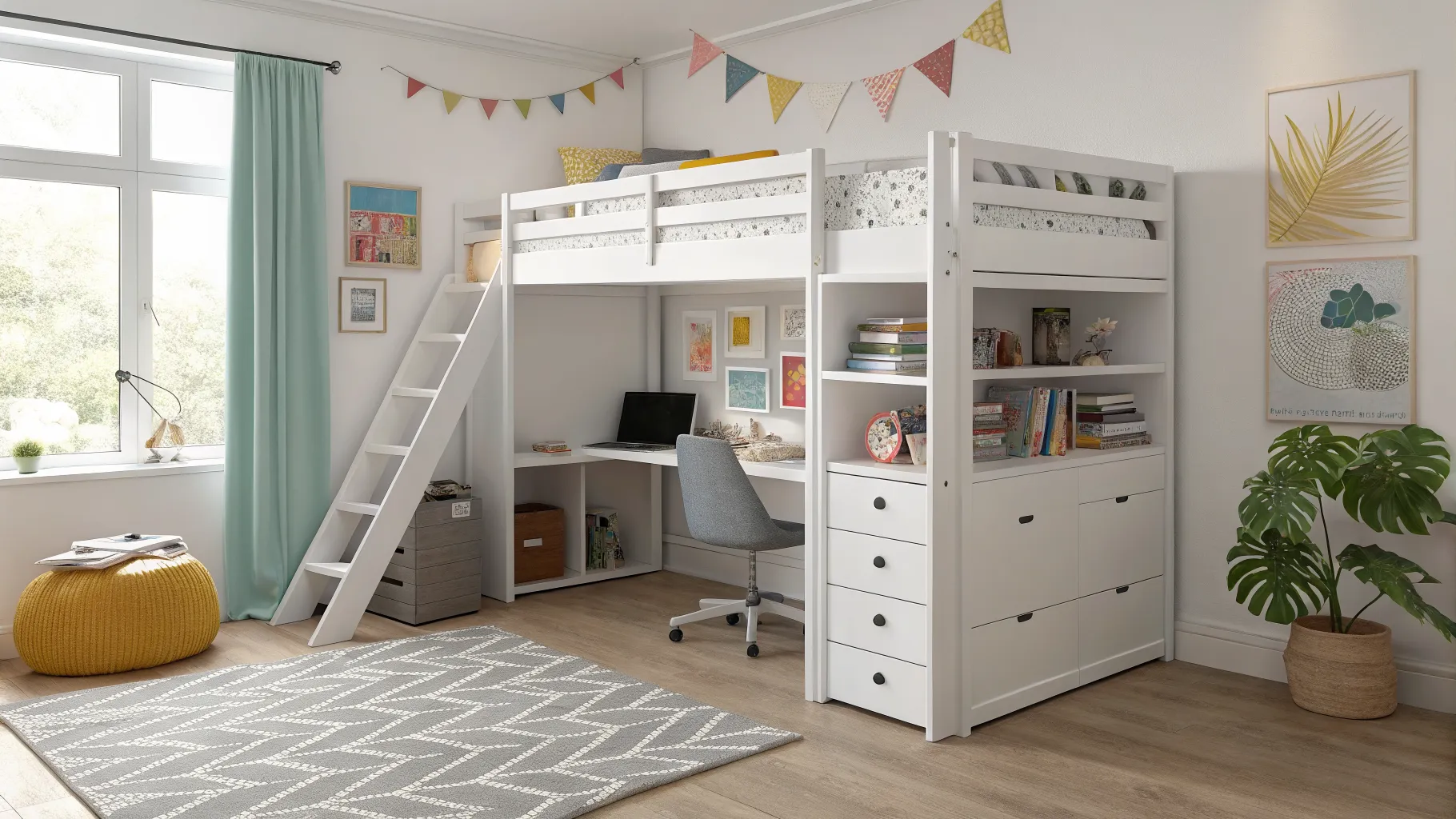
Unlocking Potential: Benefits of Kids Loft Beds
The advantages of incorporating kids loft beds into a child's room extend far beyond mere space utilization. These elevated sleeping solutions foster an environment conducive to both organization and imaginative play, addressing many common challenges faced by parents designing children's bedroom solutions. From creating dedicated study nooks to providing extra storage, a loft bed is a versatile investment in your child's personal space.
Maximizing Small Spaces
One of the primary benefits of kids loft beds is their unparalleled ability to maximize available floor space. By lifting the bed off the ground, the area underneath becomes prime real estate for various functions. This can include a desk for homework, a cozy reading nook, extra storage drawers, or even a play area. This vertical approach to furnishing is particularly effective in smaller bedrooms, transforming them from cramped to capacious. For families considering bunk bed alternatives, loft beds offer similar space-saving advantages while providing a more independent sleeping arrangement for a single child.
Enhancing Play and Study Zones
Beyond just saving space, kids loft beds naturally delineate different zones within a child's room. The elevated bed often feels like a private sanctuary, while the space beneath can be specifically configured for focused activities. A built-in desk provides a quiet spot for schoolwork and creative projects, while open shelving can house books and art supplies. Alternatively, this lower area can become a magical fort or a dedicated play corner, encouraging imaginative games without encroaching on the rest of the room. This distinction between sleeping, studying, and playing areas is crucial for developing good habits and promoting a sense of order.
Selecting the Ideal DIY Loft Bed Kit for Your Child
Choosing the perfect DIY loft bed kit requires careful consideration of several factors to ensure it meets both safety standards and your family's specific needs. With a plethora of options available, understanding what to look for will help you make an informed decision that benefits your child for years to come. Thinking about a new piece of furniture for your home requires careful deliberation, especially when it concerns children's bedroom solutions.
Safety Standards and Materials
Safety should always be the top priority when purchasing any furniture for children, especially kids loft beds. Look for kits that comply with international safety standards and certifications. The materials used are also crucial; solid wood constructions offer superior durability and stability compared to particleboard or MDF. Ensure all edges are smooth and rounded, and that the ladder or stairs are sturdy and easy for your child to navigate. Railings around the top bunk must be sufficiently high to prevent accidental falls, providing parents with peace of mind. Investing in a high-quality kit means a safer and more enduring bed for your child.
Design and Customization Options
The aesthetic and functional design of kids loft beds can vary widely, allowing for extensive customization. Consider the overall theme of your child's room and choose a design that complements it, whether modern, traditional, or whimsical. Many DIY loft bed kits come with modular components, allowing you to add features like desks, dressers, bookshelves, or even slides. This flexibility means you can adapt the bed as your child grows and their needs evolve. For older children, a more mature design that integrates a larger study area might be ideal, while younger children might benefit from more playful additions. The ability to customize ensures the loft bed remains a functional and beloved piece of furniture.
Seamless Setup: Installation and Maintenance Tips for Loft Beds
Once you've selected the ideal DIY loft bed kit, proper installation and ongoing maintenance are key to ensuring its longevity and safety. While many kits are designed for relatively straightforward assembly, paying close attention to detail during setup and following a regular maintenance schedule will guarantee that your kids loft beds remain sturdy and secure, continuing to provide excellent children's bedroom solutions for years to come.
Step-by-Step Assembly Guidance
Most DIY loft bed kits come with comprehensive instructions, and it's imperative to follow them precisely. Before beginning, lay out all components and hardware to ensure everything is present. It's often beneficial to have a second person assist with assembly, especially when lifting larger sections. Use the provided tools or appropriate alternatives to tighten all bolts and screws securely, but avoid over-tightening which could strip threads. Regularly check all connections in the first few weeks after assembly and periodically thereafter to ensure they remain snug. A well-assembled loft bed is a safe loft bed.
Ensuring Long-Term Durability
To maintain the structural integrity and appearance of your kids loft beds, a few simple maintenance practices are recommended. Regularly dust and wipe down surfaces with a damp cloth to keep them clean. Avoid harsh chemicals that could damage the finish. For wooden beds, occasionally checking for splinters or rough patches and sanding them smooth can prevent injuries. Teach your child proper usage, such as not jumping on the bed or swinging from the frame, which can put undue stress on the structure. With proper care, your investment in these space-saving beds will continue to serve its purpose beautifully and safely.
Comparison: Loft Beds vs. Bunk Bed Alternatives
When considering elevated sleeping arrangements for children, parents often weigh the pros and cons of kids loft beds against traditional bunk beds. While both offer space-saving beds solutions, they cater to slightly different needs and preferences. Loft beds are primarily designed for a single child, maximizing the floor space beneath for activities other than sleeping. This makes them ideal for creating dedicated study areas, play nooks, or extensive storage, transforming a small bedroom into a multi-functional hub. The space underneath can be fully customized with desks, shelving, or even a small sofa, providing versatile children's bedroom solutions. In contrast, bunk beds are designed to accommodate two or more children in the same vertical footprint, making them perfect for siblings sharing a room or for sleepovers. While some bunk beds offer storage, the primary focus is on dual sleeping capacity. For parents seeking to provide a single child with an expansive, personalized zone within their room, DIY loft bed kits offer superior flexibility. However, for households needing to house multiple children in one room, bunk beds remain a highly efficient choice, though they offer less personalizable space per child.
Actionable Advice: Creating a Dream Room with a Loft Bed
- Plan the Under-Bed Area Strategically: Before assembling your DIY loft bed kit, envision how the space underneath will be used. Will it be a study zone with a desk and chair? A cozy reading nook with beanbags and bookshelves? Or a vibrant play area? Plan for lighting, power outlets (if needed for electronics), and storage solutions like cubbies or drawers that fit perfectly within the dimensions.
- Decorate to Reflect Personality: Once the loft bed is installed, personalize the space to reflect your child's interests and personality. Use wall decals, colorful bedding, string lights, and themed accessories to create an inviting atmosphere. The elevated sleeping area can be made extra special with canopy drapes or unique lighting, making it feel like a private treehouse or fort.
- Prioritize Safety and Accessibility: Beyond initial assembly, regularly check the ladder, railings, and all structural connections for tightness and stability. Ensure the area around the bed is clear of clutter to prevent trips and falls, especially during nighttime. For younger children, consider anti-slip treads on the ladder steps and ensure there’s adequate head clearance if they sit up quickly.
Frequently Asked Questions
Are kids loft beds safe for younger children?
While often safe, loft beds are generally recommended for children aged six and older due to the risk of falls. Always ensure the bed meets safety standards, has sturdy guardrails, and that your child can comfortably and safely use the ladder. Supervise younger children initially.
Can I use a DIY loft bed kit in a room with low ceilings?
It depends on the specific dimensions of the loft bed and your ceiling height. Measure carefully to ensure there's ample head clearance (at least 2 feet) between the top of the mattress and the ceiling. Some space-saving beds are designed for lower ceilings, so check product specifications.
What's the difference between kids loft beds and bunk beds?
Kids loft beds typically feature one elevated bed with open space beneath for a desk, play area, or storage. Bunk beds, on the other hand, usually have two beds stacked one above the other, primarily for sleeping multiple children. Both are bunk bed alternatives to traditional single beds for space saving, but serve different primary functions.
How difficult is it to assemble a DIY loft bed kit?
Assembly difficulty varies by kit. Most DIY loft bed kits come with detailed instructions and all necessary hardware. While some can be assembled by one person, having a second person usually makes the process much easier and safer. Basic tools like a screwdriver and an Allen wrench are typically sufficient.
References
- The National Sleep Foundation: Guidelines for Children's Sleep Environments
- Consumer Product Safety Commission (CPSC): Bunk Bed Safety Standards
- Architectural Digest: Maximizing Small Bedroom Layouts
- Parenting Magazine: Creative Solutions for Kids' Rooms
- Furniture Today: Trends in Children's Furniture Design