Used Aluminum Fishing Boats for Lake Trips: A Buyer's Research Guide
Why Aluminum Dominates the Used Freshwater Fishing Boat Market
Used aluminum fishing boats consistently rank among the most sought-after vessels for lake trips because aluminum hulls resist corrosion, tolerate impacts from rocks and submerged structure, and demand significantly less maintenance than comparable fiberglass models. 1 The material's natural buoyancy and low density mean that a typical aluminum fishing boat weighs considerably less than a fiberglass equivalent of the same length, reducing towing demands and simplifying launches at public ramps. 2 For inland lake fishing, where shallow-water access and easy single-person launches matter, this weight advantage translates directly into practical utility on every trip.
Common manufacturers whose models appear frequently on the used market include Lund, Tracker, Crestliner, and Alumacraft, all of which have produced aluminum hulls across multiple decades, creating a deep secondary inventory. 3 Average fuel efficiency for a used aluminum fishing boat equipped with a mid-range outboard motor generally falls in the range of 4 to 6 miles per gallon depending on engine size and passenger load, which keeps operating costs predictable for recreational anglers. 4
Used Market Price Ranges and Real Listing Examples
The used aluminum fishing boat market spans a wide price band, with buyers generally finding entry-level options starting near $3,000 and well-equipped rigs reaching $15,000 or more depending on model year, engine hours, and included electronics. 5 At the lower end of the range, a 2001 Alumacraft Lunker V16 LTD with a Tohatsu 9.9 four-stroke tiller motor, a Minn Kota Endura 40-pound trolling motor, and a Humminbird Helix-5 fish finder was listed at $3,495, illustrating what a functional older rig can offer. 6 A 12-foot aluminum Lund with a 9.8 Tohatsu four-stroke motor, electric start, and a trailer was offered at $3,500, representing a basic but self-contained package for small lakes. 7
Mid-range inventory clusters between $10,000 and $15,000. A 2019 Lowe Stinger 175, a 17-foot aluminum bass boat equipped with a Mercury 60 ELPT outboard, a Motor Guide trolling motor, and a Lowrance GPS unit, was listed at $12,995 by a Texas marine dealer. 8 A 2021 Lund 1600 Fury Tiller, measuring 16 feet 2 inches with a beam of 73 inches and a 475-pound hull weight rated for a maximum of 40 HP, appeared in the market at $12,990 and highlighted how recent-model compact boats retain strong resale values. 9 At higher price points, a 2018 Lund 1775 Impact powered by a Mercury 115 HP four-stroke outboard with only 45 logged hours was listed at $31,995, reflecting the premium commanded by low-use, well-equipped 17- to 18-foot platforms. 10
Popular Size Categories for Lake Fishing Applications
A typical used aluminum fishing boat intended for lake trips measures between 14 and 18 feet in length, a range that balances casting room, stability in moderate chop, and trailering practicality. 11 Boats near 14 feet, such as the Alweld 1442, which weighs approximately 300 pounds, are well-suited for solo outings on smaller lakes and ponds, while 16- to 17-foot hulls comfortably accommodate two anglers and their equipment on larger bodies of water. 12 For solo fishing on calm lakes, a bottom width of 36 inches provides adequate performance, while two-person outings benefit from a 48-inch or wider bottom for improved stability and deck space. 13
At the larger end, 17- to 19-foot aluminum platforms, such as the Lund 1775 Impact with its deep-V hull, deliver smoother rides in open water and support higher-horsepower outboards while still remaining trailerable behind most full-size trucks and larger SUVs. 14 Hull geometry matters significantly for lake performance: flat-bottom jon boats excel in calm, shallow conditions, while V-hull aluminum designs, including the 16-foot-range models from Alumacraft and Lund, handle wind chop more confidently and are generally better suited for larger reservoirs. 15
What to Inspect When Evaluating a Used Aluminum Boat
A thorough pre-purchase inspection of any used aluminum fishing boat should prioritize hull integrity above all other factors. Buyers should examine the exterior aluminum skin for oxidation pitting, which appears as small cratered dimples and indicates long-term material degradation. 16 On riveted construction boats, which represent a large segment of the used market across brands like Lund and Tracker, each rivet line should be checked for looseness, signs of weeping (indicating minor leaks), or corrosion staining. Welded construction models, common among brands like Alweld and some Alumacraft lines, warrant inspection for cracking along weld seams, particularly near the transom where outboard torque concentrates stress. 17
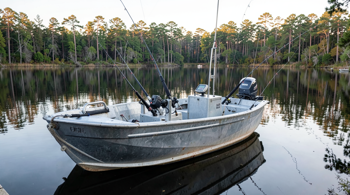
The outboard motor's service history, logged hours, and compression readings are equally critical, as the engine typically represents the most expensive component in the total package. Electronics packages, including fish finders and trolling motors, should be powered on and functionally tested before any transaction is finalized. For boats stored outdoors over multiple winters, inspecting the floor for soft spots, delamination of any wood sub-structure, and the condition of wiring insulation helps identify deferred maintenance costs that buyers will ultimately absorb. 18
Where Used Aluminum Fishing Boats Are Typically Found
The used aluminum fishing boat market operates across several distinct channels, each with different risk and value profiles. Certified pre-owned inventory at marine dealerships, such as those operated by Premier Boating Centers in Texas, typically includes water testing and certified technician inspections before a vessel is listed, providing buyers with more purchase confidence at a price premium. 19 Online platforms including Boats.com, Boat Trader, and eBay Motors aggregate national inventory and allow buyers to filter by length, brand, price range, and location, making regional price comparison straightforward. 20
Private party platforms, including Facebook Marketplace and Craigslist, surface local inventory at generally lower prices but without any inspection guarantees or recourse mechanisms. Specialized regional marketplaces, such as Louisiana Sportsman classifieds and Canadian platforms like FishPost.ca, serve specific geographic communities and often list boats that would not appear on national aggregators. Auction platforms, as illustrated by a 1988 Lund Rebel 16 with a Johnson 25 HP motor that appeared on Global Auction Guide in Minnesota, can yield older functional rigs at unpredictable price points. 21
Ongoing Maintenance Realities and Ownership Risks
Aluminum boats require structured seasonal maintenance regardless of the lake environment they operate in. Sacrificial anode replacement is a critical and recurring task because anodes protect the aluminum hull and lower unit from galvanic corrosion, particularly when boats are stored in the water at docks rather than on trailers. 22 Proper winterization, including engine fogging, draining water passages, removing batteries for indoor storage, and applying corrosion inhibitors to exposed aluminum surfaces, directly determines how a hull and drivetrain perform after extended cold-season storage. Neglected winterization is one of the most common causes of preventable mechanical failures observed in the used boat market.
Buyers should also account for insurance costs, registration fees, trailer maintenance including bearing repack and tire inspection, and any regulatory requirements specific to the lakes they intend to fish. In states with invasive species management programs, such as those bordering the Great Lakes watershed, boats may be subject to mandatory decontamination inspections when transiting between water bodies, adding logistical considerations to regular use. The total cost of ownership for a used aluminum fishing boat extends meaningfully beyond the initial purchase price, and realistic budgeting for at least one season of maintenance costs protects buyers from financial surprises. 23
Sources
- BoatingMag.com - Aluminum vs. Fiberglass Fishing Boats
- DiscoverBoating.com - How to Buy a Used Boat
- LundBoats.com
- BoatUS.org - Fuel Efficiency and Boat Maintenance Guides
- Boats.com - Used Aluminum Fishing Boat Listings
- VicsBoats.com - 2001 Alumacraft Lunker V16 LTD Listing
- FishPost.ca - 12 Ft Aluminum Lund Fishing Boat Listing
- PremierBoatingCenters.com - 2019 Lowe Stinger 175 Listing
- PremierBoatingCenters.com - 2021 Lund 1600 Fury Tiller Listing
- AnglerSportMarine.com - 2018 Lund 1775 Impact Listing
- MotoMember.com - Best Fishing Boats for Lakes, Rivers and Reservoirs
- Alweld.com - Small Aluminum Fishing Boats Guide
- TanieUlotki24.pl - Introduction to the 1760 Jon Boat with Console
- BoatExportUSA.com - 2002 Lund 16.5 Explorer Listing
- BlackbeardMarine.com - Fishing Boats Oklahoma Guide
- BoatsForSalePhoenix.com - Lake Pleasant Fishing Boats Buying Guide
- BoatUS.org - Aluminum Boat Maintenance and Anode Replacement
- TinBoats.net - Good First Boat Discussion Forum
- PremierBoatingCenters.com - About Premier Boating Centers
- BoatTrader.com - Used Aluminum Fishing Boat Marketplace
- GlobalAuctionGuide.com - 1988 Lund Rebel 16 Aluminum Fishing Boat Auction
- BoatUS.org - Sacrificial Anode and Corrosion Prevention Guides
- DiscoverBoating.com - True Cost of Boat Ownership