Police Impound Cars on Sale: Public Liquidation Processes and Buyer Guidelines
Municipalities and law enforcement organizations systematically process abandoned, unclaimed, and seized vehicles, commonly categorizing these actions as police impound cars on sale. These liquidation sales serve as an administrative mechanism to clear local tow lots while retrieving storage and administrative expenses incurred by local governments 1. Bidders must comprehend the complex legal processes, strictly regulated environments, and financial risks associated with purchasing assets from municipal impoundment facilities 2.
Legal Framework of Impoundment and Asset Liquidation
Law enforcement agencies seize vehicles under distinct legal mechanisms, primarily municipal impoundment and civil asset forfeiture 3. Temporary impoundment occurs when operators violate traffic codes, such as operating without valid insurance, registration, or licensing, as demonstrated by the Aurora Police Department's policy which resulted in over 1,500 vehicle impoundments 4. When owners fail to present appropriate documentation and clear outstanding administrative charges within a legally mandated period, the municipality declares the vehicles abandoned and initiates public liquidation 5 6.
Forfeiture occurs when vehicles are seized in connection with criminal activity rather than basic traffic violations 3. These items are held under local, state, or federal guidelines, such as the Texas Transportation Code Section 683, before receiving judicial approval for public auction 5. State guidelines govern the legal transition of ownership, determining whether transactions yield clean, salvage, or non-repairable title certificates that impact a buyer's ability to legally operate the vehicle 7 8.
Municipal Inventory Variations and Case Studies
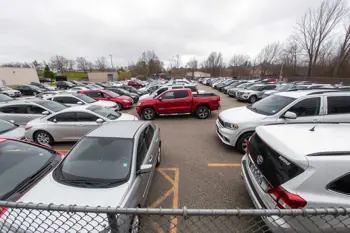
Historical records illustrate the high volume and diverse inventory processed at city impound facilities. In Columbus, Ohio, the Division of Police conducts structured vehicle auctions, liquidating approximately 130 impounded, forfeited, or crash-involved vehicles per event 7. Similarly, the Louisville Metro Police Department has historically processed auctions featuring over 170 unclaimed vehicles, incorporating passenger sedans, utility trucks, motorcycles, and cargo trailers that remained unclaimed beyond the 45-day statutory limit 6.
In Houston, Texas, scheduled municipal auctions regularly list vehicles stored at regional facilities like the Houston Central Auto Storage 9. Documented inventories in these auctions have included older and mid-2000s models, such as Chevrolet C/K trucks, Ford F-150 pickups, Toyota Corollas, and Honda Odysseys 9. These listings reflect typical yard trends where vehicle age and condition vary widely based on local impoundment origins 9.
Bidder Registration Requirements and Participant Eligibility
Participation in public vehicle auctions is restricted by formal registration rules and eligibility criteria. Municipalities like Dallas require potential buyers to register prior to bidding, validating identities using state-issued driver's licenses, identification cards, or Mexican Consulate IDs 5. Bidders must be at least 18 years of age to participate, and all sales executed in these environments are considered final under local administrative statutes 5 7.
Many bidding systems require financial security deposits to prevent non-payment issues. For example, some municipal online auction configurations require a $300 registration deposit charged to the participant's credit card 2 10. Winning bidders have their deposit integrated into their final transaction balance, whereas non-winning participants receive refunds 10. Non-compliance with payment terms typically leads to immediate forfeiture of the asset, loss of the security deposit, and a permanent ban from subsequent auctions 2.
Transition to Online Formats and Third-Party Auction Platforms
Modern administrative trends show a transition from traditional physical yard auctions to online liquidation platforms. Cities such as Kansas City, Missouri, utilize online-only auction platforms to conduct bi-monthly sales of unclaimed municipal tow lot vehicles and surplus fleet units 11. This modernization expands geographical reach, utilizing specialized municipal liquidation engines or third-party auction providers to administer bidding platforms 6 12.
Federal and local agencies frequently contract with national platforms like Copart, GovDeals, and Municibid to manage their vehicle disposals 8 12 13. These third-party entities organize inventories into distinct categories such as passenger automobiles, utility pickup trucks, and specialized public safety vehicles 12. While some platforms offer arbitration policies for specific vehicle classifications, most assets acquired through municipal channels remain entirely exempt from standard retail protections 2 8.
Assessing Vehicle Condition and Regulatory Disclosures
A fundamental characteristic of municipal vehicle auctions is that all assets are sold strictly as-is and where-is, with no warranties expressed or implied 2 5 14. Buyers must assume the absolute risk regarding the operational integrity, mechanical condition, and parts completeness of each vehicle 2 14. Most impounded units are liquidated without ignition keys, and auction organizers do not possess historical maintenance data, service records, or verified odometer accuracy reports 2 14.
Due to these technical uncertainties, agencies offer designated viewing windows to facilitate public inspection. For instance, the Lubbock Police Department provides scheduled inspection days prior to bidding, enabling buyers to physically assess vehicles parked at their contracted wrecker services 14. Norfolk Police Department auctions similarly offer limited on-site inspection windows for public review 15 16. Utilizing professional background checks and vehicle history reports is highly recommended to mitigate the inherent risk of purchasing salvage-titled assets 7 15.
Post-Auction Payment Schedules and Removal Mandates
Successful bidders must comply with rapid, non-negotiable payment deadlines to secure their purchased property. Municipal regulations in Kansas City require complete payment via wire transfer or cash at the tow lot office within 24 hours of the auction's closure 10 11. Similarly, the Dallas Auto Pound requires full financial settlement no later than one hour after the final vehicle of the day is sold 5. Payment structures commonly include additional administrative fees, such as a 10% buyer's premium and standardized lot handling fees 10 17.
Post-sale removal rules are equally strict to prevent overcrowding at municipal yards. Under Dallas and Kansas City ordinances, purchased vehicles are strictly prohibited from being driven off the lot under their own power, requiring immediate transport by a licensed wrecker service 5 11. Buyers are allotted a restricted timeframe, typically 24 to 72 hours, to retrieve their assets 5 11. Failure to meet these removal deadlines results in storage penalties, which commonly accumulate at a rate of $30 per vehicle for each day the asset remains on municipal property 10 11.
Sources
- eThekwini Metropolitan Police Service: https://www.citizen.co.za/southlands-sun/news-headlines/2026/05/21/metro-gives-final-warning-for-impounded-vehicles/
- Kansas City Police Tow Lot Auction Terms: https://auctions.oaikc.com/auction/kansas-city-tow-lot-2026-03-03-80457/details
- LegalClarity: https://legalclarity.org/police-seized-my-car-how-do-i-get-it-back/
- Denver7: https://www.denver7.com/news/front-range/aurora/1-500-vehicles-impounded-during-first-year-of-auroras-three-strikes-rule
- City of Dallas Auto Pound: https://www.dallaspolice.net/divisions/Pages/Auto-Pound-Auction.aspx
- WDRB Local News: https://www.wdrb.com/news/from-tow-lot-to-treasure-lmpd-auctions-170-unclaimed-vehicles-online/article_251aac35-251a-4a1b-950e-0a51885a3964.html
- Columbus Dispatch / Cincinnati.com: https://www.cincinnati.com/story/news/local/2026/04/22/columbus-police-auctioning-about-130-impounded-cars-april-25/89720859007/
- Copart Wholesale Auctions: https://www.copart.com/repo-and-impound-sales
- Houston Police Department: https://www.houstontx.gov/police/auto_dealers_detail/Vehicles_Scheduled_For_Auction.htm
- Kansas City Police Auction (March 2026): https://bids.oaikc.com/auctions/45682-2026-03-03-kc-tow-lot
- City of Kansas City Public Works: https://www.kcmo.gov/city-hall/departments/public-works/tow-services/vehicle-auctions
- GovDeals: https://blog.govdeals.com/where-to-find-police-auctions-near-me
- Municibid Government Surplus: https://municibid.com/Browse/R3777816-C160883/Maine-Automotive?SortFilterOptions=0&StatusFilter=completed_only&ViewStyle=list
- City of Lubbock, TX: https://www.mylubbock.us/388/Abandoned-Vehicle-Auction
- Norfolk Police Auction (Auction757): https://auction757.com/auction_listings/norfolk-police-auction-5-7-2026/
- Norfolk Police Auction Video (YouTube): https://www.youtube.com/watch?v=xFgTKaLxj88
- Powell Auction & Realty: https://www.powellauction.com/events/august24policeseizure/