Stylish midi dresses for wedding guests: An Analytical Guide to Seasonal Trends, Fabric Mechanics, and Protocol Etiquette
When researching stylish midi dresses for wedding guests, finding an optimal balance between formal etiquette and personal physical comfort is of paramount importance. The midi length, typically defined as a hemline falling elegantly between the knee and the mid-calf, has become a prominent staple in modern event fashion 4. This article examines the leading design movements, fabric characteristics, and care guidelines to help readers navigate upcoming celebrations. By analyzing market data and consumer behaviors, fashion observers note that this versatile length accommodates both relaxed outdoor gatherings and traditional formal ceremonies with ease 13.
The Evolution and Rise of the Midi Silhouette
Historically, formal event wear dictated rigid stylistic boundaries, frequently forcing attendees to choose between heavy floor-length evening gowns or short cocktail attire 13. Modern guest fashion, however, has transitioned toward comfort, durability, and refined silhouettes, placing the midi dress at the forefront of the retail market 4. The rise of this silhouette reflects a broader shift toward transitional garments that move effortlessly from a daytime church service to an evening reception without requiring a change of clothes 6.
This transition is well-documented by leading fashion authorities, who continuously feature midi silhouettes in their seasonal bridal guides 1. High-profile television and media appearances have further amplified public interest, with specific floral print midi designs generating sudden increases in consumer search volume 12. Ultimately, the modern midi dress offers a balanced alternative that respects traditional modest dress codes while remaining highly expressive and stylish 13.
Decoding Wedding Dress Codes with Midi Lengths
Navigating dress code terminology remains a common point of confusion for invited guests 1. The midi length serves as a reliable baseline that can be styled up or down to satisfy a range of expectations, from backyard casual to black-tie optional 4. In cocktail-themed celebrations, for instance, guests have greater freedom to experiment with bold patterns, asymmetric hemlines, and structural details, making the midi dress a highly practical canvas for personal style 2.
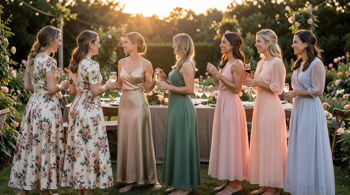
For semi-formal, daytime, or outdoor ceremonies, style experts generally advise selecting soft pastel shades, subtle ditsy prints, or light floral motifs 9, 12. Conversely, evening receptions or formal settings are better met with rich jewel tones, metallic weaves, or structured silhouettes that convey a sophisticated tone 15. Because midis provide intermediate leg coverage, they easily satisfy traditional religious protocols while remaining fully appropriate for the post-ceremony celebration 13.
Key Silhouette Categories and Structural Designs
To assist in analyzing the current market, the table below highlights key structural silhouettes of wedding guest midi dresses, showing their primary design features and event utility:
| Design Style | Structural Features | Primary Utility |
|---|---|---|
| Wrap and V-Neck | Adjustable waist tie, deep neckline, relaxed fit 6 | Creates an hourglass profile on diverse body types 6 |
| Asymmetric Cowl | Sleeveless cut, draped neck, irregular hem 7, 10 | Offers a modern, fluid profile for evening plans 10 |
| Cold-Shoulder A-Line | Spaghetti straps, ruffled short sleeves, back zipper 5 | Ensures lightweight movement, ideal for summer weddings 5 |
| Smocked Chiffon | Elastic smocked bodice, tiered skirt, sheer sleeves 13 | Provides comfortable stretch and a romantic aesthetic 13 |
These structural designs emphasize how manufacturers balance visual appeal with physical wearability. Selecting the appropriate silhouette allows guests to maintain comfort during several hours of sitting, standing, and dining. By understanding these categories, consumers can narrow their choices based on the specific architectural demands of the wedding venue.
Fabric Selection and Care Considerations
The raw material of a midi dress dictates both its aesthetic quality and its environmental performance during warm-weather or cold-weather events. Chiffon is a highly favored fabric for spring and summer celebrations, appreciated for its airy feel and graceful drape 5. Often crafted from synthetic fibers, chiffon dresses usually feature soft inner linings to ensure opacity while leaving sleeves unlined for a delicate, sheer look 9. Satin and silk, by contrast, offer a high-shine finish that is ideal for formal evening celebrations but requires cautious handling as they wrinkle easily 15.
For autumn and winter ceremonies, heavier textures like jacquard, velvet, or embroidered tulle are preferred for their thermal properties and structural weight 11. Jacquard weaves with gold or silver floral highlights provide a slightly shimmery, elegant finish that stands out in dim venue lighting 15. Proper care is essential to protect these luxury textiles. Dry cleaning or gentle cold hand washing is highly recommended, and low-temperature steam ironing is preferred over direct heat to prevent fabric damage 5, 6.
Strategic Accessorizing and Dress Code Etiquette
Completing a midi dress ensemble requires careful attention to styling, which plays a major role in elevating the outfit to meet specific event guidelines 2. When styling lighter colors like sky-blue or lavender, experts suggest pairing the garment with subtle gold jewelry, a neutral structured clutch, and lace-detailed heels to keep the look balanced 14. Footwear is especially critical; outdoor garden or beach ceremonies require sturdier block heels or embellished flat sandals to ensure stability on uneven natural surfaces.
Furthermore, established wedding guest etiquette imposes clear dress boundaries that guests must respect. Avoiding white, cream, or off-white garments remains a fundamental rule to prevent any visual competition with the bride. Additionally, while bold patterns like ditsy florals or botanical prints are highly acceptable, guests should avoid overly loud, reflective, or neon shades that might distract from the ceremonial proceedings, keeping the focus on the couple.
Logistical Realities: Sizing, Shipping, and Returns
While searching for the perfect midi dress, consumers must navigate several practical friction points within the retail landscape. Sizing consistency is a frequent issue, especially with structured dress styles that offer little to no stretch in the bodice 5. Since size charts vary substantially across brands, buyers often need to cross-reference precise measurements or plan for professional tailoring. Additionally, delivery times can vary from quick standard shipping of three to ten business days up to several weeks for international preorders, necessitating advance scheduling 5.
Return policies represent another critical consideration for event shoppers. Many standard retailers offer a standard thirty-day return or exchange window, but some final sale items are completely ineligible for refunds 5, 9. To mitigate these risks and reduce individual expenses, many consumers are turning to clothing rental platforms or subscription services 3. These models allow guests to wear high-end designer midi dresses for a fraction of the cost, presenting a highly sustainable approach to event fashion.
Sources
- Vogue
- The Knot
- Bloomingdale's
- Lady Black Tie
- Ever-Pretty
- Mason & Cole
- Lomiea
- Luma Belle
- Baltic Born
- Harper Los Angeles
- Nerisa Studio
- OK! Magazine
- Taangerine Tiger
- My Daily Glam
- Medium