Metal roofing panels on sale: Market Evolution, Cost Benchmarks, and Material Profiles
Market Assessment of Metal Roofing Panels
Consumers monitoring the architectural market frequently observe metal roofing panels on sale as regional inventories rotate through supply chains 1. Industrial distributors often manage these transitions by rotating heavy-duty 26-gauge Galvalume siding and roof panels to accommodate fresh warehouse shipments 1. These steel panels must be evaluated based on their structural profile and protective finishes to ensure compatibility with localized weather patterns 2. Modern steel manufacturing utilizes high-durability polyester paint systems to prevent fading, ensuring that panels retain their color and structural properties over extended cycles 2.
A thorough project assessment requires understanding the different classes of metal components, which include standard ribbed profiles, premium standing seam systems, and custom matching trim 3. Regional suppliers typically present standard G-rib panels for commercial or agricultural outbuildings, alongside more rigid R-rib designs for environments requiring extended structural spans 3. Incorporating these variations into building designs allows project planners to optimize material expenses without compromising architectural stability.
Analysis of Major Panel Profiles and Systems
Profile configurations play a definitive role in how a roof handles physical stress and moisture runoff. Property owners often select corrugated profiles, such as 24-gauge sandstone or rustable bare steel, to achieve specific architectural looks 4. For smaller utility applications, including sheds, carports, and fences, manufactured multi-packs containing twenty galvanized steel sheets are highly utilized 5. These packaged panels are engineered to be highly weather-resistant and are easily secured using standard exposed fasteners 5.
For residential and commercial installations requiring a sleek, modern aesthetic, concealed fastener systems represent a high-performance alternative 6. The 1.5-inch Snap Lock profile is designed for high-end residential applications, featuring a fixed-clip system that handles complex environmental changes while hiding all penetrations 6. Similarly, traditional coastal regions frequently employ 5V Crimp profiles constructed from 26-gauge Galvalume steel, which feature double inverted-V ribs to prevent lateral water intrusion 7. These distinct profile options require precise structural alignment during installation to ensure long-term performance.
Standard Gauge and Material Specifications
The mechanical engineering of modern panels focuses heavily on thermal movement and paint durability. Premium systems like the Hardy Clip 175 Standing Seam utilize an integral snap-lock seam and clip attachment, allowing the metal to expand and contract naturally 8. This specialized engineering minimizes the visual distortion known as oil canning, which can affect flat metal surfaces over time 8. For specific contemporary layouts, designers also utilize thin, lightweight weather-resistant black steel panels measuring 96 inches in length to create clean visual lines 9.
Distributors frequently optimize their inventory by offering paint line overstock and aged coil lots in widths of 16 inches or 40 inches 10. These 24-gauge structural coils are highly suitable for on-site roll-forming, provided that the project utilizes a single batch of paint to avoid subtle color variability 10. For heavy-duty commercial projects, structural exposed-fastener R-panels utilizing 1.25-inch major ribs are often finished with high-performance silicone-modified polyester or premium PVDF coatings to defend against atmospheric pollutants 11.
Comparative Pricing and Operational Costs
Comprehensive cost modeling indicates that initial capital requirements vary widely depending on the selected profile, steel thickness, and fastening method 12. Standard corrugated exposed-fastener panels represent the entry-level option, with material costs typically ranging from $120 to $250 per square 12. In contrast, architectural standing seam materials demand an investment of $400 to $700 per square due to their complex concealed fastening mechanisms 12. Stamped metal shingles and copper panels represent premium classes that sit at the top of the historical pricing matrix 12.
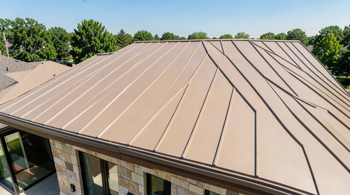
Professional contractor networks emphasize that successful metal roof replacement projects depend heavily on regional environmental planning and quality preparatory materials 13. For example, coastal and waterfront installations from Florida to Texas routinely utilize 24-gauge and 26-gauge colored panels paired with high-performance underlayment to provide maximum defense against wind-driven rain 13. The following historical data table summarizes typical industry pricing benchmarks for materials and installation across major panel categories 12:
| Roofing Profile Type | Material Cost per Square | Installed Cost per Sq. Ft. | Typical Warranty Lifespan |
|---|---|---|---|
| Corrugated Panels (Exposed Fastener) | $120 to $250 | $4 to $8 | 25 to 40 Years |
| Stamped Metal Shingles | $250 to $500 | $8 to $15 | 50 Years |
| Standing Seam (Concealed Fastener) | $400 to $700 | $10 to $22 | 50+ Years |
| Copper and Zinc Panels | $600 to $900 | $18 to $30 | 70+ Years |
Installation Requirements, Underlayment, and Structural Mechanics
Despite higher upfront expenses compared to asphalt alternatives, metal roofing exhibits exceptional long-term economic performance. On average, a standard metal roof installed on a residential structure runs between $3 and $12 per square foot 14. Because steel and aluminum systems provide active service for 40 to 70 years, they routinely outlast multiple cycles of traditional composition roofing 14. This durability is especially evident in regions prone to heavy snowfall, extreme heat, or hail, where standard materials quickly deteriorate.
Furthermore, the thermodynamic properties of these systems contribute directly to reducing monthly climate-control costs. Highly reflective steel and aluminum panels deflect solar radiation away from the structure, preventing thermal heat transfer into the building's interior 15. This reflectivity can lower seasonal cooling costs by 10% to 25% 15. Consequently, the initial material investment is balanced by decades of reduced electrical utility demands and lower mechanical system wear.
Balance and Risk Assessment
While the structural benefits of metal roofing are extensive, property owners must also evaluate the associated risks and maintenance realities. Exposed fastener systems require regular upkeep because the neoprene washers surrounding the screws degrade over a ten-to-fifteen-year period, requiring complete fastener replacement to prevent localized leaks. Additionally, improper installation by inexperienced labor can result in severe issues like oil canning, panel warping, or water pooling, which can completely compromise the building envelope.
Acoustic dynamics represent another operational consideration, as rain and hail impact can generate elevated noise levels if the attic is not correctly insulated. Property owners must also coordinate with regional homeowners' associations and municipal building departments, as some local codes restrict specific profile colors or panel types. Conducting thorough material inspections, verifying engineering certifications, and securing experienced professional contractors remain mandatory steps to achieving a high-performing and compliant roofing installation.
Sources
- SoCal Fence and Barn
- BarrierBoss
- Kauffman Metals
- Steeldash
- Garvee
- Metal America
- USA Metal Sales
- Mid-Michigan Metal Sales
- Slatsolution
- Sheffield Metals
- LTH Steel Structures
- EstimationPro AI
- Trusty
- Forbes Home
- Energy.gov