Rent-to-own boats: buying guide - What Buyers Need to Know Before Signing
Rent-to-own boat programs have attracted growing interest among buyers who want access to a vessel before completing a full purchase, particularly those who face credit limitations or want to test long-term ownership before committing capital. Unlike a standard boat loan, these agreements keep the title in the dealer or seller's name until the final payment or balloon sum is settled, making due diligence at every stage critically important. 1 Understanding the structure, costs, and legal exposure of these contracts is essential before any agreement is signed.
How Rent-to-Own Boat Agreements Work
A rent-to-own boat agreement functions similarly to a lease-to-own contract, where a portion of each monthly payment is credited toward the eventual purchase price of the vessel. 2 The buyer takes physical possession of the boat and uses it during the contract term, but legal ownership does not transfer until the full purchase obligation is satisfied. Contract terms typically run between two and five years, after which the renter can choose to complete the purchase, return the vessel, or in some cases extend the rental period. 3
These programs are offered by some traditional boat dealerships as well as specialized marine financing companies. 4 The critical distinction from a standard loan is that an 'option to purchase' clause governs whether the buyer is legally obligated to complete the purchase at term end or simply has the right to do so. 5 Buyers must confirm this language explicitly before signing, as it determines financial exposure if circumstances change during the agreement period.
Upfront Costs and Monthly Payment Structure
Most rent-to-own boat programs require a down payment before the agreement begins, typically ranging from 10% to 25% of the vessel's total value. 6 This upfront amount is generally non-refundable if the contract is terminated early, representing a direct financial loss if the buyer walks away. For a mid-range vessel priced at $40,000, a 20% down payment translates to $8,000 committed before any monthly payments begin.
Interest rates on rent-to-own and owner-financed marine agreements are often higher than rates offered by traditional marine lenders, typically falling between 8% and 15% depending on the buyer's credit profile, the size of the down payment, and the specific lender's terms. 7 By comparison, conventional boat financing through institutional lenders can offer more competitive rates, particularly for buyers with strong credit. Research data indicates that a $40,000 boat financed over ten years at 8% APR carries a monthly loan payment of approximately $485, and adding ongoing operating costs can push total annual ownership expenses to between $10,200 and $17,900 per year. 8
Maintenance, Insurance, and Ongoing Responsibilities
One of the most important and often underestimated aspects of a rent-to-own arrangement is the allocation of ongoing costs. Even though the buyer does not yet hold title to the vessel, maintenance and repair responsibilities are frequently assigned to the renter throughout the contract period. 9 This means the renter bears the financial burden of engine servicing, hull maintenance, and component repairs on a boat they do not yet legally own.
Insurance coverage obligations also vary by agreement. Some rent-to-own programs include insurance within the monthly rental fee, while others require the renter to source and fund a separate marine insurance policy. 10 A standard annual marine insurance cost for a small boat runs between $200 and $500, rising to $500 to $1,200 annually for mid-size vessels. 8 Storage or slip fees represent an additional recurring expense, with marina and dry-storage costs ranging from $1,500 to $4,000 per year for mid-size boats. Buyers should build all of these figures into their total monthly budget before evaluating affordability.
Pre-Agreement Inspection and Survey Requirements
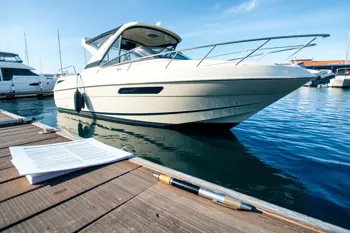
A professional marine survey is one of the most critical steps before entering any rent-to-own agreement. Because the renter typically assumes liability for repairs during the contract period, discovering a structural defect or mechanical fault after signing can result in substantial unplanned costs. 11 Key inspection points include engine hours, service history, warranty coverage, transom condition, hull integrity, and the condition of steering and shifting cables. Soft spots in the deck or flooring can indicate rotted core material, which can cost over $5,000 to repair. 12
A sea trial should also be conducted before committing to any long-term rent-to-own contract. Performance on the water reveals issues that static inspections miss, including handling at speed, engine response, and instrument function. 13 Buyers should also verify the boat's complete service records, confirm the engine's oil condition shows no signs of water intrusion, and check the hull for osmotic blisters or structural cracks along the keel. These inspections are the primary defense against inheriting costly problems under a contract that assigns repair responsibility to the renter.
Legal Protections and Title Verification
Because the title remains with the seller or dealer throughout the rent-to-own period, buyers face meaningful legal risk if the seller defaults on their own financial obligations. A lien against the vessel from the seller's creditors could attach to the boat even while the renter is making payments and using it. 14 To mitigate this, title companies or escrow services should be used to confirm the vessel is free of existing liens before the contract is signed.
Legally binding purchase agreements must clearly specify responsibility for insurance, liability, and maintenance throughout the full rental period. 15 Early purchase options are sometimes available within rent-to-own contracts, allowing buyers to exercise the purchase right before the full term concludes without penalty. 16 Buyers should request written confirmation of any early buyout terms, including how accumulated rental credits are calculated and whether the residual purchase price adjusts if the boat depreciates significantly during the agreement period.
Comparing Rent-to-Own Against Traditional Financing and Rental
Rent-to-own agreements occupy a middle position between outright rental and a conventional financed purchase. Buyers who use a vessel fewer than 15 to 20 days per year often find that straightforward day rentals represent a lower total cost when all ownership expenses are factored in. 8 Traditional boat loans, which are now offered with terms up to 20 years for qualified buyers, provide the advantage of clear title transfer from the outset and competitive institutional rates. 17
| Feature | Rent-to-Own | Traditional Boat Loan | Rental |
|---|---|---|---|
| Title Held By | Seller until final payment | Buyer from purchase date | Rental company |
| Down Payment | 10% to 25% | 10% to 20% typical | None or small deposit |
| Typical Interest Rate | 8% to 15% | Competitive institutional rates | Not applicable |
| Maintenance Responsibility | Usually renter | Owner | Rental company |
| Contract Term | 2 to 5 years | Up to 20 years | Per-day or per-week |
Buyers who cannot qualify for conventional marine financing due to credit challenges may find rent-to-own arrangements more accessible, but the higher effective cost and legal complexity make thorough due diligence non-negotiable. Annual maintenance and operating costs can range from 10% to 20% of a vessel's value regardless of how the boat is financed, which means total cost of ownership must be evaluated independently of the financing method chosen. 18
Sources
- Investopedia - Rent-to-Own Agreement Overview: https://www.investopedia.com/terms/r/rent-to-own.asp
- Bankrate - Boat Loan and Financing Guide: https://www.bankrate.com/loans/boat-loans/
- BoatUS - Rent-to-Own and Alternative Boat Financing: https://www.boatus.com/boating/boat-buying-guide
- YachtWorld - Boat Buying Guide Including Financing Options: https://www.yachtworld.com/
- Progressive - Boat Buying and Legal Agreement Guide: https://www.progressive.com/boat/buying-guide/
- BoatUS - How to Finance Your Boat: https://www.boatus.com/expert-advice/expert-advice-archive/2012/october/how-to-finance-your-boat
- Boat123 - Boat Financing and Rent-to-Own Alternatives: https://www.boat123.com/
- Wealthvieu - Buy or Rent a Boat 2026 Cost Comparison: https://wealthvieu.com/loans/personal-loans/buy-or-rent-boat/
- Soundings Trade Only - Tips for Buying a Used Boat: https://www.tradeonlytoday.com/buying-selling/tips-for-buying-a-used-boat
- Progressive - Insurance Responsibilities in Boat Agreements: https://www.progressive.com/boat/buying-guide/
- Discover Boating - Professional Marine Survey Guide: https://www.discoverboating.com/buying/boat-survey
- KayaksBoats - How to Buy a Boat and What to Look For: https://kayaksboats.com/index.php/2026/01/16/how-to-buy-a-boat-things-to-look-for-to-save-you-money/
- Novesea - Boat Buyer's Guide Including Sea Trials: https://www.novesea.com/blog/post/boat-buyers-guide.html
- Soundings Trade Only - Escrow Services for Boat Purchases: https://www.tradeonlytoday.com/buying-selling/tips-for-buying-a-used-boat
- Progressive - Legally Binding Boat Purchase Agreements: https://www.progressive.com/boat/buying-guide/
- BoatUS - Early Buyout Options in Marine Financing: https://www.boatus.com/expert-advice/expert-advice-archive/2012/october/how-to-finance-your-boat
- Boatzon - First-Time Boat Buyer Financing Guide: https://boatzon.com/discover/first-time-boat-buyer-financing-guide
- Halyard Aranca - Financial Considerations of Boat Ownership: https://halyard.aranca.com/r-ishouldbuyaboat-is-this-the-right-time-to-make-your-dream-purchase