Abandoned houses for sale in the US: Market Trends, Sourcing Channels, and Structural Liabilities
The market for abandoned houses for sale in the US represents a complex niche in real estate, attracting historic preservationists and investors. Across the nation, thousands of homes sit vacant due to tax foreclosures, legal disputes, or simple neglect, requiring extensive administrative and physical due diligence before acquisition. Understanding regional distribution, procurement methods, and structural liabilities of these properties is essential for evaluating the distressed real estate landscape.
Geographic and Economic Distribution of Vacant Properties
Abandoned and distressed listings are distributed widely across diverse American markets, spanning rural areas and metropolitan centers. For example, historical records document properties like the Nathaniel J. Wyeth House on Staten Island, which entered the market at $950,000, representing a major adjustment from previous listings reaching $2.88 million 1. In contrast, rural properties command lower baseline prices but present unique regional challenges, such as a 2.15-acre parcel with an unused 1900-built home in Kingston Springs, Tennessee, listed at $269,500 2.
The price per square foot for these distressed structures fluctuates based on location and parcel utility. In Texas, properties such as a neglected 1944 home in Rogers, Texas, are priced as direct tear-downs at $50,000, illustrating how land value often eclipses the structure itself 3. Similarly, a waterfront cottage in Breckenridge, Texas, listed at $104,900, highlights how direct lake access can command a premium even when the physical structure requires comprehensive rebuilding 4.
Acquisition Channels and Auction Structures
Prospective buyers navigate various public and private acquisition channels to secure vacant properties. Many abandoned homes are processed directly through local government tax assessors and municipal treasurers via tax deed sales and quarterly foreclosure auctions 5. Government agencies, including the Department of Housing and Urban Development (HUD) and the Department of Veterans Affairs (VA), maintain dedicated platforms to list foreclosed real estate below market averages 6 7.
Digital real estate platforms provide searchable databases of bank-owned assets and active foreclosure filings 8 9 10. Private investment networks also aggregate local databases to track vacant structures before they reach public auction blocks 11. Regardless of the sourcing channel, these properties are typically sold under rigid auction terms, frequently requiring cash-only transactions and immediate deposit commitments 3 12.
Historical and Architectural Preservation Opportunities
A subset of the abandoned housing stock consists of historically significant structures that present unique opportunities for restoration. Notable examples include the historic Blackwood Hall in Shelbyville, Kentucky, which served as the primary residence of Colonel Harland Sanders for a quarter-century 13. Other architecturally significant properties, such as the 1920s Sears & Roebuck kit home situated on 22.42 acres on Highland Lake in Stoddard, New Hampshire, command premium valuations up to $1.44 million due to their rarity and water frontage 14.
Landmark designations introduce substantial regulatory oversight. For example, the Staten Island Nathaniel J. Wyeth House was landmarked in 2007, which legally prevents demolition and mandates that any restoration strictly adhere to historical architectural standards 1. Similarly, properties like the Casey Jones House in Joshua Tree, California, a 1950s architectural landmark on 65 acres, require specialist restoration due to severe fire damage 15.
Physical Risks and Environmental Liabilities
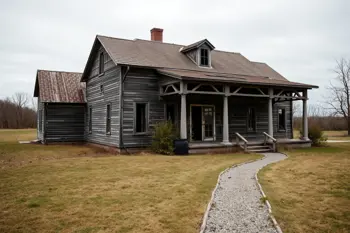
Long-term vacancy inevitably results in structural decay and environmental hazards. Abandoned buildings are often declared condemned by local municipalities due to safety concerns, completely prohibiting occupancy 12 16. Prolonged lack of maintenance leads to compounding roof leaks, water damage, and compromised foundations 16. For example, some properties sit unoccupied so long that wildlife reclaims the interior, as seen in a Parkton, Maryland cabin occupied entirely by feral cats and raccoons 17.
Physical structural compromise represents a primary cost driver. Homes built in the mid-20th century or earlier may contain hazardous materials like asbestos or lead-based paint, necessitating certified abatement. Extreme events, such as historical fires or localized structural collapses, mean some structures, such as the 1940 historic residence moved to Canton, Texas, must remain vacant until highly specialized engineering interventions are completed 18.
Financial Implications and Administrative Overhead
Beyond the initial purchase price, the ongoing costs of vacant properties can deplete capital reserves. Unoccupied homes remain subject to municipal taxes, regional insurance policies, and utility base rates 16. Municipal agencies frequently issue escalating fines and code enforcement penalties if the grounds are left neglected or pose safety threats to the neighborhood 16 19. These ongoing expenses accumulate quickly, transforming low-cost purchases into substantial financial commitments prior to occupancy.
A professional appraisal is critical before putting forward any offer, as the delta between land value and total rehabilitation cost is often highly compressed 19. Many of these transactions are conducted on an "As-Is, Where-Is" basis, shifting the responsibility for debris cleanout and physical stabilization to the buyer without any seller warranties 20 12 19. Consequently, unexpected structural complications can double renovation timelines.
Mandatory Due Diligence and Legal Pre-requisites
Acquiring distressed real estate requires a rigorous due diligence framework to identify hidden title defects and financial encumbrances. Many abandoned homes carry outstanding mechanics' liens, unpaid property taxes, or complex probate issues that do not dissolve upon sale 19 21. Regulatory bodies, including the Federal Trade Commission (FTC), highlight the critical importance of performing comprehensive title searches to ensure clear ownership rights before executing contracts 22.
Physical due diligence is equally vital, particularly in rural jurisdictions lacking municipal utility hookups. Buyers must commission independent septic system assessments, structural engineering reviews, and well-water purity tests to confirm the feasibility of residential use 20. Without these verifications, investors risk acquiring land that cannot legally support occupancy or requires capital-intensive municipal water line installations 20. This physical inspection protects buyers from significant post-sale capital expenditure.
Sources
- Realtor.com
- NestingInNashville.com
- Knox Realtors
- Knox Realtors
- National Association of County Assessors
- US Department of Housing and Urban Development (HUD)
- VA.gov
- Zillow
- Redfin
- Fannie Mae
- Connected Investors
- Hiscock Homes at REMAX Realty Group
- Garretts Realty
- Bean Group
- Knight Group
- HomeVisors Collective
- Domain.com.au
- Knox Realtors
- Beaumont Mobile Home Buyers
- Nashville Home Guru
- U.S. Securities and Exchange Commission (SEC)
- US Federal Trade Commission (FTC)