A Journalistic Analysis of Cashmere Knitwear Trends Shaping 2026 Style in the United States: Market Dynamics and Consumer Preferences
The Macroeconomic Scale of the United States Knitwear Market
The evolution of consumer preferences is changing how individuals approach seasonal wardrobe curation, with Cashmere Knitwear Trends Shaping 2026 Style in the United States serving as a primary benchmark for modern apparel standards 1. After seasons of supply chain adjustments, the broader domestic market demonstrates consolidation and steady expansion. Statistical evidence shows that the overall US knitwear market was valued at approximately USD 12.5 billion in 2024 and is projected to reach USD 20.3 billion by 2034, registering a compound annual growth rate of 5.1% 2.
This trajectory is heavily supported by the premium segment, which is estimated to reach USD 3,334.5 million by the year 2031 3. The average consumer in the United States now purchases approximately seven knitted items annually, with comfort driving over half of all buying decisions 4. Within the female demographic, the domestic demand for women's knitted clothing reached over 1.2 billion consumed units 5. Similarly, the market for men's and boys' knitted apparel has solidified its position, with consumption volumes of 586 million units 6.
Material Sourcing Shifts and Traceability Mandates
Luxury apparel buyers are transitioning their priorities from cosmetic attributes toward rigorous material verification and ethical procurement frameworks. In the global market, the total size of the cashmere clothing industry reached approximately USD 3.63 billion in 2025 and is projected to expand steadily to USD 3.78 billion in 2026 7. Within this expanding market, strict certifications such as the Good Cashmere Standard and verified recycled cashmere regulations have become primary structural requirements 8.
Studies in consumer psychology demonstrate that 36% of luxury buyers now actively evaluate supply chain transparency and verifiable origin proofs before purchasing premium items 8. Authentic luxury cashmere is harvested specifically from the protective undercoat of the Capra Hircus, which thrives in extreme climates where temperatures can drop to negative 40 degrees Celsius 9. This specific fleece provides insulation that is up to eight times warmer than sheep's wool, meaning that ensuring the long-term sustainability of grazing lands represents an operational priority 10.
Silhouette Evolution and the Casualization of Luxury
The structural form of premium knitwear is undergoing a structural recalibration as the casualization of luxury is fully integrated into professional and social environments 10. Rather than subscribing to rigid, body-conscious tailoring, consumers favor relaxed, balanced silhouettes that establish space without losing structural integrity 11. The current design direction emphasizes a broader, comfortable body shape contrasted with a highly precise, clean shoulder line 11.
This structural balance is further demonstrated in specific design details like sleeve volumes and hemlines. Fuller sleeves are constructed to taper before becoming excessively bulky, and mid-hip cuts remain the standard preference due to their compatibility with tailored trousers 11. From a factory perspective, manufacturers report that regular-fit crew neck designs remain the most highly reordered items, owing to their balanced structure that easily allows for layering 12.
Color Palettes Redefining the Quiet Luxury Aesthetic
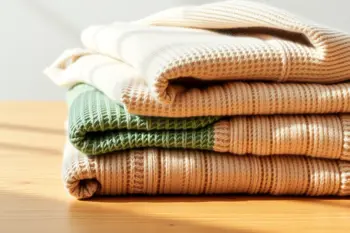
Color choices in the premium knitwear sector are shifting away from loud branding toward a sophisticated, understated vocabulary. The definitive foundation of the 2026 color scheme is dominated by Cloud Dancer, a rich, creamy off-white that replaces clinical whites in lightweight knits 13. Earthy tones such as Sage Green, Acacia, and oatmeal white are highly favored because they emphasize the natural, unblemished luster of cashmere fibers 13 14.
To balance these traditional neutrals, specific high-energy colors are integrated as intentional style accents. Saturated shades like Marina Blue, Electric Cobalt, and Lava Falls red are gaining notable traction, providing visual variety within minimalist wardrobes 13. These vibrant colors are styled carefully, often combined with classic neutral foundations 15. This combination of neutral backdrops and controlled pops of color allows the garments to remain versatile across multiple seasonal transitions 16.
Technical Innovation and the Rise of 3D Knitting
Behind the aesthetic shifts in cashmere apparel lies an intensive technological revolution that is redefining manufacturing efficiency and product construction. The integration of 3D knitting technology is enabling brands to produce seamless garments that align with zero-waste sustainability initiatives 17. These architectural knits utilize varying tensions of ribbing to shape the garment without the need for traditional sewn seams, resulting in highly ergonomic fits 17.
Additionally, manufacturers are utilizing advanced yarn-spinning techniques to develop ultra-lightweight, transitional layers designed specifically to handle variable weather conditions. Modern consumers increasingly face unpredictable spring temperatures, with mornings starting around 45 degrees Fahrenheit and afternoons reaching up to 65 degrees 18. Breathable, fine-gauge cashmere yarns allow for effective year-round layering under coats, solving the traditional limitation of cashmere as a purely cold-weather material 19.
Supply Chain Risks, Regulatory Oversight, and Maintenance Realities
While the demand for luxury cashmere continues to grow, the industry faces significant structural challenges and operational risks. Global supply chains remain highly sensitive to ecological changes in primary harvesting regions like Inner Mongolia and Mongolia 7. Desertification and grazing land degradation have forced regulatory bodies to introduce strict caps on herd sizes, creating potential fiber shortages and price volatility for raw materials 7.
Furthermore, consumers must confront the practical realities of owning high-end cashmere garments. Because authentic cashmere is composed of exceptionally fine fibers, it is naturally susceptible to friction, pilling, and distortion if not cared for correctly 20. Sizing complexities also continue to impact retail margins, with e-commerce return rates for knitwear remaining up to 10% higher than those for woven garments due to fit inconsistencies 4.
Sources
- SweaterSearch Buyer Guide
- Emergen Research US Knitwear Report
- Metastat Insights US Premium Knitwear
- WifiTalents Knitwear Industry Statistics
- IndexBox US Women Knitwear Report
- IndexBox US Men Knitwear Report
- Lanly Cashmere Market Outlook
- Inner Mongolia Cashmere Supplier Trends
- WFS Cashmere Buyer Guide
- WFS Cashmere Trend Report
- Kulfiy Cashmere Sweater Trends
- CH Cashmere Reorder Patterns Analysis
- US Cashmere Color Trend Report
- WFS Cashmere New Collection Drop
- Vogue Spring Knitwear Guide
- The Hype Magazine Timeless Knitwear
- Fashion Valet Autumn Knitwear Forecast
- GOBI Cashmere Early Spring Style Guide
- GOBI Cashmere Work and Leisure Guide
- InStyle Best Sweaters Guide