Government surplus generators for sale: Technical Assessment and Market Sourcing Guide
Procuring decommissioned municipal, state, and federal infrastructure assets often leads commercial buyers to analyze government surplus generators for sale as a viable strategy to secure reliable back-up power systems. Across North America, several official portals manage the lifecycle and disposal of public electrical equipment, including heavy-duty motors, transformers, and industrial generators. For instance, the Canadian federal disposal portal, GC Surplus, regularly lists electrical machinery and power apparatus categorized under specific commodity groups to facilitate orderly public bidding 1.
The Landscape of Government Surplus Power Equipment
On the federal level in the United States, the General Services Administration, known as GSA, operates the GSA Auctions platform to sell a diverse range of federal surplus property to qualified bidders 2. These items originate from federal agencies that no longer require them, transforming capital-intensive assets into available market inventory. Concurrently, the Defense Logistics Agency Disposition Services manages the disposition of military-grade equipment, establishing clear protocols for the public to safely purchase surplus power generation units 3.
State and local agencies also participate heavily in secondary markets, selling retired municipal assets. Many state governments establish dedicated surplus property divisions to offload generators previously used in hospitals, schools, and administrative facilities, highlighting that surplus availability is highly decentralized.
Procurement Platforms and Tender Processes
The methods for acquiring public sector power equipment vary from structured online auctions to formal public tenders. Commercial entities often utilize platforms such as GovDeals, which facilitates government surplus auctions across multiple state and local jurisdictions, allowing buyers to search by category, geographic location, and bid status 4. In other regions, governments rely on traditional sealed-bid processes; for example, the Ministry of Finance in Guyana utilizes formal invitation-to-tender procedures to execute the public sale of heavy-duty generator units 5.
Local and municipal entities frequently bypass national portals, electing instead to list decommissioned equipment on dedicated regional networks. Platforms like Public Surplus serve as specialized online marketplaces where county, city, and state agencies list backup power infrastructure directly to local buyers 6. Regardless of the platform, the transition of government property to private ownership requires strict adherence to registration rules, verified identification, and precise compliance with state or national export control regulations.
Military and Tactical Generator Specifications
Military-grade power systems represent a unique sub-category within the surplus market, prized for their extreme durability and adherence to strict design criteria. Tactical units, such as the 2007 Fermont MEP-803A 10kW generator set, are designed to withstand rugged environmental conditions while maintaining reliable power delivery in the field 7. Specialized defense manufacturers, including Fischer Panda, design compact, quiet diesel generators and auxiliary power units specifically to meet military-standard requirements concerning infrared signatures, electromagnetic interference, and operational acoustics 8.
Because military units are frequently deployed in mission-critical scenarios, many are maintained under rigorous scheduled maintenance programs before entering the surplus market. Organizations like Green Mountain Generators specialize in acquiring, refurbishing, and distributing these battle-tested military diesel generators and sourcing hard-to-find spare parts 9. Many of these refurbished generators are exported globally under approvals granted by the United States Department of Defense and Department of Commerce, highlighting the highly regulated nature of military-standard power assets 9.
Industrial and Commercial-Scale Surplus Units
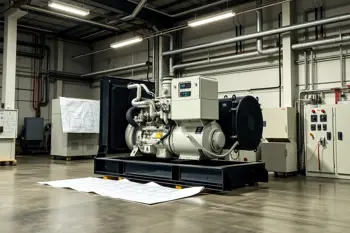
Beyond small portable tactical units, the surplus market frequently features massive commercial-grade generators designed to back up large facilities or support industrial projects. Major liquidators and auction houses, such as Ritchie Bros. Auctioneers, regularly catalog hundreds of stationary generator sets and mobile power vans suited for heavy industries like construction, mining, and data center operations 10. These industrial units often feature high-capacity engines from legendary manufacturers such as Caterpillar, Cummins, Volvo, and Generac, which are built to minimize downtime 10.
To help prospective buyers analyze the scale of available industrial surplus systems, the following table summarizes common technical profiles documented across active secondary marketplaces, including Generator Source and Power Generation Enterprises:
| Manufacturer & Model | Capacity (kW) | Voltage Configuration | Condition & Fuel Type |
|---|---|---|---|
| Generac SD0030 11 | 30 kW | 120/208V or 120/240V | New Surplus / Diesel |
| Kohler 400REZXB 12 | 400 kW | 120/208V | Surplus / Natural Gas |
| Cummins QST30 11 | 1000 kW | 277/480V | New Surplus / Diesel |
| Caterpillar 3516DITA 13 | 1850 kW | 7200/12470V | Pre-owned / Diesel |
Risk Assessment and Regulatory Compliance for Secondary Buyers
While surplus generators present an opportunity to acquire premium engineering at a lower capital cost, secondary buyers must navigate significant technical risks and regulatory friction. Many government surplus units are sold strictly on an as-is basis, meaning they carry no manufacturer warranties and may possess hidden mechanical defects, missing components, or internal wear that is not visible in online listings. Furthermore, older surplus equipment may fail to meet modern environmental standards, as emissions regulations vary significantly between legacy Tier 1 engines and contemporary Tier 4 Final configurations 13.
Navigating local environmental guidelines is critical when deploying large-scale generators. For instance, while a new surplus Caterpillar C18 500kW generator may feature advanced Tier 4 Final compliance suitable for highly regulated regions, older pre-owned assets like a 2004 Caterpillar 3516DITA with Tier 1 emissions might be restricted to emergency-only standby use or barred entirely from urban zones 13. Buyers must verify EPA compliance, regional air-quality permits, and local noise ordinances before finalizing any purchase or initiating installation.
Logistics, Transportation, and Commissioning Realities
The physical logistics of moving and installing high-capacity surplus generators present substantial operational challenges that require professional coordination. Industrial units are incredibly heavy; for example, an 1850kW high-voltage Caterpillar generator set can weigh approximately 40,000 pounds and measure over 23 feet in length 13. Transporting such massive machinery from staging facilities, such as depots in Brighton, Colorado, requires specialized flatbeds, heavy rigging equipment, and municipal transport permits 11.
Commissioning these assets also demands specialized engineering expertise, particularly when dealing with medium-voltage or high-voltage distributions. An 1850kW generator configured for 12,470 volts line-to-line cannot be connected directly to standard low-voltage building panels; it requires dedicated medium-voltage switchgear, step-down transformers, and precise synchronization controls 13. Consequently, the true cost of integration must factor in professional rigging, advanced electrical engineering, site preparation, and extensive load-bank testing to ensure system stability under operational loads.
Sources
- GC Surplus - Government of Canada Surplus Electrical Equipment Group
- GSA Auctions - US General Services Administration Federal Assets
- DLA Disposition Services - US Department of Defense Surplus Program
- GovDeals - Government Surplus Auctions
- Department of Public Information, Guyana - Ministry of Finance Public Tender
- Public Surplus - Local Government Online Auction Platform
- GovAuctions.app - Government Surplus Tools in Arizona
- Fischer Panda - Quiet Diesel Military Generators and Tactical APUs
- Green Mountain Generators - Refurbished Military Diesel Generators
- Ritchie Bros. Auctioneers - Industrial Generators and Power Equipment
- Generator Source - Industrial Diesel Generator Inventory
- Woodstock Power - Surplus Commercial Generators
- Power Generation Enterprises - New and Pre-owned Industrial Generators