Repo ATVs and Dirt Bikes on Sale: A Consumer Research Guide to the Repossessed Powersports Market
The market for repo ATVs and dirt bikes on sale draws significant consumer interest because repossessed powersports vehicles can circulate at substantially reduced historical averages compared to retail pricing. Units such as a 2021 Kawasaki ATV KRX 1000 with 3,280 miles have appeared in credit union liquidation channels with bids starting at $14,000, while newer models like a 2024 Polaris Xpedition ADV have been listed by credit unions at approximately $27,500 with clean titles and under 400 miles on record. 1 Understanding how this inventory moves, who controls it, and what conditions govern its sale is essential before any buyer engages with this category.
How Repossessed ATVs and Dirt Bikes Enter the Market
When a borrower defaults on a secured loan tied to a powersports vehicle, the lending institution, typically a bank or credit union, initiates repossession proceedings to recover the outstanding balance. The lender then liquidates the asset through dealer networks, sealed-bid auctions, or specialized repo aggregators. Platforms such as RepoFinder aggregate listings from financial institutions across the United States, archiving units from states including Utah, Idaho, and Iowa with vehicle details, VINs, and clean title documentation. 2 Some listings remain open to registered bidders while others are already resolved, meaning repo archives serve as both active channels and historical research databases simultaneously.
Government agencies add another layer to this supply chain. Platforms like GovDeals, operated under the Liquidity Services brand umbrella, list motorcycles and powersports seized by law enforcement or municipal authorities. 3 Auction platforms such as Copart and IAA (Insurance Auto Auctions) also facilitate repo powersports sales sourced from financial institutions and fleet liquidations, with live and online bidding formats available to registered participants. Manheim Auctions operates regional repo sales including powersports vehicles sourced from lenders and repossession agents. 4
Documented Repo Inventory: Makes, Models, and Observed Conditions
The range of repo ATV and dirt bike inventory reflects the broader retail market. Recent archival data includes a 2025 Kawasaki Teryx4 1000 KRX 4 Lifted Edition in Utah with only 111 miles, a clean title, and a four-passenger configuration listed under a bid-acceptance format. 1 A separate Idaho listing documented two 2023 Arctic Cat Alterra 600 TRV LTD units with NADA Average Retail values of $7,210 each, at 335 and 394 miles respectively, bundled with a 2024 Rover Trailer with an Average Retail of $3,010. 2 All such repossessions are sold as-is with no expressed or implied warranty from the liquidating institution.
Salvage and wrecked powersports auctions represent a distinct adjacent category. Platforms like SCA Auction list damaged ATVs in states such as Louisiana, with inventory spanning Honda, Can-Am, Polaris, Yamaha, Kawasaki, and CFMOTO units. 5 Damage categories in these listings include rollover, front-end, theft, engine damage, and total burn classifications. Similarly, ABetter.Bid lists salvage ATVs in Pennsylvania including a 2024 Can-Am Maverick X3 with all-over damage and an opening bid recorded at $200, and a 2025 Polaris RZR XP with front-end damage at 3,022 miles. 6 Buyers must distinguish between clean-title repo units and salvage-title units, as financing and registration for salvage vehicles is significantly more complicated.
Pricing Benchmarks and Market Averages
General market research indicates that repo ATV and dirt bike prices historically range from approximately $1,500 to $8,000 depending on condition, model year, and make, with documented savings potential on recent-model units reaching notable margins compared to retail. 7 Auction bid increments on specialized repo platforms typically start between $100 and $500, and weekly or monthly sale cycles govern when inventory becomes available for bidding. 7 For context, new retail pricing in the ATV segment spans from approximately $3,630 for a 2026 Can-Am Renegade 110 EFI youth model to $38,549 for a 2026 Can-Am Defender MAX Limited HD11 utility side-by-side. 8
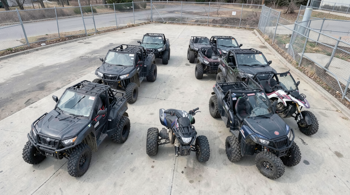
Financing is occasionally available directly through the liquidating credit union. One documented example from RepoFinder showed a 2021 Kawasaki KRX 1000 offered at a $14,000 bid with 1% APR financing for 60 months, resulting in an estimated $240 monthly payment. 1 However, such financing arrangements are institution-specific, not universally available across repo channels, and rates are subject to creditworthiness and collateral conditions. New retail financing benchmarks for comparison include Yamaha offering 0% APR for 60 months on select models, and Can-Am offering 0.99% for 36 months on select 2026 SXS and ATV models. 9
Where Repo Powersports Inventory Is Found
Several distinct channel types aggregate or conduct repo powersports sales across the United States. The primary categories include the following:
- Specialized repo aggregators: RepoFinder tracks repossessed vehicles from financial institutions nationwide, including powersports listed by banks and credit unions.
- Government auction platforms: GovDeals and similar sites list seized and surplus powersports from law enforcement and municipal agencies. 3
- Salvage auction platforms: Copart, IAA, SCA Auction, and ABetter.Bid conduct online bidding on damaged and repossessed powersports with title documentation provided. 5
- General marketplaces: Facebook Marketplace, Craigslist, and eBay Motors host individual and dealer repo listings with local pickup and buyer protection policies in regional markets. 10
- Licensed used powersports dealers: Some dealerships acquire repo inventory from banks and lease companies, occasionally offering limited warranty protections and dealer financing on discounted units. 7
Seasonal Patterns and Inventory Cycles
Repo powersports inventory does not distribute evenly across calendar months. Research indicates that seasonal repo inventory peaks after winter months, when ATV and dirt bike usage declines in colder regions. This reduced ridership correlates with increased defaults and repossessions, creating higher availability and historically greater price reductions in the spring selling window. 7 Buyers who monitor platforms through late winter and into April or May may encounter a broader selection of recently reclaimed units at the start of the outdoor season.
Auction cycle frequency also affects buyer strategy. Platforms conducting weekly sales provide more frequent opportunities but can result in faster inventory turnover, while monthly sealed-bid formats give buyers additional time to research condition and comparable retail values. Understanding how a specific platform structures its auction timeline is as important as the unit itself, since missed bid windows typically require waiting for the next cycle rather than submitting a late offer.
Risks, Limitations, and Due Diligence Requirements
The as-is nature of all repossession sales is the single most consequential risk for prospective buyers. Lending institutions generally have no knowledge of the full maintenance history of a repossessed unit, a disclosure that appears explicitly in documented listings. 2 Mechanical inspections are either unavailable or conducted only at the buyer's expense prior to bidding. Units listed with clean titles may still carry deferred maintenance, hidden damage, or missing components that are not visible in listing photographs.
Title complexity represents a second significant risk dimension. Salvage-titled repo units, common on platforms like SCA Auction and ABetter.Bid, face registration barriers in many states and are frequently ineligible for standard powersports financing. 5 Additionally, some repo platforms restrict bidding to registered members or licensed dealers, meaning individual consumers may need to work through intermediaries who charge buyer fees. Registration requirements, buyer premiums, transportation costs, and applicable state sales taxes can materially increase the effective total cost above the winning bid price, a factor that must be calculated before any bid is placed.
Sources
- RepoFinder.com - Repossessed Powersports Listings (repofinder.com)
- RepoFinder.com - Repo Powersports Archive Database (repofinder.com)
- GovDeals.com - Government Surplus Motorcycles and Powersports (govdeals.com)
- Manheim Auctions - Repo and Fleet Powersports Sales (manheim.com)
- SCA Auction - Salvage and Wrecked ATVs for Sale (sca.auction)
- ABetter.Bid - Salvage ATV Auctions Pennsylvania (abetter.bid)
- LLM General Research - Repo Powersports Market Pricing and Trends
- JD Power / MotoMember - New ATV Retail Pricing Reference (jdpower.com, motomember.com)
- Crossroad Powersports / RideNow - Manufacturer Financing Benchmarks (crossroadpowersports.com, ridenowchandler.com)
- Facebook Marketplace / eBay Motors / Craigslist - General Repo and Used Powersports Marketplaces