Seized Luxury Cars on Sale: Global Liquidation Trends and Public Auction Dynamics
The public availability of seized luxury cars on sale has increasingly captured the attention of automotive analysts and private collectors. When government enforcement divisions or tax authorities confiscate premium vehicles in connection with legal disputes, they often liquidate these assets through transparent public auctions. This process converts idle personal property into public funding. Far from standard retail environments, these sales follow rigid regulatory frameworks designed to ensure transparency and competitive bidding.
Regulatory Frameworks Governing Public Vehicle Auctions
In many jurisdictions, the process of bringing seized luxury cars on sale is heavily regulated. For example, the Taipei Branch of the Administrative Enforcement Agency under Taiwan's Ministry of Justice schedules public auctions for fleets of seized exotics, ranging from Ferraris and Rolls-Royces to Porsches and Mercedes-Benz models 1. These events are structured under administrative guidelines to maintain public trust. By shifting high-end assets from criminal investigations to public channels, agencies recover value for the public purse.
In the Philippines, the Bureau of Internal Revenue and the Bureau of Customs implement similar asset disposal protocols. High-value SUVs and sedans confiscated due to tax discrepancies undergo public viewings before being offered at sealed bidding events 2. These agencies set floor prices based on official market appraisals to ensure the government recovers realistic values. Potential buyers must comply with complex registration rules, which include presenting certified tax records.
Historical Asset Liquidations and Case Studies
Historical auction results offer insight into how premium assets are processed. In early 2026, the Philippine Bureau of Customs successfully auctioned nine high-end vehicles tied to a prominent contractor case, raising over P102 million in public revenue 3. This portfolio included a 2024 Lincoln Navigator, a 2022 Cadillac Escalade ESV, and a 2022 Bentley Bentayga. These vehicles were originally seized after investigations uncovered significant import documentation failures, prompting their classification as smuggled assets. The proceeds were subsequently remitted directly to the national treasury.
When public bidding fails to attract qualified offers, agencies frequently utilize negotiated sales to clear remaining inventory. The final four luxury vehicles from the same corporate seizure were sold through a direct negotiated sale, generating P12.276 million 4. This package featured a 2022 GMC XL Yukon Denali, a 2021 Cadillac Escalade, a 2022 Maserati Levante Modena, and a 2022 GMC Yukon Denali. This multi-step disposition methodology emphasizes the structured, long-term administrative efforts required.
The Scale of Global High-End Seizure Operations
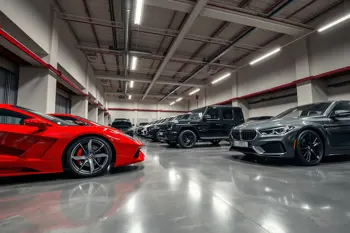
The phenomenon of government-led vehicle liquidations extends far beyond Southeast Asia. In March 2026, an auction in Taipei featured assets from an international online financial fraud organization known as the Prince Group 5. The event drew 266 bidders and included 33 high-end supercars. Notable sales included a Porsche 918 Spyder for approximately 56 million New Taiwan dollars and a Ferrari LaFerrari for 135 million New Taiwan dollars. Although some ultra-high-end vehicles like a Bugatti Chiron Sport remained unsold, the auction raised 436.62 million New Taiwan dollars in total.
These global actions highlight how coordinated law enforcement operations systematically dismantle complex financial networks. By liquidating luxury assets, judicial systems penalize unlawful enterprises and convert physical wealth into usable national funding. However, the sheer size of these fleets requires extensive logistic coordination, secure storage, and specialized marketing. This ensures that the global market can absorb such significant numbers of ultra-luxury vehicles.
North American Seizure and Forfeiture Programs
In the United States, law enforcement agencies regularly seize hypercars linked to complex financial crimes. For example, federal marshals and local police departments coordinate with major auction houses like Bonhams to liquidate assets seized in massive fraud cases 6. One notable case involved the arrest of business owners in Las Vegas accused of running a 57 million dollar scheme. The subsequent forfeiture proceedings placed ultra-rare vehicles, including a Bugatti Chiron Super Sport and a Pagani Huayra R, into prominent public auction lineups.
Bankruptcy courts also serve as a major source of seized luxury cars on sale. A bulletproof Mercedes-Benz Maybach S650, formerly owned by a detained ex-billionaire, was sold at a bankruptcy auction for 63,000 dollars 7. The vehicle, which originally cost 192,000 dollars, spent years in legal limbo while a network of lawyers, appraisers, and bankruptcy judges prepared it for liquidation. This case illustrates the extensive administrative timelines and depreciation risks that characterize high-value asset recoveries.
International Asset Recovery and Restitution Efforts
Governments worldwide continue to establish specialized asset recovery agencies to manage luxury confiscations. In Nigeria, the Economic and Financial Crimes Commission secured a final court order for the permanent forfeiture of high-value assets belonging to a prominent businesswoman 8. The court-ordered seizure included 11 exotic vehicles valued at 4.293 billion naira, alongside billions in luxury jewelry and cash. These court decisions officially transfer ownership to the state, paving the way for public asset auctions to reintegrate these funds.
In Europe, similar mechanisms exist to handle assets seized under various proceeds of crime laws. Agencies like the Spanish Tax Agency and the Irish Criminal Assets Bureau utilize dedicated public auction platforms to auction off seized cars and designer goods. These agencies systematically catalog every vehicle, verifying their origin to provide buyers with clear legal titles. By formalizing these sales, European governments ensure that seized assets are sold transparently, with all generated revenue flowing back into local municipal and state treasuries.
Operational Realities and Buyer Considerations
Purchasing a seized vehicle through government portals involves unique procedural steps and operational risks. Unlike traditional automotive dealerships, federal agencies like the U.S. Marshals Service utilize platforms such as Bid4Assets and the GSA Auctions site to conduct public bidding 9. Bidders are typically required to register in advance, verify their identity, and submit credit card holding fees. Furthermore, processing times for obtaining clean title documentation can be significantly longer due to the complex nature of the underlying court proceedings.
Buyers must also carefully evaluate the mechanical condition of the vehicles, as most government asset sales are conducted strictly on an as-is basis 10. Standard warranties are not provided, and pre-auction inspections may be limited to specific physical viewing windows or photographic catalogs. Buyers are usually responsible for auxiliary costs, including transfer fees, towing services, and outstanding administrative taxes. Consequently, extensive due diligence regarding vehicle history, past maintenance, and potential transport logistics is crucial.
Sources
- Taiwan News
- The Philippine Star
- Philstar Global
- Cebu Daily News
- The Asia Business Daily
- Jalopnik
- Benzinga
- SocietyGists
- U.S. Marshals Service
- Copart Auction Terms