Getting Started: A Guide to Beginner Woodworking Classes
Woodworking is a rewarding craft that combines creativity with practical skill, allowing you to create everything from simple decorative objects to functional furniture. For those new to the field, the array of tools, techniques, and safety precautions can seem daunting. This is where a beginner woodworking class provides an invaluable foundation, offering a structured and safe environment to learn the fundamentals.
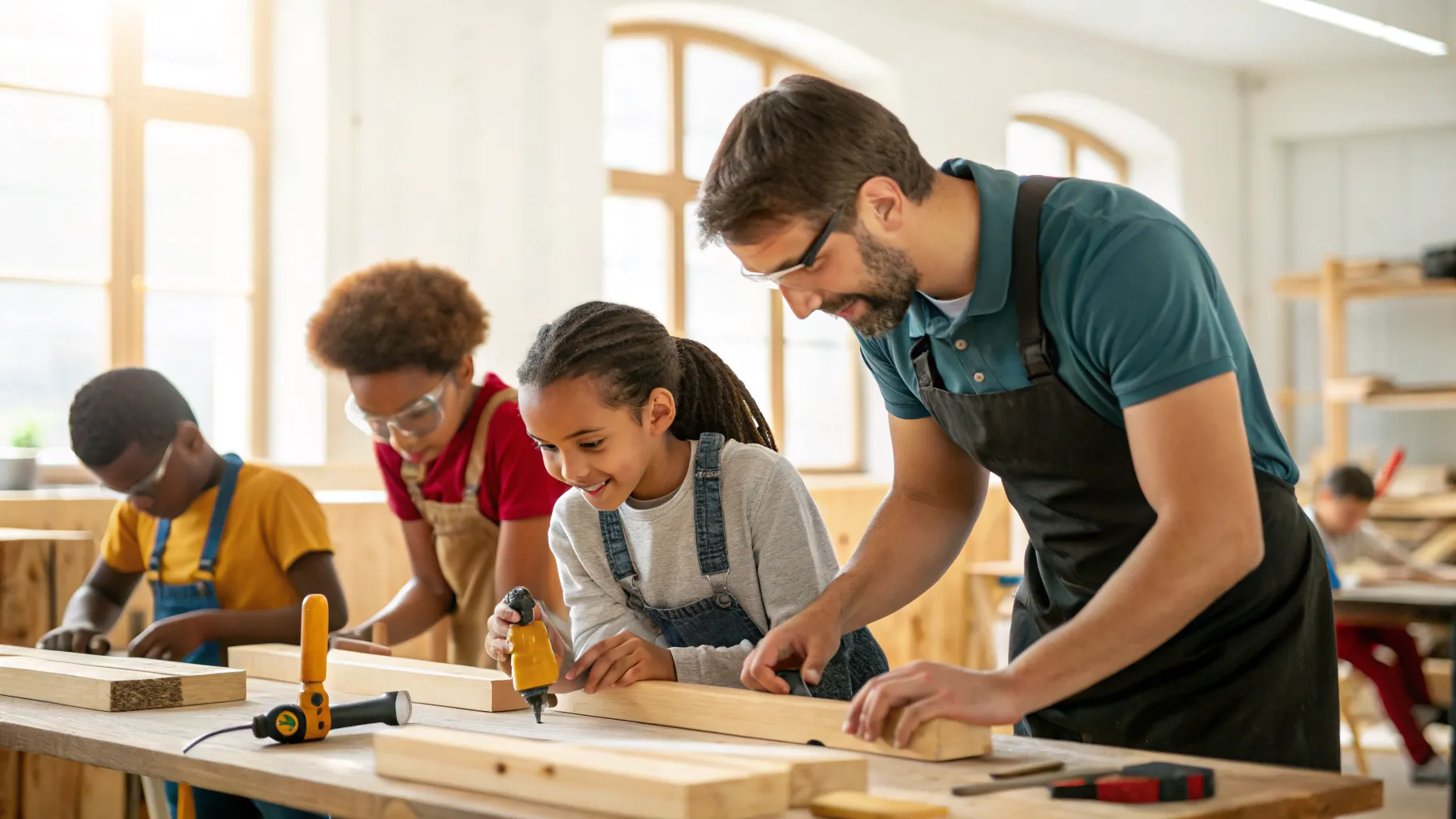
What to Expect in a Beginner's Class
Your first woodworking class will almost certainly begin with a comprehensive safety briefing. You'll learn the proper way to handle both hand tools and power tools, the importance of personal protective equipment like safety glasses and hearing protection, and general workshop safety rules. This foundational knowledge is crucial for building confidence and preventing accidents.
After the safety orientation, you'll be introduced to the basic tools of the trade. Instructors typically cover how to use fundamental hand tools like saws, chisels, and planes, as well as common power tools such as drills, sanders, and miter saws. Most beginner courses are project-based, meaning you'll apply these new skills to create a small, take-home item like a cutting board, a small box, or a simple stool. This hands-on approach helps solidify your learning and gives you a tangible sense of accomplishment.
Types of Woodworking Classes Available
Woodworking is a broad field, and the classes available reflect that diversity. The most common starting point is a general 'Introduction to Woodworking' course. These classes cover a wide range of basic skills and are designed to give you a feel for the craft without requiring a deep commitment to one specialty.
For those with a specific interest, there are numerous specialized workshops. You might find one-day classes focused on a single project, such as building a picture frame or a small shelf. Other options delve into specific skills like woodturning, joinery, carving, or cabinetmaking. These focused classes are excellent for developing proficiency in a particular area once you've grasped the basics.
The Benefits of Formal Instruction
While online tutorials and books are plentiful, learning in a formal class setting offers distinct advantages. The most significant benefit is direct access to an experienced instructor who can provide real-time feedback, correct your technique, and answer questions as they arise. This personalized guidance helps you learn correctly from the start, avoiding the development of bad habits that can be difficult to unlearn later.
Another major advantage is access to a fully equipped workshop. Professional woodworking tools and machinery can be a significant investment. A class allows you to use high-quality equipment without the upfront cost, helping you decide which tools you might want to invest in for a home shop. Furthermore, the structured curriculum ensures you learn skills in a logical order, building a solid foundation for more complex projects.
Where to Find Woodworking Classes
Finding a local woodworking class is often easier than you might think. Many communities have dedicated woodworking schools or craft centers that offer a variety of courses for all skill levels. Another excellent resource is your local community college, which frequently includes woodworking or carpentry in its continuing education or vocational programs.
You can also check with local maker spaces. These collaborative workspaces often have well-equipped woodshops and host classes and workshops for their members and the public. Some high-end lumberyards or woodworking supply stores also offer classes to help customers learn how to use the tools and materials they sell. A simple online search for 'woodworking classes near me' is a great way to discover the options available in your area.
Choosing the Right Class for You
With several options likely available, it's important to choose a class that aligns with your goals and learning style. Consider the class size first; smaller classes typically offer more one-on-one time with the instructor. Look into the instructor's background and experience to ensure they are a knowledgeable and patient teacher. Reading reviews from past students can be very insightful.
Also, evaluate the course structure and cost. Is it a one-time workshop or a multi-week course? Does the fee include all materials, or will you need to purchase your own lumber and supplies? Finally, consider what you want to get out of the class. If your goal is simply to try a new hobby, a fun, project-based workshop might be perfect. If you're aiming to build serious skills, a more comprehensive introductory course would be a better fit.
Essential Skills You Will Learn
A quality beginner's course will equip you with a core set of fundamental skills that are applicable to nearly any woodworking project. You will learn how to read a plan, measure accurately, and mark your cuts with precision. These are the building blocks of successful woodworking, where even small errors can have a big impact on the final result.
Beyond measurement and layout, you can expect to learn several key techniques. These typically include:
- Safe Tool Operation: Proper handling of common hand tools (saws, chisels, planes) and power tools (drills, sanders, saws).
- Basic Cutting Techniques: How to make straight, square cuts using various types of saws.
- Fundamental Joinery: Creating simple but strong connections between pieces of wood, such as butt joints, lap joints, or dowel joints.
- Sanding and Finishing: The proper methods for smoothing wood surfaces and applying finishes like oil or varnish to protect the wood and enhance its appearance.