A Guide to Concrete Patio Installation Prices
A concrete patio can be a durable and functional addition to any backyard, providing a solid surface for furniture, grills, and outdoor activities. However, the cost of installation can vary significantly based on a wide range of factors. Understanding these variables is key to setting a realistic budget and making informed decisions for your project.
Key Factors Influencing Overall Cost
The most significant drivers of a concrete patio's cost are its size and thickness. Patios are priced per square foot, so a larger patio will naturally cost more. The standard thickness for a simple patio is typically four inches. If you plan to place heavy objects on it, such as a large hot tub or an outdoor kitchen structure, a thicker slab of five or six inches with reinforcement will be necessary, increasing material and labor costs.
Site preparation is another crucial element that affects the final price. A level, clear, and easily accessible site will be the least expensive to work with. If your yard has a significant slope, it will require grading to create a level base, which adds to the labor. Furthermore, the cost will increase if contractors need to remove an existing structure like an old deck, large rocks, or trees before they can begin.
The Price of Concrete and Materials
The concrete itself is a major material expense. It is typically sold by the cubic yard, and the price can fluctuate based on your location and the specific mix required. Concrete is rated by its compressive strength, measured in pounds per square inch (PSI). A standard patio might use a 3,000 to 4,000 PSI mix, but a stronger, more expensive mix may be recommended in climates with extreme weather cycles.
Beyond the concrete, other materials are necessary for a proper installation. A sub-base of gravel or crushed stone is required to ensure proper drainage and provide a stable foundation for the slab. To prevent cracking, the concrete is often reinforced with steel rebar or a wire mesh grid. The lumber used to build the forms that hold the wet concrete in place also contributes to the material costs.
How Labor Costs Affect the Budget
Labor often accounts for more than half of the total project cost. These rates can vary dramatically depending on your geographic location, with prices generally being higher in urban centers than in rural areas. The availability and experience of local contractors can also play a role in pricing. It is always a good idea to research typical labor rates in your specific city or region to get a baseline understanding.
The labor portion of a quote covers all the physical work involved in the installation. This includes excavating the area, building the forms, laying and compacting the gravel base, installing reinforcement, pouring and leveling the concrete, applying the desired finish, and cleaning up the site afterward. A more complex job, such as a patio with multiple levels or intricate curves, will require more time and skill, thus increasing the labor charges.
Basic vs. Decorative Finishes
The simplest and most affordable finish for a concrete patio is a standard broom finish. After the concrete is smoothed, a broom is dragged across the surface to create a slip-resistant texture. This functional finish is a popular choice for those prioritizing budget and durability over aesthetics. Many basic installation quotes will assume this type of finish unless otherwise specified.
For homeowners wanting a more customized look, several decorative options are available, each adding to the overall cost. These finishes require additional materials and specialized labor to apply correctly.
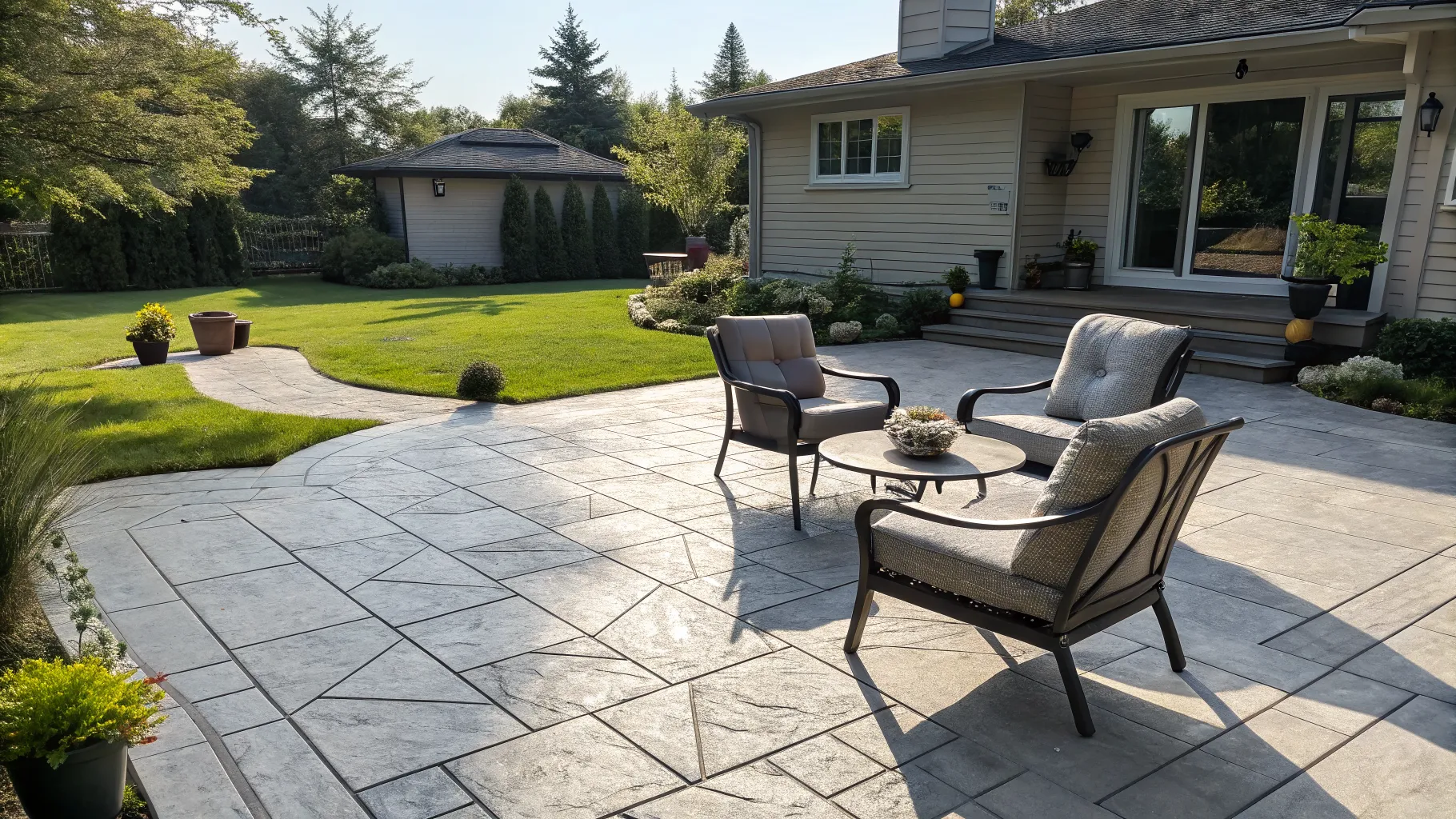
- Stamped Concrete: This popular option uses molds to press patterns into the wet concrete, mimicking the look of materials like stone, brick, or wood at a lower cost.
- Stained Concrete: Stains can be applied to add color and visual interest. Acid stains react chemically with the concrete to create mottled, earthy tones, while water-based stains offer a wider and more uniform palette of colors.
- Exposed Aggregate: This finish is achieved by washing away the top layer of cement paste to reveal the small stones and gravel mixed into the concrete, creating a durable and textured surface.
Getting and Comparing Project Quotes
To ensure you are getting a fair price, it is highly recommended to obtain at least three detailed quotes from different qualified contractors. Be wary of any quote that is significantly lower than the others, as it may indicate subpar materials or inexperienced labor. A professional quote should be provided in writing and be thoroughly detailed, not just a single lump sum.
When comparing quotes, make sure each one includes a clear breakdown of all costs. This should cover the square footage and thickness of the slab, the type of concrete mix and reinforcement being used, the extent of site preparation, the specific finish requested, labor charges, and a policy for cleanup. Having this level of detail allows you to make an accurate comparison and understand exactly what you are paying for.
Potential Additional Costs to Consider
Sometimes, unexpected issues can arise during a project that lead to additional costs. For example, the crew might discover very poor soil that requires more extensive excavation and more base material to stabilize. Access can also be an issue; if the patio site is in a backyard with no easy entry for a concrete truck, laborers may need to use wheelbarrows or a concrete pump, which adds to the expense.
There are also optional features that can increase the budget. If you need an old patio or deck demolished and hauled away, this will be an added charge. Applying a high-quality sealer after the concrete cures is an extra cost, but it is a worthwhile investment to protect the surface from stains and weather damage. Finally, features like built-in seating walls, steps, or integrated landscape lighting will be priced separately from the patio slab itself.