6 Skin Conditions Linked to Ulcerative Colitis You Should Know
Facts:
- Up to 25% of IBD patients experience skin issues.
- Managing gut inflammation is key for treating UC skin issues.
Connecting Gut Health and Skin: The UC Link
Ulcerative colitis (UC) is primarily known as an inflammatory bowel disease (IBD) that affects the large intestine. However, its impact can extend far beyond the gut, leading to a range of extraintestinal manifestations. Among the most common are various skin problems. Understanding these skin symptoms ulcerative colitis can lead to earlier diagnosis and more effective management of both the gut and skin. These ibd skin problems are not just cosmetic; they often signal underlying disease activity and can significantly impact quality of life.
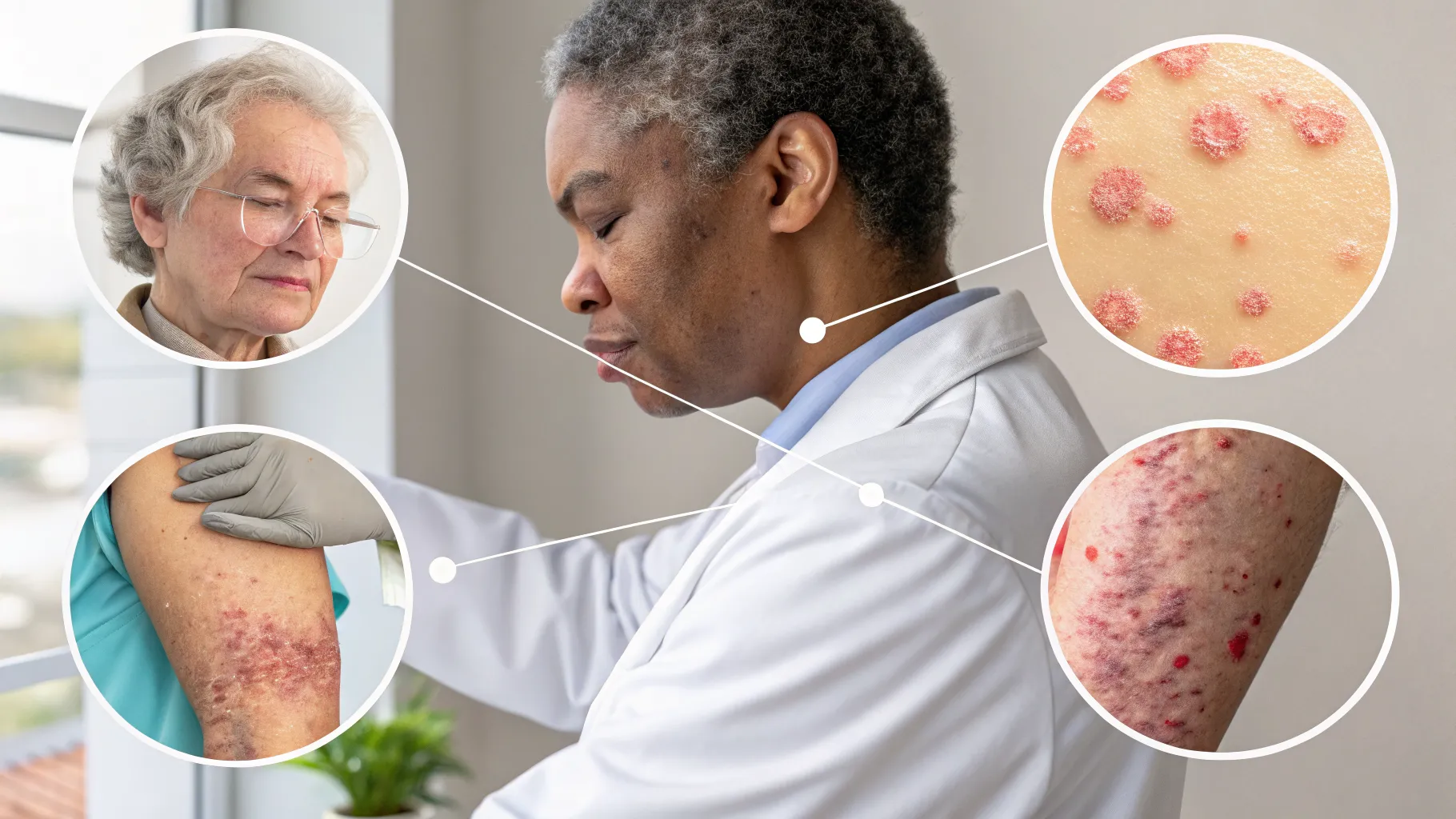
The 6 Ulcerative Colitis Skin Conditions Explained
1. Erythema Nodosum
Erythema nodosum is the most frequent skin manifestation seen in patients with ulcerative colitis. It presents as painful, red or violet-colored nodules, typically found on the shins, ankles, and sometimes arms. These bumps are caused by inflammation of the fat cells under the skin. The activity of erythema nodosum often mirrors the activity of the colitis; when the gut inflammation flares, these skin lesions tend to appear or worsen. This specific type of autoimmune skin disease ibd is a clear indicator that the underlying IBD needs attention. Managing the uc skin issues related to erythema nodosum almost always involves getting the primary bowel disease under control.
2. Pyoderma Gangrenosum
Though less common than erythema nodosum, pyoderma gangrenosum (PG) is one of the more severe 6 ulcerative colitis skin conditions. It typically begins as a small pustule or red bump, often after minor trauma, which rapidly evolves into a deep, painful ulcer with a purplish, undermined border. PG can be very difficult to treat and may lead to significant scarring. Unlike erythema nodosum, its activity does not always correlate with IBD flare-ups. This makes managing these particular ibd skin problems particularly challenging, often requiring a combination of wound care and potent immunosuppressive medications.
3. Psoriasis
Psoriasis is a well-known autoimmune condition that causes rapid skin cell buildup, resulting in scaly, red patches. There is a strong genetic link between IBD and psoriasis. Individuals with ulcerative colitis have a higher risk of developing psoriasis, and vice versa. The inflammation pathways are similar in both diseases. Recognizing these shared skin symptoms ulcerative colitis is crucial for a holistic treatment approach, often involving biologic drugs that can target the inflammation driving both conditions.
4. Sweet's Syndrome (Acute Febrile Neutrophilic Dermatosis)
Sweet's syndrome is a rare skin condition characterized by the sudden onset of fever and painful skin lesions, which appear as red or bluish plaques and nodules. These lesions are filled with neutrophils, a type of white blood cell. It is considered another one of the significant uc skin issues linked to underlying systemic diseases, including IBD. The appearance of Sweet's syndrome can coincide with a flare of ulcerative colitis, and treatment usually focuses on systemic corticosteroids to control the widespread inflammation.
5. Aphthous Stomatitis
While technically occurring in the mouth, aphthous stomatitis (canker sores) is frequently categorized with skin manifestations of IBD. These are small, painful ulcers that appear on the inside of the lips, cheeks, or on the tongue. Their presence often correlates directly with UC disease activity. For patients, these sores can be a frustrating and painful part of their ibd skin problems, making eating and drinking difficult. Effective management of the underlying ulcerative colitis usually leads to the resolution of these oral ulcers.
6. Cutaneous Vasculitis
Cutaneous vasculitis refers to inflammation of the small blood vessels in the skin. In the context of ulcerative colitis, this can manifest as palpable purpura (raised purple spots), ulcers, or nodules, most commonly on the lower legs. This autoimmune skin disease ibd is caused by immune complexes depositing in the blood vessel walls, triggering inflammation. It is one of the more complex 6 ulcerative colitis skin conditions to manage, as it signals a systemic immune response that requires careful treatment of the underlying IBD.
Why Does Ulcerative Colitis Cause Skin Problems?
The connection between the gut and the skin in IBD is a subject of ongoing research. The leading theory revolves around systemic inflammation and immune system dysregulation. In ulcerative colitis, the immune system mistakenly attacks the lining of the colon. This immune response isn't always confined to the gut; inflammatory cells and proteins can travel through the bloodstream, triggering inflammation in other parts of the body, including the skin. This leads to the development of various skin symptoms ulcerative colitis. Furthermore, genetic predispositions can make an individual susceptible to both gut and skin autoimmune conditions. Understanding these mechanisms is key to developing treatments that address the root cause of these interconnected uc skin issues.
Managing Your Skin During a UC Flare
- Communicate with Your Gastroenterologist: Always report new or worsening skin issues to your GI doctor. They are often the first sign of a flare or a need to adjust your IBD medication. Treating the underlying UC is the primary strategy for resolving most ibd skin problems.
- Consult a Dermatologist: A dermatologist can help correctly diagnose the specific skin condition and recommend topical treatments or wound care to manage symptoms directly. A collaborative approach between your GI and dermatologist is often most effective for an autoimmune skin disease ibd.
- Practice Gentle Skin Care: Use mild, fragrance-free soaps and moisturizers. Avoid harsh scrubs or irritants, especially on sensitive areas. Protecting the skin barrier is crucial when dealing with inflammatory conditions.
- Monitor for Infection: Skin lesions, especially ulcers from pyoderma gangrenosum, can become infected. Watch for signs like increased redness, pus, or warmth, and seek medical attention immediately if you suspect an infection.
Frequently Asked Questions
Can diet changes for UC also help my uc skin issues?
Yes, to an extent. While diet alone may not cure these skin conditions, managing your ulcerative colitis through diet can reduce overall inflammation, which may in turn lessen the severity of your skin symptoms. An anti-inflammatory diet can be beneficial for both gut and skin health.
Are these skin symptoms ulcerative colitis contagious?
No, the skin conditions associated with ulcerative colitis, such as erythema nodosum and pyoderma gangrenosum, are not contagious. They are manifestations of an internal autoimmune and inflammatory process, not an infection that can be passed to others.
Will my skin problems go away if my UC is in remission?
For many patients, yes. Conditions like erythema nodosum and aphthous stomatitis often clear up completely when ulcerative colitis is in remission. However, conditions like pyoderma gangrenosum can sometimes follow an independent course and may require separate, targeted treatment even when gut symptoms are controlled.
References
- Crohn's & Colitis Foundation: Extraintestinal Manifestations of IBD
- American Academy of Dermatology: How IBD Can Affect the Skin
- Journal of Clinical Gastroenterology: Dermatologic Manifestations of Inflammatory Bowel Disease
- Nature Reviews Gastroenterology & Hepatology: IBD and the Skin