What to Know About Music Lessons for Seniors
Embarking on a musical journey is a rewarding endeavor at any age, and older adults are increasingly discovering the profound joys of learning an instrument. Whether you are picking up a guitar for the first time or returning to a childhood piano, engaging with music offers unique cognitive and emotional rewards. Understanding what to expect, how to choose the right learning environment, and how to navigate physical changes can make the process deeply fulfilling.
Cognitive and Physical Benefits of Learning Music Later in Life
Taking music lessons for seniors is often associated with improved brain health. Engaging with an instrument requires coordination, pattern recognition, and memory retention. These mental exercises help maintain neuroplasticity, which is the ability of the brain to form new neural connections. Many experts suggest that learning to read music and play notes can act as a workout for the mind, potentially delaying cognitive decline.
Beyond mental sharpness, there are notable physical advantages. Playing an instrument encourages fine motor skills and hand-eye coordination. Gentle, repetitive movements can actually help keep joints flexible. For instance, playing the keyboard can serve as mild physical therapy for fingers, while learning a wind instrument improves respiratory control and lung capacity.
Popular Instruments for Older Adults
When considering senior music classes, some instruments are naturally more approachable and popular. It helps to choose an instrument that aligns with personal musical tastes and physical comfort levels. Singing is also a wonderful avenue that requires no purchased instrument, focusing instead on vocal health and breathing techniques.
- Piano lessons for seniors are highly sought after because the layout of the keys is visual and straightforward. The student can sit comfortably, and producing a sound does not require building calluses.
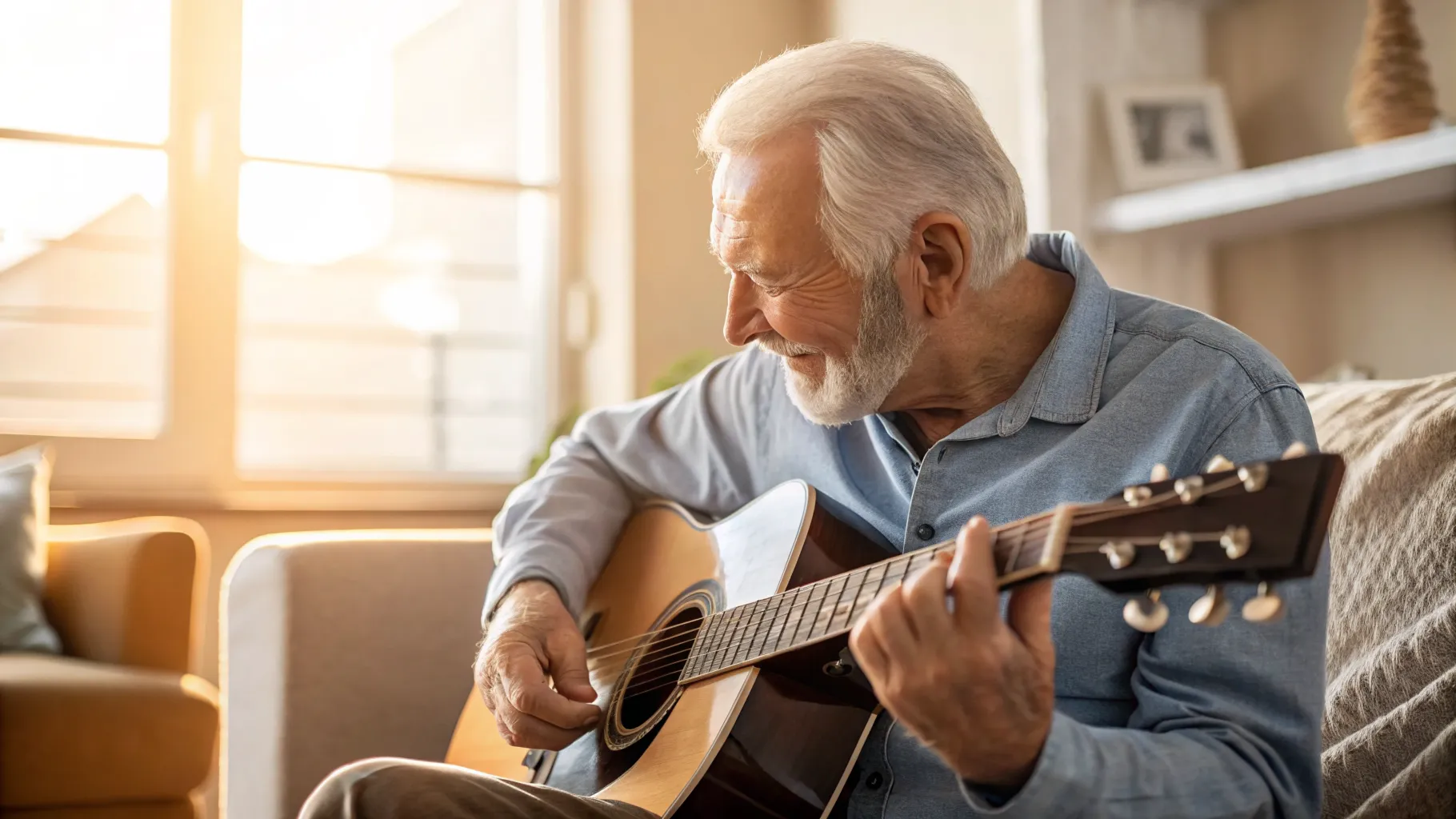
- Guitar lessons for seniors are another excellent option, offering portability and a vast repertoire of familiar songs.
- For those concerned about the size or string tension of a standard acoustic guitar, a ukulele or nylon-string classical guitar provides a gentler alternative.
Group Classes Versus Private Instruction
Older adults have two main avenues for learning: one-on-one sessions or group environments. Group music classes for older adults provide a fantastic opportunity for socialization. Learning alongside peers removes the pressure of being the sole focus of the instructor and helps build a supportive community. These group settings often focus on the joy of making music together, which can combat loneliness and isolation.
On the other hand, private lessons offer a highly customized experience. A private tutor can adjust the pacing to match the exact learning speed of the student. If a senior needs to spend three weeks mastering a single chord progression, a private instructor can accommodate that without the pressure of keeping up with a class.
Finding the Right Teacher for Senior Learners
The success of music lessons for seniors often hinges on finding the right instructor. Teaching an older adult requires a different approach than teaching a young child. Adult learners typically understand concepts quickly but may need more time to train their fingers to execute the physical movements. A good teacher will recognize this and offer patient, encouraging guidance without being patronizing.
Before signing up for sessions, it is wise to interview potential teachers. Ask about their experience working with retirees or older individuals. An ideal instructor will be flexible with their curriculum, perhaps allowing the student to learn their favorite songs from the past rather than sticking strictly to traditional beginner exercise books.
Navigating Physical Limitations and Adaptations
It is completely normal for older adults to face certain physical hurdles when learning a new instrument. Vision changes, hearing loss, or joint stiffness are common factors that need to be addressed. However, these challenges rarely mean a person cannot learn to play. There are many simple adaptations available to make the process comfortable and enjoyable.
For vision issues, instructors can provide enlarged sheet music or color-coded tablature. If arthritis makes holding a pick difficult, musicians can explore alternative strumming techniques or switch to an instrument with lighter action. Those with hearing aids can often find specialized headphones or adjust the acoustics of their practice space to ensure they hear the notes clearly.
Setting Realistic Expectations and Goals
One of the most important aspects of taking up music later in life is managing expectations. While children might learn physical skills with sponge-like speed, adults bring a depth of emotional understanding and life experience to their playing. Progress might feel slow on some days, but the journey itself is where the true value lies.
The primary goal of engaging in music at an older age should be enjoyment, stress relief, and personal enrichment. Whether the aim is to play a simple lullaby for a grandchild or just to strum a few chords on the porch, celebrating small milestones keeps motivation high and ensures the experience remains a positive addition to daily life.