Best Driveway Paving Contractors: An Industry Report on Performance Standards and Material Selection
Professional residential and commercial paving projects represent a significant portion of a property’s initial visual impact and long-term structural integrity. Industry data suggests that a driveway can account for approximately 30 percent of a home’s curb appeal, serving as a primary indicator of property maintenance to prospective buyers 1. Beyond aesthetics, the technical execution of paving projects influences property valuation and functional longevity, with professional installations often yielding a high return on investment. The selection of the best driveway paving contractors requires an understanding of regional material standards, engineering protocols, and the specific environmental challenges present in different geographical corridors 3.
The Economic Impact and Value Retention of Professional Paving
Real estate valuation research indicates that exterior renovations involving professional paving offer some of the highest returns on investment in the home improvement sector. Analysts have noted that while internal upgrades like kitchen remodels might recoup 80 percent of costs and pool additions often only recoup 50 percent, a new paved driveway can facilitate a return of 75 percent to 100 percent of the project cost in immediate home equity 1. This high recoupment rate is largely due to the elimination of perceived deferred maintenance, as cracked or crumbling surfaces often signal deeper structural issues to potential investors and appraisers 1.
Furthermore, a professionally installed asphalt or concrete surface is estimated to add between $5,000 and $10,000 in perceived property value, depending on the scale and complexity of the project 3. The following table provides a comparison of typical home renovation returns based on national remodeling cost reports:
| Project Type | Estimated Return on Investment (ROI) |
|---|---|
| New Paved Driveway | ~100% |
| Kitchen Remodel | ~80% |
| Pool Addition | ~50% |
Comparative Analysis of Paving Materials and Lifespans
The selection of paving materials is a critical decision that impacts both the upfront project expenditure and the multi-decade maintenance schedule. Asphalt remains the most common choice for residential driveways in the United States due to its flexibility and relative cost-effectiveness 21. However, concrete provides a distinct set of benefits, including a longer service life that typically ranges from 30 to 40 years, compared to the 15 to 25 year average for asphalt 12. While asphalt requires more frequent sealcoating to prevent oxidation, concrete may be prone to surface scaling if not correctly installed in regions with frequent freeze-thaw cycles 11.
Alternative materials such as interlocking pavers and stone offer a premium aesthetic and high durability. Pavers are particularly valued for their ability to handle ground movement without the visible cracking often seen in monolithic slabs 6. Additionally, permeable pavers have gained popularity as an eco-friendly solution to manage stormwater runoff, although they often require more specialized sub-base engineering to ensure proper drainage and prevent the migration of fine soil particles into the aggregate layers 21.
Regional Engineering Challenges and Environmental Factors
Paving specifications must be tailored to the specific climatic conditions of the region to prevent premature failure. In Northern climates, such as Ontario or Colorado, contractors must engineer surfaces to withstand 40 or more freeze-thaw cycles annually 9. This requires a focus on frost-heave resistance and moisture management 11. Conversely, in coastal or sandy regions like South Florida or Long Island, the primary engineering challenges involve managing high moisture levels and preventing the settling of surfaces over sandy, unstable subsoils 17. Professionals in these areas often emphasize the importance of excavating to depths of 8 to 10 inches to establish a stable foundation 17.
- London Clay Conditions: In regions like Harlow, UK, high-shrinkage clay requires a minimum 200mm Type 1 MOT sub-base and geotextile membranes to prevent sinking 29.
- Freeze-Thaw Durability: Northern Indiana and Pennsylvania contractors focus on hot-mix asphalt density to resist cracking during winter temperature swings 5.
- Coastal Drainage: Long Island installations require specific grading to move water away from foundations to prevent pooling on sandy soil 17.
Technical Protocols for Sub-Base and Foundation Integrity
The durability of any paved surface is fundamentally dependent on the quality of the sub-grade and base preparation rather than the thickness of the top layer alone. Industry experts state that an asphalt driveway is only as durable as the base beneath it, with improper compaction being the leading cause of early structural failure 12. A standard professional process involves thorough site evaluation, excavation, and the installation of a compacted aggregate base designed to support the expected traffic load 8. This base must be graded precisely to ensure water runoff, as standing water is a primary catalyst for the deterioration of both asphalt and concrete 18.
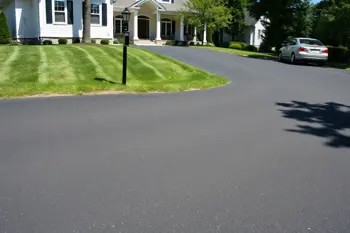
During the paving phase, specialized machinery is used to lay hot-mix asphalt continuously, which helps prevent the formation of cold joints where cracks are most likely to develop 18. Heavy vibratory rollers are then utilized to achieve maximum density, resulting in a smooth finish that resists water penetration 18. For concrete installations, proper reinforcement and the timing of control joints are equally vital to managing the natural shrinkage and expansion of the material as it cures and ages 13.
Methodology for Vetting and Selecting Professional Contractors
Homeowners and commercial property managers are encouraged to follow a structured vetting process when selecting a paving provider. Analysts suggest obtaining at least three written estimates that provide itemized details on the depth of excavation, the type of base material, and the thickness of the final paving layer 21. Verified platforms such as the Better Business Bureau, Yelp, and Angi serve as primary resources for reviewing contractor history and customer feedback 21. It is essential to confirm that a contractor is licensed, bonded, and carries adequate liability and workers' compensation insurance to protect the property owner from potential legal or financial risks 12.
Furthermore, examining the longevity of a firm can be a reliable indicator of quality. Many established paving companies are multi-generational family businesses with decades of experience in specific local soil conditions 5. Direct communication with the owner or a project manager who remains on-site is often cited as a preference for consumers seeking accountability and transparency 11. Clear documentation regarding warranties for both materials and workmanship should be secured before any project commences to ensure long-term protection of the investment 12.
Maintenance Realities and Lifecycle Management
Once a driveway is installed, its total lifespan is dictated by the adherence to a regular maintenance schedule. For asphalt surfaces, sealcoating is a vital preventative measure that provides UV protection, water resistance, and shielding against oil spills 11. Professionals generally recommend applying the first sealcoat 12 to 24 months after installation and every 2 to 4 years thereafter 11. This process can extend the life of the pavement by up to four times by preventing the oxidation that turns asphalt grey and brittle 11.
Concrete maintenance, while less frequent, involves sealing the surface to prevent moisture penetration and staining. In all paving types, the immediate repair of small cracks is necessary to prevent water from reaching the sub-base, where it can cause significant structural damage during freeze-thaw cycles 11. For commercial properties, maintenance also includes the upkeep of ADA-compliant striping and drainage systems to ensure safety and regulatory compliance 19. By following these lifecycle management protocols, property owners can maximize the functional and aesthetic value of their paved surfaces for decades.
Sources
- Sunshine Paving Driveways
- V&F Paving
- W&S Asphalt Paving
- All Pro Paving Long Island
- Brooks Brothers Driveways
- All Paving and Masonry LI
- Driveway Specialists
- Advanced Concrete & Paving
- Park Paving
- Marini Paving and Masonry
- Clear Choice Paving
- Best Construction Inc
- Pro-Seal & Paving
- M&J Paving LLC
- Burlington County Home Services
- Dominic’s Paving
- Stone Escapes
- Limitless Golden Construction
- Jobco Paving
- Productive Asphalt LLC
- Angi