Best Commercial Grade Roofing Contractors: A National Analysis of Industrial Performance and Standards
Commercial building envelopes require a sophisticated approach that exceeds the technical demands of standard residential construction. High-capacity roofing systems must manage complex variables including internal load bearing, advanced drainage dynamics, thermal movement, and the placement of large-scale mechanical units 2. For facility managers and institutional developers, selecting a contractor is a decision that impacts long-term asset value, operational continuity, and safety compliance across diverse industrial environments 16.
Core Selection Criteria for Industrial Roofing Partners
Identifying the top performers in the commercial sector involves an analysis of national footprint, manufacturer certifications, and safety performance history. Leading organizations typically maintain a capability in multiple states and possess specialized certifications for single-ply membranes such as TPO, EPDM, and PVC 2. These certifications are critical as they allow contractors to offer manufacturer-backed warranties that cover both material and workmanship for durations of 15 to 30 years 27.
Operational standards in this industry are often benchmarked by trade organizations like the National Roofing Contractors Association (NRCA), which provides a framework for professional installation practices across the United States 6. Furthermore, expert contractors are often vetted through global supply chain risk management platforms such as Avetta and ISNetworld to ensure they meet stringent insurance and safety mandates required by large-scale industrial clients 1. Reviewing a firm's portfolio of managed square footage, often exceeding millions of square feet, serves as a primary metric for assessing their ability to handle complex logistics 3.
Analysis of Leading National Roofing Corporations
The landscape of commercial roofing is dominated by several large-scale corporations that report significant annual revenue and manage extensive workforces. In recent industry reports, firms such as Tecta America and CentiMark Corporation have consistently ranked at the top of the market based on revenue and national reach 5. These organizations often provide a full suite of services including roofing, waterproofing, and energy upgrades for institutional facilities like airports, schools, and distribution warehouses 2.
| Company Name | Headquarters | Core Specializations |
|---|---|---|
| Tecta America | Dallas, TX | National Account Programs, Energy Upgrades, Waterproofing |
| CentiMark Corporation | Canonsburg, PA | Maintenance, Flooring Services, Material Certifications |
| Flynn Group (U.S.) | Kansas City, MO | Industrial Logistics, Large-Scale Institutional Projects |
| Roofing Corp. of America | Atlanta, GA | Private Equity-Backed Growth, Multi-Site Portfolios |
Beyond revenue, these market leaders are distinguished by their ability to provide proactive maintenance programs and documented project tracking. This level of oversight is particularly important for organizations managing high-value equipment zones where unplanned disruptions can lead to significant revenue loss 16. Many of these firms are now affiliated with private equity groups, which has facilitated rapid expansion and standardized quality control across their national service networks 5.
Regional Specialization and Environmental Performance
Regional contractors often provide specialized expertise tailored to specific climatic challenges. For example, firms operating in the Northeast, such as Vanguard Roofing, have managed over 19 million square feet of roofing since 1972, focusing on the harsh weather cycles of New York, New Jersey, and Connecticut 1. Similarly, in Southern California, providers like A-1 All American Roofing must ensure systems comply with California Title 24 energy standards while resisting intense UV exposure and coastal salt air 22.
In the Midwest, companies like Shamrock Roofing have operated for nearly five decades, focusing on the structural impacts of extreme temperature fluctuations and heavy snow loads in regions like Kansas City and Minneapolis 4. These regional experts emphasize the fundamental physics of low-slope systems, which must remain 100 percent watertight across every seam and penetration despite thermal cycling and structural expansion 9. Historical performance in these specific environments is often a more reliable indicator of system longevity than initial bid pricing alone.
Technical Comparison of Commercial Membrane Systems
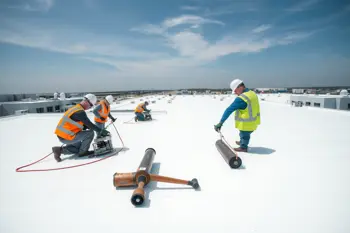
Commercial roofing technology has evolved into several primary single-ply membrane systems, each offering unique benefits for specific facility types. The selection of a membrane often dictates the required installer credentials and the eventual service life of the roof. Common systems include:
- Thermoplastic Polyolefin (TPO): Highly reflective and energy-efficient, TPO utilizes heat-weldable seams to create a watertight bond superior to standard adhesives 8.
- Ethylene Propylene Diene Monomer (EPDM): A durable synthetic rubber with a 30 year track record, ideal for industrial facilities subject to extreme temperature swings 8.
- Polyvinyl Chloride (PVC): Known for superior chemical resistance, making it the preferred specification for restaurants and facilities exposed to grease or oils 8.
- Metal Roofing: Standing seam metal systems provide a service life often exceeding 40 years and are frequently used in manufacturing and cold storage plants 7.
Proper installation of these materials requires specialized equipment such as thermal imaging for inspections and mechanical fasteners for wind-uplift resistance 27. Experts note that faulty workmanship accounts for approximately 86 percent of roof leaks, reinforcing the necessity of hiring contractors who utilize in-house crews rather than unvetted subcontractors 14. Some premier contractors even operate in-house sheet metal fabrication shops to ensure custom details like coping caps and edge metals are built to precise dimensions 12.
Financial Modeling and Warranty Structures in Asset Management
The financial aspects of commercial roofing extend beyond the initial installation cost, which typically ranges from $8 to $15 per square foot 27. A balanced view of the market suggests that the lowest bid may ultimately result in higher lifecycle costs if it skips critical waterproofing details or utilizes thinner membranes 13. Asset management teams increasingly use roof condition reports and capital forecasting to transition from reactive repairs to proactive maintenance strategies, which can significantly extend a system's lifespan 3.
Warranties in the commercial sector are structured as a hierarchy of protections. Manufacturers provide material warranties, while contractors provide workmanship or labor warranties, often ranging from 10 to 15 years 14. High-tier installers often hold Elite or Platinum status with manufacturers like GAF or Duro-Last, which grants them the authority to offer no-dollar-limit (NDL) warranties 12. These agreements are essential for protecting the significant capital investment required for industrial-scale properties.
Regulatory Compliance and Safety Mitigation Standards
Compliance with local building codes and safety regulations is a mandatory requirement for any reputable commercial contractor. In hurricane-prone regions like Florida, contractors must adhere to strict wind uplift ratings such as FM 1-90 or UL 580 Class 90 standards 20. Failure to meet these codes can result in significant legal liabilities and the voiding of insurance coverage during storm events. Licensed contractors often carry extensive liability insurance, sometimes reaching $16 million in coverage, to mitigate risks associated with large-scale projects 14.
Safety culture is often quantified by the Experience Modification Rate (EMR), which tracks a company's worker compensation claims history against industry averages. An EMR below 1.0 indicates a safer than average operation, with some elite contractors achieving ratings as low as 0.66 12. This metric is a vital indicator for general contractors and facility owners who must minimize onsite liability. Professional training programs, such as the CERTA torch safety accreditation provided by the NRCA, further ensure that crews are equipped to handle hazardous installation methods safely 6.
Sources
- Vanguard Roofing
- Owl Roofing
- Beckwith Commercial Roofing
- Shamrock Roofing
- Roofing Contractor Magazine
- National Roofing Contractors Association
- Southeast Commercial Roofing
- Shelter Construction Services
- Above All Roofing and Construction
- United American Co.
- Matthews Roofing
- Metalmaster Roofmaster
- HHH Roofing and Construction
- Royalty Roofing
- A-1 All American Roofing
- Beckwith Specialty Capabilities
- Flat Roof Group
- Mr. Roofer Atlanta
- Cosam Contracting
- All Pro Roofing Orlando
- Crown Roofing
- Cert-A-Roof California
- GAF Commercial
- Sika Sarnafil
- Owens Corning
- Carlisle
- General Research Data