Market Analysis and Demographic Trends: 5 fastest growing suburbs in Texas for first-time buyers
Navigating the real estate landscape in the Lone Star State can be challenging, but identifying the 5 fastest growing suburbs in Texas for first-time buyers provides a clear roadmap for individuals seeking a balance between affordability and investment potential. Driven by corporate relocations, favorable tax climates, and master-planned community developments, outer-ring suburbs have evolved into primary targets for entry-level purchasers. This data-backed analysis examines the key demographic engines and specific geographic corridors that define these rapidly expanding suburban real estate markets.
Demographic Shifts in the Lone Star State
Texas has consistently led the nation in population expansion, with massive domestic migration reshaping major metropolitan areas over the past decade. According to historical estimates from the U.S. Census Bureau, the Dallas-Fort Worth-Arlington metropolitan area expanded by more than 1.8 million residents from 2010 to 2023 7. Over the same general period, the Houston-The Woodlands-Sugar Land metro area grew by approximately 1.0 million residents 8. This significant influx has placed pressure on the housing supply within urban cores, leading buyers to look outward.
This geographic dispersion is heavily driven by the phenomenon of seeking affordability further from central business districts, commonly referred to as the drive until you qualify market model. Because land acquisition costs are substantially lower in outer-ring communities, homebuilders can deliver new-construction single-family homes at entry-level price points. Consequently, these peripheral suburbs have registered unprecedented population growth rates, transforming rural acreage into highly organized master-planned residential communities with modern local schools.
Fulshear - The Houston Metro Powerhouse
Fulshear, located on the western edge of the Greater Houston area, stands as a prime example of rapid suburban development in Texas. According to a comprehensive national study analyzing five-year population changes, Fulshear experienced a remarkable 252% population boom 1. This rapid growth has positioned Fulshear at the top of national suburban growth indexes, making it a highly discussed market for those tracking outward real estate expansion 1.
For first-time buyers, Fulshear represents a structural transition where developers have heavily invested in local infrastructure to accommodate the influx. The community benefits from its relative proximity to Houston while maintaining a lower-density suburban lifestyle. As a result of this rapid residential permit activity, buyers find modern home layouts with energy-efficient building standards that are rarely available at comparable price points in older, established inner-core neighborhoods throughout the broader Houston region.
Celina - The Rapidly Expanding Collin County Center
In North Texas, Collin County has emerged as the premier growth corridor in the United States, led by the city of Celina. A national evaluation of suburban population metrics revealed that Celina achieved a 208.3% five-year population increase 1. Furthermore, recent U.S. Census Bureau data shows that Celina's population climbed by 24.6% in a single year to reach 64,427 residents 2. This expansion rate dramatically outpaced the national average population growth rate of 0.5% over the same annual period 2.
The explosive development in Celina is highly tied to land accessibility and developer initiatives. Damon Williamson, a broker with The Agency Dallas, explained that the primary driver for this construction boom is the ability of builders to secure less expensive lot costs further out 2. To support this rapid population influx, local authorities have expanded essential services, highlighted by the opening of the Methodist Celina Medical Center in 2026 9.
Princeton and Melissa - Deep Collin County Growth
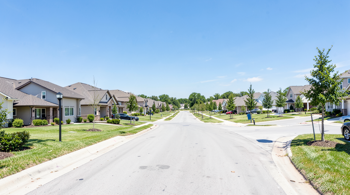
Just east of Celina, the Collin County suburbs of Princeton and Melissa are experiencing parallel surges in residential development. Princeton recorded a 132.6% population boom over a five-year period 1, which was supported by a 22.3% population increase between 2022 and 2023 3. This rapid expansion is primarily fueled by homebuyers moving further east from McKinney in search of lower entry-level price points where their housing budgets can go much further.
Melissa has demonstrated a similar growth trajectory, with its five-year population increasing by 112.3% 1. Over a longer ten-year horizon, Melissa's population surged by 211.2%, while its housing inventory soared by 222% to accommodate new arrivals 4. RentCafe research indicates that a substantial surge in recent apartment construction has played a major role in expanding Melissa's housing variety, offering diverse housing formats for those not yet ready to commit to a traditional single-family mortgage 4.
Anna - Entry-Level Opportunities North of McKinney
Anna, situated directly north of McKinney along the US-75 corridor, represents another high-growth destination for entry-level home purchases. National data ranks Anna as the eighth fastest-growing suburb in the United States, driven by a continuous influx of young professionals and families 1. The market in Anna is characterized by its lower cost of entry compared to more mature North Texas suburbs, presenting an attractive alternative for buyers balancing strict monthly budgets 5.
A primary catalyst for Anna's housing market is the volume of residential permit activity. Collin County municipalities like Anna and Celina consistently lead the state of Texas in new residential permits 6. This high level of construction ensures a steady supply of new starter homes, which helps moderate home price appreciation and provides buyers with greater negotiating leverage during their search. Additionally, nearby commercial developments, such as new manufacturing facilities in Sherman, continue to bring stable employment opportunities close to the community.
Market Friction Points and Resale Realities
While the fastest-growing suburbs in Texas present clear opportunities, first-time homebuyers must remain aware of unique regional friction points. In many newly developed suburbs, total property tax rates can range significantly higher due to Municipal Utility District assessments. These additional taxes are utilized to fund local water, sewage, and road infrastructure, but they can unexpectedly increase a homeowner's monthly payment. Buyers are advised to verify lot-specific tax structures before finalizing a contract.
Furthermore, rapid outward expansion can outpace the development of local amenities and transportation corridors. Residents in highly peripheral suburbs often experience increased commute times to major urban job centers before planned highway expansions are completed. Additionally, while homebuilders frequently offer initial incentives such as temporary interest rate buydowns, these lower rates may only last for the first one to three years of the mortgage. Confirming the long-term, permanent mortgage rate remains critical to maintaining multi-year housing affordability.
Sources
- MoneyLion Study on America's Fastest-Growing Suburbs
- Realtor.com Census Population Report
- NBC DFW North Texas Census Data Analysis
- AOL Housing Inventory and Population Study
- Flat Fee Landlord DFW Submarket Investment Analysis
- Texas Real Estate Research Center Housing Insights
- U.S. Census Bureau Metro DFW Population Estimates
- U.S. Census Bureau Metro Houston Population Estimates
- Investing.plus Texas Suburbs Development Report