Navigating Government impound pickup trucks and utility vehicles: inspection dates listed and card payment options
Acquiring government impound pickup trucks and utility vehicles through public surplus auctions requires a strict understanding of the process, including how inspection dates listed and card payment options operate in different jurisdictions 1. Federal entities, such as the General Services Administration, utilize standardized financial frameworks 2. Simultaneously, municipal police departments manage local storage yards where unclaimed vehicles are systematically auctioned off 3. This guide details the administrative timelines, scheduled previews, and payment methods necessary to navigate these government platforms successfully 4.
Understanding Municipal and State Impound Vehicle Auctions
Government institutions systematically aggregate unclaimed, abandoned, and surplus utility vehicles to sell them at public auctions 1. Law enforcement divisions, such as the Saint Paul Police Department in Minnesota, hold scheduled in-person and online events to process vehicles that have entered municipal custody 5. Because these public sales are governed strictly by state and local statutes, participants must review specific rules and registration criteria prior to bidding 5.
A fundamental principle across almost all public auctions is that all vehicles and utility equipment are sold strictly as-is, where-is 3. This designation shifts all mechanical and structural risks to the buyer 3. Many auctioned pickup trucks do not come with operational keys, and municipal lots do not guarantee the presence or functionality of engines, transmissions, or key components 3. Consequently, bidders must prepare to manage potential repairs or tow the vehicles directly from the lot immediately after the transaction is finalized 5.
Official Inspection Protocols and Designated Viewing Windows
Because public vehicles are sold without warranties, participating agencies designate specific inspection windows to allow bidders to evaluate the physical condition of the inventory 3. For example, in Lubbock, Texas, the municipal police department schedules a separate inspection day on the Thursday preceding the auction, running from 8:00 AM to 5:00 PM 3. Similarly, the Public Works department in Fairbanks, Alaska, schedules a preview on the Friday before each auction from 10:00 AM to 4:00 PM 1.
Even auctions transitioning to online-only bidding models maintain in-person inspection opportunities to support transparent transaction processes. In Kansas City, Missouri, public works tow lot services schedule a physical viewing day on the second Tuesday of each month from 8:00 AM to 4:00 PM 6. In contrast, Saint Paul, Minnesota, provides a compressed viewing window on the day of the live auction, starting at 11:30 AM before bidding commences at 1:00 PM 5.
Financial Settlement Terms and Accepted Card Payment Options
Payment methodologies for purchasing government impound pickup trucks are strictly defined by each organizing agency 2. Federal transactions conducted through GSA Auctions support credit card options, allowing MasterCard, Visa, Discover, and American Express up to a maximum threshold of $24,999.99 per single transaction 2. Regional towing lots, such as the contracted El Cajon yard in California, also accept cash, debit, and credit cards for immediate release and transaction settlements 7.
Conversely, many local municipal lots do not accept credit cards for final vehicle purchases. Bidders in Saint Paul must pay in cash by 4:30 PM on the day of the auction 5. Other municipal online systems utilize card systems primarily for security deposits; for instance, Kansas City online auctions charge a $300 deposit to the card on file during registration, but require the final balance to be paid via cash or wire transfer 8.
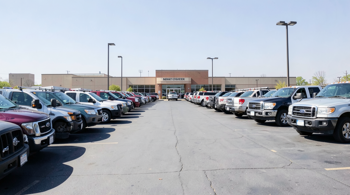
Daily Storage Accruals and Vehicle Retrieval Requirements
Prompt retrieval of any purchased pickup truck or utility vehicle is critical because of daily storage fees that begin accruing immediately. In Kansas City, winning bidders have until the Saturday following the sale to remove their purchases, after which a storage charge of $30 per day is applied 6. Fairbanks, Alaska, limits post-auction collection to specific hours on the Sunday and Monday immediately following the event to ensure lot space is cleared 1.
These daily storage costs reflect the general administrative realities of impound operations across the country. In Texas counties such as Williamson and Denton, daily vehicle storage fees at municipal and contracted lots start at $22.85 per day 9, 10. In Walton County, Georgia, fees are estimated at $45 per day 11, while the Calgary Municipal Impound Lot in Alberta charges storage fees ranging from $32.76 to $65 per day, in addition to vehicle-specific towing charges ranging from $138 to $373 12.
Operational Protocols for Online Bidding and Surplus Platforms
State and federal agencies regularly contract with professional online hosting services to manage surplus and impounded assets. In Virginia, the Office of Surplus Property Management holds scheduled monthly auctions through virtual platforms like GovDeals to liquidate well-maintained utility trucks and office assets 13. Bidders utilizing these services can inspect listed pickup trucks strictly by scheduling individual appointments through the platform 4.
Bidders utilizing online state surplus portals must complete a detailed registration process, including verifying contact credentials and payment capabilities 4. Under Oklahoma state surplus guidelines, payments are due within five business days of auction closure, with any transaction totaling $5,000 or above requiring a wire transfer 4. Bidders must also submit specialized tax exemption forms before payment is processed if they qualify for state exemptions 4.
Regulatory Compliance, Titling, and Post-Sale Documentation
Completing a financial transaction does not automatically authorize a buyer to drive a purchased utility vehicle or pickup truck. Most municipal impound lots prohibit driving any auction vehicle directly off the lot, mandating that all purchased vehicles be towed away by a certified service 6. Furthermore, standard vehicle titles are typically not provided at the time of sale; instead, buyers are issued a bill of sale or a specific police auction receipt 3.
In Texas, successful bidders receive a Police Auction Sales Receipt Form 71-1, which serves as the official document to apply for a title through the state 3. In Missouri, buyers must set up an appointment with a State Highway Patrol VIN inspection station 6. Bidders must provide the year, make, model, and vehicle identification number when booking the appointment to ensure the purchased vehicle complies with state registration requirements 6.
Sources
- City of Fairbanks Public Works
- U.S. General Services Administration
- Lubbock Police Department
- Oklahoma Capital Assets Management
- City of Saint Paul Police Department
- Kansas City Public Works Tow Services
- California Driver Safety El Cajon Recovery
- OAI Auctions Kansas City Tow Lot
- Williamson County Vehicle Impound Guide
- Denton County Vehicle Impound Guide
- Walton County Vehicle Impound Guide
- Calgary Municipal Impound Lot Guide
- Virginia Department of General Services